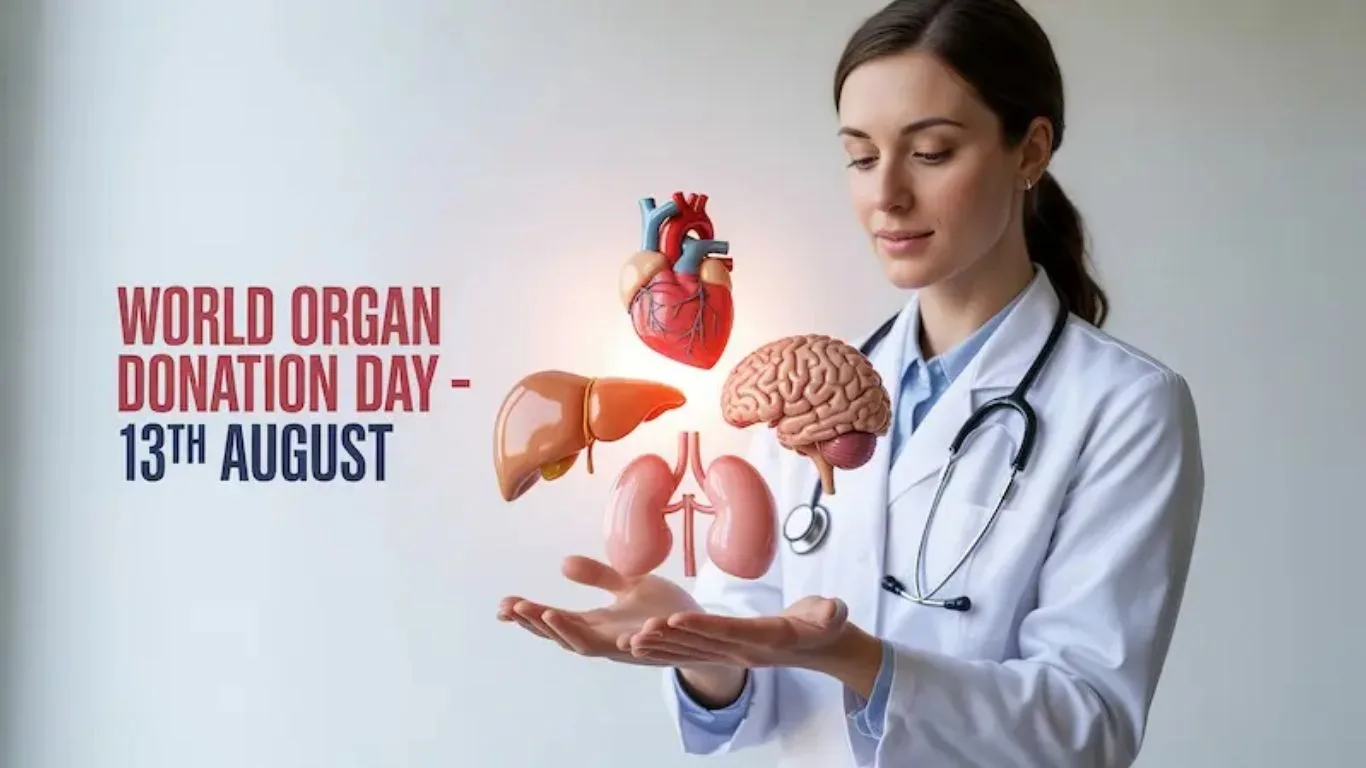
On World Organ Donation Day, know how India became the world’s third-largest transplant nation and why myths and low deceased donation remain major challenges
New Delhi: Every year on August 13, the world observes World Organ Donation Day, a moment that asks a simple but uncomfortable question: why do thousands of patients still die waiting for organs that could have saved them? In India, the answer is layered — part awareness gap, part infrastructure, and part deep-rooted myth. Yet the numbers tell a story of undeniable progress.
India’s Rising Graph
India now ranks third globally in total organ transplants, behind only the United States and China. The country performed a record 20,138 transplants in 2025. This was the highest annual figure and more than 300% higher than the 4,990 transplants recorded in 2013.
India also leads the world in living-donor organ transplants. This reflects strong family support and advances in transplant medicine. Kidney transplants accounted for most procedures, with 14,477 cases in 2025. Liver transplants followed with 5,154 cases. Heart and lung transplants were fewer but continued to rise.
The picture changes for deceased-donor transplants. These involve people who donate organs after death, usually after being declared brain-dead. Such transplants increased from 837 in 2013 to 3,526 in 2025. However, the figure remains low compared with India’s medical capacity.
India’s reliance on living donors also highlights a key gap. Too few people pledge their organs after death. Even fewer families provide consent when the time comes.
Delhi recorded the highest number of organ donations among states and union territories in 2025, with 4,564 donations. Tamil Nadu followed with 2,796. However, Tamil Nadu led in deceased organ donation, recording 266 deceased donors. Maharashtra, Telangana, Karnataka and Kerala followed.
The data shows a clear pattern. States with strong transplant networks, hospital protocols and public awareness tend to perform better. Others continue to lag despite having similar populations and medical capacity.
The Government’s Push
Much of this progress comes from stronger institutional efforts. The National Organ and Tissue Transplant Organisation (NOTTO) serves as the nodal body for organ procurement and allocation in India.
Since the launch of its Aadhaar-based online pledge portal in 2023, over five lakh citizens have registered verified organ donation pledges. In 2025 alone, more than 2.58 lakh people pledged their organs and tissues, showing growing public participation.
The government has also expanded its institutional network. Delhi established its State Organ and Tissue Transplant Organisation in 2025-26. Similar bodies also became operational in Meghalaya, Sikkim, Tripura and Arunachal Pradesh, expanding transplant coordination to underserved regions.
Alongside these efforts, the national “Angdaan-Jeevan Sanjeevani Abhiyan” continues to address myths and encourage more people to pledge their organs.
Where Myths Still Win
Despite awareness campaigns, myths continue to widen India’s organ donation gap. Many families fear organ retrieval disfigures the body or disrupts funeral rites. However, doctors say retrieval is a careful surgical procedure, and the body remains suitable for cremation or burial without visible disfigurement.
Religious misconceptions also discourage donation. Hinduism, Islam, Christianity, Sikhism and Buddhism all permit or encourage organ donation as an act of compassion. Religious leaders have also supported donation as a form of charity.
Another myth is that doctors may not try to save a patient who has pledged organs. In reality, the treating team is separate from the donation evaluation team, and donation is considered only after death is independently confirmed.
Age and health are also not automatic barriers. Doctors assess each organ individually, so even older people or those with certain illnesses may donate suitable organs or tissues.
Finally, organ allocation is not based on wealth or influence. India’s system uses computerised waiting lists managed by NOTTO and state bodies, with priority based on medical urgency and compatibility.
Closing the Gap
India is the world’s third-largest transplant nation, yet many patients still die while waiting for organs. The key challenge is the low rate of deceased donation, even as living donation continues to grow.
Closing this gap requires sustained public awareness. It also requires families to discuss their wishes before a crisis occurs. Citizens should see an organ donation pledge as a clear decision and share it with their families.
One donor can save up to eight lives. Tissue donation can also improve many more. World Organ Donation Day reminds India of this impact and highlights the need to bridge the gap between transplant progress and the thousands still waiting for life-saving organs.