
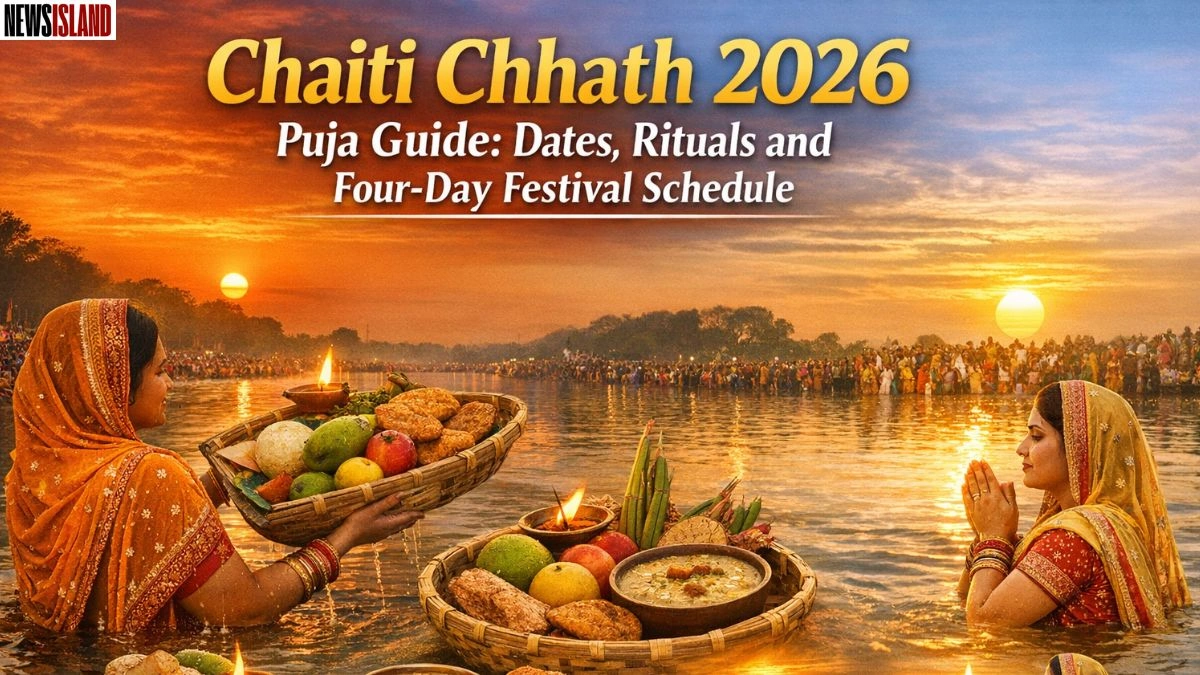
Chaiti Chhath festival will start on March 22; Devotees will follow strict rituals and fasting until the final Usha Arghya on March 25
New Delhi: The sacred Hindu festival Chaiti Chhath will begin on March 22. This four-day festival is dedicated to the worship of Surya, the Sun God, and Chhathi Maiya. During the festival, devotees perform a series of traditional rituals that start with Nahay Khay and end with the final offering known as Usha Arghya.
The festival is mainly celebrated in Bihar, Jharkhand, and eastern parts of Uttar Pradesh, as well as in the Terai region of Nepal. However, the celebration has spread to many other parts of India and even to other countries where Indian communities live.
Festival Meaning
Chaiti Chhath is considered the spring version of the well-known Chhath Puja. While the main Chhath festival is celebrated later in the year during the month of Kartik, Chaiti Chhath takes place in the Hindu month of Chaitra.
During this festival, devotees worship the Sun God and Chhathi Maiya to seek blessings for good health, prosperity, and happiness for their families. Many people also believe that Chhathi Maiya protects children and blesses families with wellbeing.
A unique part of the festival is that devotees offer prayers to both the setting sun and the rising sun. This tradition reflects respect for nature and gratitude for the natural cycle of life.
Four-Day Calendar
In 2026, Chaiti Chhath will be celebrated for four days according to the traditional schedule of rituals.
- March 22, 2026 – Nahay Khay
- March 23, 2026 – Kharna
- March 24, 2026 – Sandhya Arghya
- March 25, 2026 – Usha Arghya and Parana
The most important rituals take place on the third and fourth days when devotees offer Arghya, which means offering water and prayers to the Sun.
The expected timings for the main rituals in 2026 are:
Sandhya Arghya: Around 6:40 PM on March 24
Usha Arghya: Around 5:47 AM on March 25
Nahay Khay Ritual
The festival begins with the ritual called Nahay Khay, which means “bathe and eat.” On this day, the person who observes the fast, known as the vrati, takes a holy bath in a river, pond, or any clean water body.
After returning home, families clean their houses carefully and purify the kitchen. Devotees cook only pure vegetarian food known as sattvik food.
The usual dishes prepared on this day include bottle gourd (lauki) vegetable, chana dal, and rice cooked in ghee. The vrati eats this meal once during the day to begin the festival and prepare for the strict fasting in the coming days.
Kharna Ritual
The second day of the festival is called Kharna, which is also known as Lohanda in some places.
On this day, devotees observe a strict fast from sunrise to sunset without eating or drinking anything. After sunset, they prepare a special offering called Kharna prasad.
The prasad usually includes jaggery kheer (sweet rice pudding), chapati, and fruits. Devotees first offer this food to the Sun God and Chhathi Maiya and then share it with family members, friends, and neighbours.
After completing this ritual, the vrati begins a 36-hour nirjala fast, meaning they do not eat or drink anything until the final ritual of the festival.
Sandhya Arghya Ritual
The third day is considered the most important part of the festival. On this day, devotees perform Sandhya Arghya, which is the prayer offered to the setting sun.
In the evening, devotees gather near rivers, ponds, lakes, or other water bodies. They stand in waist-deep water and offer Arghya to the Sun God using water, milk, flowers, and other sacred items.
Devotees carry offerings in traditional bamboo baskets called soop. These baskets usually contain fruits, coconut, sugarcane, rice, sweets, and thekua, a traditional sweet specially made for Chhath.
Families and communities gather at riverbanks, sing devotional songs for Chhathi Maiya, and perform the rituals together with great devotion. Many devotees stay awake through the night while preparing for the final ritual.
Usha Arghya Ritual
The fourth and final day of the festival is called Usha Arghya, when devotees offer prayers to the rising sun.
Before sunrise, devotees once again gather near water bodies and stand in the water to offer Arghya to Surya Dev as the sun rises. This moment is considered the most sacred part of the entire festival.
During this ritual, devotees pray for the health, prosperity, and wellbeing of their families, especially their children.
Parana Ceremony
After performing Usha Arghya, devotees complete the festival with a ritual known as Parana. This ceremony marks the end of the 36-hour fast.
The vrati finally breaks the fast by eating prasad and sharing it with family members, friends, and neighbours.
Cultural Importance
Chaiti Chhath is known for its strict discipline and deep devotion. The festival requires long hours of fasting, physical effort, and pure rituals.
Another important aspect of the festival is its close connection with nature. Devotees use eco-friendly items such as bamboo baskets, clay lamps, fruits, and natural offerings, avoiding plastic or artificial materials.
The rituals also highlight the importance of the Sun as the main source of life, energy, and health.
Celebrations Across Regions
The festival is widely celebrated in Bihar, Jharkhand, and eastern Uttar Pradesh, but today it is observed across many parts of India.
Large gatherings take place along rivers such as the Ganga, Gandak, Kosi, and Son River, where thousands of devotees perform the rituals together.
Indian communities living abroad also celebrate Chhath Puja by gathering at lakes, beaches, or specially prepared water tanks.
Festival Conclusion
Chaiti Chhath 2026 will begin on March 22 and end on March 25, following the traditional four-day sequence from Nahay Khay to Usha Arghya.
Through fasting, prayers, and community participation, devotees express gratitude to the Sun God and seek blessings for health, prosperity, and happiness for their families. The festival continues to remain one of the most spiritually powerful and culturally meaningful traditions in Hindu culture.
Estimated reading time: 5 minutes

khushisikarwar is an award-winning journalist and content creator who thrives on telling stories that matter. As a key contributor to Newsisland, [she] focus on cultural commentary, providing readers with thought-provoking insights.


