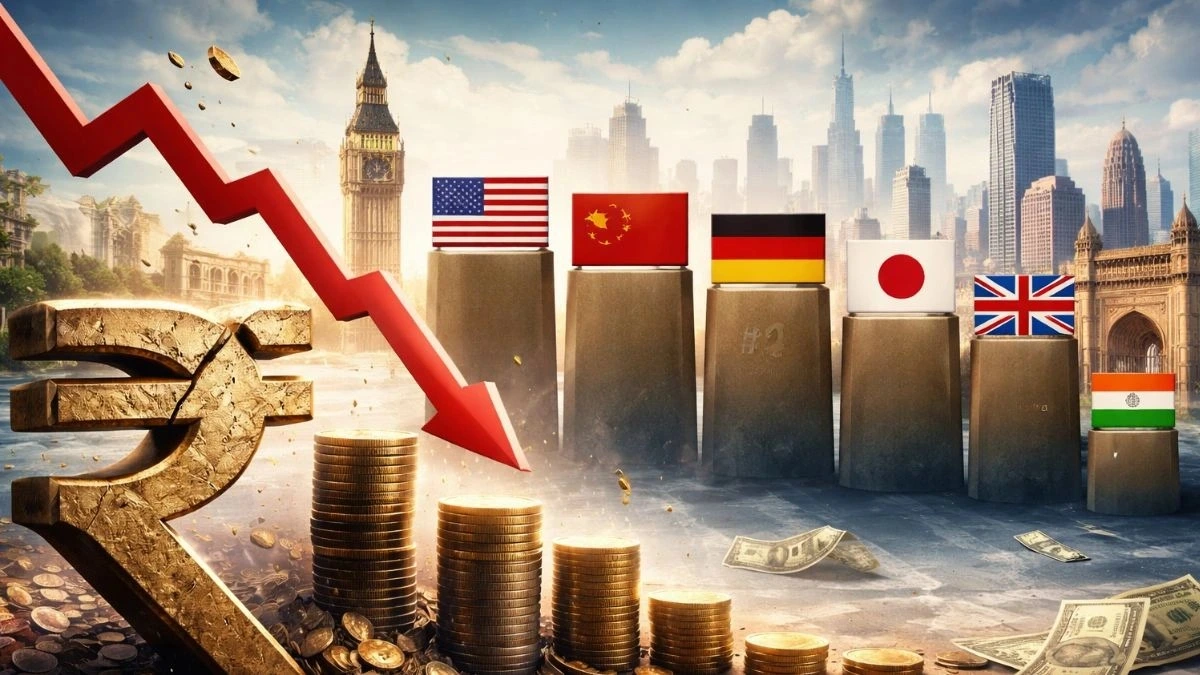
Rising oil prices, West Asia tensions and investor panic push rupee to record low, increasing pressure on India’s economy and markets
New Delhi: The Indian rupee fell to its lowest level ever, reaching 93.12 against the US dollar. This happened because oil prices increased and tensions in West Asia worried global markets. Because of this, investors became cautious and moved their money to safer options, which put more pressure on the rupee.
Overall, the rupee has fallen nearly 2% since the conflict escalated and about 6–7% over the past year. During the day, it even slipped further to around 93.27, clearly showing the strong downward pressure.
Table of contents
- Rising oil prices, West Asia tensions and investor panic push rupee to record low, increasing pressure on India’s economy and markets
- How the Rupee Reached This Level
- West Asia Crisis Sparks the Problem
- Rising Oil Prices Hit India Hard
- Foreign Investors Pull Money Out
- Investors Shift to Safer Options
- Strong US Dollar Makes Things Worse
- Reserve Bank of India Steps In
- Impact on the Economy
- Markets Show Mixed Reaction
- Why India Is More Affected
How the Rupee Reached This Level
The rupee did not fall suddenly. Instead, it weakened step by step over the past few days due to continuous global developments.
- In early March, it traded around 92.2–92.4
- On March 18, it fell to 92.63
- Then, on March 19, it hovered near 92.89–93
- Finally, on March 20, it hit a record 93.12 and weakened further
So, this steady fall shows that global factors, not a single event, drove the decline.
West Asia Crisis Sparks the Problem
The biggest reason behind this fall is the ongoing conflict in West Asia. The situation worsened in late February 2026, when attacks targeted oil facilities and key shipping routes.
A major concern is the Strait of Hormuz, which carries nearly 20% of the world’s oil supply. Because of this, even a small disruption can quickly impact global oil prices.
As tensions continue to rise, markets fear supply shortages. Therefore, this fear has pushed oil prices higher and created panic across global markets.
Rising Oil Prices Hit India Hard
At the same time, crude oil prices have increased sharply, making the situation worse.
- Prices jumped around 30–40% since the conflict started
- They touched nearly $119–$120 per barrel at peak levels
- Even now, prices remain above $100 per barrel
- This matters a lot for India because the country imports 80–85% of its oil needs.
Here’s how it affects the rupee
- First, higher oil prices increase India’s import bill
- Then, companies need more US dollars to pay for oil
- As demand for dollars rises, the rupee weakens
- So, oil prices remain the biggest driver behind the rupee’s fall.
Foreign Investors Pull Money Out
Meanwhile, foreign investors have started pulling money out of Indian markets.
Around $8 billion has left Indian equities in March 2026, according to market estimates
They are mainly worried about:
- Rising global tensions
- Higher oil prices
- Possible inflation and slower economic growth
- As investors sell Indian assets, they convert rupees into dollars. Consequently, the rupee weakens further.
Investors Shift to Safer Options
At the same time, global investors are playing safe, leading to a risk-off trend.
They are now moving money into:
- US dollar
- Gold
- Government bonds
Because of this shift, demand for the rupee has reduced, which is further adding to its weakness.
Strong US Dollar Makes Things Worse
In addition, the US dollar has become stronger during this crisis.
Also Read: India’s e-Rupee Explained: What the New Digital Currency Means for Payments
This is happening because:
- Investors trust the dollar during uncertain times
- US interest rates remain relatively high
As a result:
- Global demand for dollars has increased
- India also needs more dollars for oil imports
- Therefore, the rupee faces pressure from both global and domestic demand for dollars.
Reserve Bank of India Steps In
To control the situation, the Reserve Bank of India (RBI) has taken several steps.
What RBI is doing
- Selling dollars from its forex reserves
- Managing liquidity in the market
Key facts:
- RBI sold over $50 billion between April and December 2025
- India still holds over $600 billion in forex reserves
- However, experts say RBI can only slow the fall, not completely stop it, because global factors remain very strong.
Impact on the Economy
The falling rupee is likely to affect the economy in multiple ways.
- Inflation may rise
- Fuel prices could increase, which will raise transport and food costs.
- Trade deficit may widen
- Imports will become more expensive, increasing the gap between imports and exports.
- Growth may slow
- Some global analysts have already cut India’s growth forecast to around 6.4%.
Markets Show Mixed Reaction
Interestingly, stock markets showed some positive movement despite the falling rupee.
Sensex rose about 900 points
Nifty gained around 1–1.3%
This happened because:
Oil prices cooled slightly to around $107 from higher levels
There is hope that tensions may ease
However, the overall market sentiment still remains uncertain.
Why India Is More Affected
- India faces more pressure compared to many other countries due to structural reasons.
- It depends heavily on imported oil
- It already runs a trade deficit
- It is highly sensitive to global financial changes
- Because of these reasons, the rupee reacts quickly to global shocks.
Estimated reading time: 4 minutes

khushisikarwar is an award-winning journalist and content creator who thrives on telling stories that matter. As a key contributor to Newsisland, [she] focus on cultural commentary, providing readers with thought-provoking insights.