
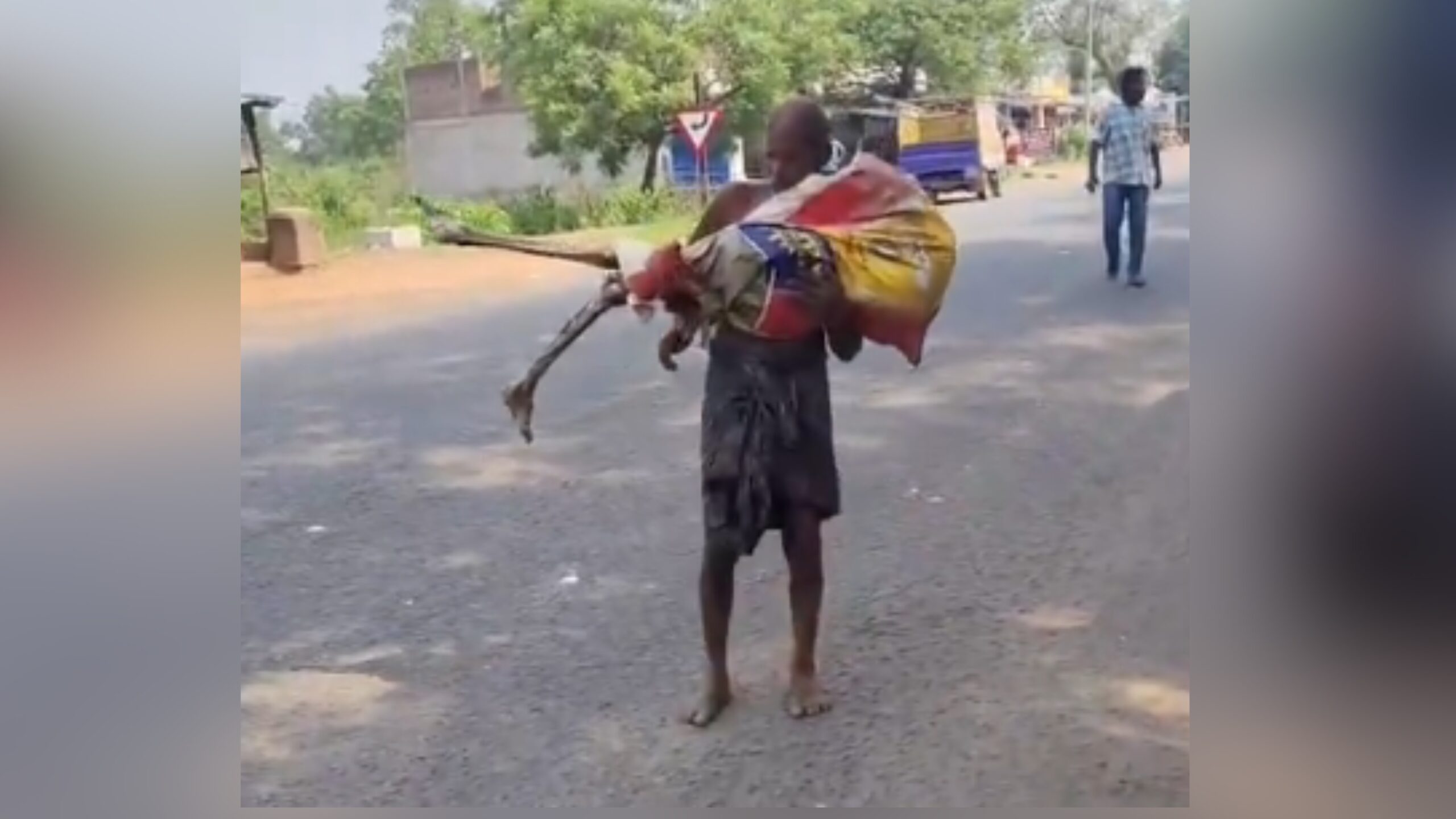
Odisha: A disturbing incident has come to light from Keonjhar district, where a man arrived at a bank carrying the skeletal remains of his sister, who had been buried days earlier.
Jitu Munda, who comes from a tribal community, was denied access to around ₹19,000–₹20,000 from his sister’s bank account by officials. He was reportedly asked to present proof of death and other documents in order to withdraw the money.
Denied due to lack of documentation
According to reports, Jitu had approached the bank multiple times seeking withdrawal. However, officials insisted on formal requirements such as a death certificate or legal heir proof. Without these documents, the request was not processed.
Also read: How Political Defection is Undermining Indian Democracy
Jitu, who is unaware of the documentation process and does not have access to such paperwork, was left without any clear guidance on how to proceed.
Extreme step in desperation
With no understanding of the process and no help available, Jitu dug up his sister’s body and brought the skeleton to the bank as proof of her death. The incident created panic at the bank, after which police and local authorities stepped in. After the incident came to light, officials said they will help Jitu complete the required formalities so he can withdraw the money.
The incident highlights the gap between rules and ground reality. While documents are required, lack of awareness and support forces vulnerable people into such situations.

Prateeksha Kumari is a journalist and strategic communications professional specialising in digital journalism, political reporting, and public affairs. Her work focuses on grassroots issues, governance, and civic developments, with an emphasis on clarity, accuracy, and narrative-driven reporting.
She holds a Master’s degree in Journalism and Mass Communication from Himachal Pradesh University, Shimla and has qualified the UGC-NET examination, reflecting her academic grounding in media studies and communication research. Her reporting spans politics, public policy, health, education, and socio-economic issues, and she is experienced in bilingual (Hindi and English) content creation tailored to diverse audiences.
Alongside her journalistic work, she brings experience in political communication and public relations, where she has contributed to campaign messaging, media outreach, and narrative building. She has worked on integrated communication strategies across print and digital platforms, combining editorial judgment with audience insight and data-led content approaches.