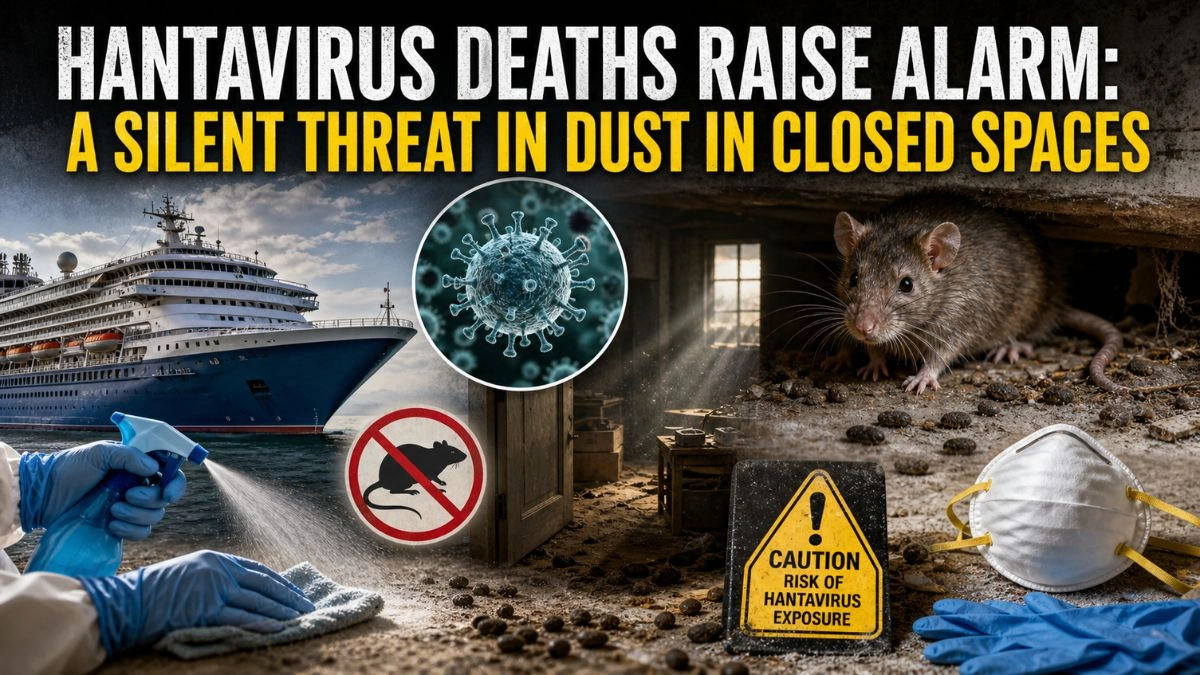
Hantavirus deaths highlight hidden risk from dust in closed spaces, how it spreads, symptoms and why prevention is key to stay safe
New Delhi: Hantavirus, a rare but serious disease, is in focus after reports of deaths linked to a suspected outbreak on a cruise ship. Health experts say the virus does not spread like common infections, but it can still be highly dangerous—especially in closed, dusty spaces where people may not realise the risk.
What was the case?
A suspected hantavirus outbreak on the cruise ship MV Hondius in the Atlantic Ocean has raised serious concerns after three passengers died and several others fell ill during the journey. The ship was travelling from Argentina to Cape Verde when passengers began showing symptoms such as fever and severe illness. Health authorities confirmed at least one case, while a few others remain suspected.
The victims included an elderly Dutch couple and another passenger. One British passenger is currently in critical condition in a hospital in South Africa. Officials believe the infection may have spread through exposure to contaminated dust or rodent waste on the ship.
The situation worsened when authorities in Cape Verde delayed disembarkation, slowing down immediate medical care. The World Health Organization and other agencies have now started investigations and testing.
Doctors say this virus does not spread easily from person to person, but it can still pose a serious threat in enclosed and dusty places.
How dust spreads the virus
Hantavirus mainly spreads through rodents like rats and mice. These animals carry the virus in their urine, droppings, and saliva. When this waste dries, it can break into tiny particles and mix with the air.
People can get infected when they breathe in this contaminated dust. This often happens while sweeping, cleaning, or opening places that have been closed for a long time. Areas like basements, attics, storage rooms, or unused cabins are more risky because they are usually poorly ventilated and may have rodent activity.
Why it is hard to detect early
Doctors call hantavirus a “silent” risk because it is difficult to identify in the early stage. The first symptoms look like a common viral infection. People may experience:
- Fever and tiredness
- Body aches and headache
- Nausea and stomach discomfort
Because these symptoms are common, people may ignore them at first. However, the condition can suddenly become serious. In severe cases, patients may develop coughing and breathing problems due to fluid filling in the lungs, which can quickly become life-threatening.
Experts say that in some cases, the death rate can reach up to 40%, making the infection very serious.
Two main types of hantavirus illness
Hantavirus infection usually appears in two forms:
- Hantavirus Pulmonary Syndrome (HPS): This affects the lungs and can cause severe breathing problems.
- Hemorrhagic Fever with Renal Syndrome (HFRS): This affects the kidneys and can lead to serious complications.
Both types can become dangerous and require immediate medical attention.
No specific cure available
Another major concern is that there is no specific antiviral medicine to cure hantavirus. Doctors mainly provide supportive care to help patients recover.
This includes giving oxygen, managing body fluids, controlling blood pressure, and closely monitoring the patient in hospital, sometimes in the ICU. Early treatment can improve survival chances, but if the condition becomes severe, it becomes difficult to manage.
Who is at higher risk
Some people face a higher risk of infection. These include:
- People cleaning dusty or long-closed areas
- Workers in farms, construction sites, or storage facilities
- People living or working in places with rodent infestation
Even simple actions like opening a closed room or sweeping dry dust can increase the risk of infection.
Prevention is the best protection
Since there is no proper cure, prevention is the most important step. Experts advise people not to sweep or vacuum dry rodent waste, as it can release harmful particles into the air.
Instead, people should ventilate closed spaces before cleaning, wear masks and gloves, and use disinfectants rather than raising dust. Keeping surroundings clean, controlling pests, and sealing entry points for rodents can also help reduce the risk.
Why this issue matters now
Recent cases, including the suspected outbreak on a cruise ship, have increased awareness about hantavirus. These incidents show that the virus can appear in unexpected places and affect people without warning.
Experts say that although hantavirus is rare, its hidden spread and serious impact make it a health concern that should not be ignored.
Conclusion
Hantavirus may not spread easily between people, but it can infect individuals through contaminated dust in closed spaces. With no specific cure available, awareness, early medical care, and proper precautions remain the most effective ways to stay safe.

khushisikarwar is an award-winning journalist and content creator who thrives on telling stories that matter. As a key contributor to Newsisland, [she] focus on cultural commentary, providing readers with thought-provoking insights.