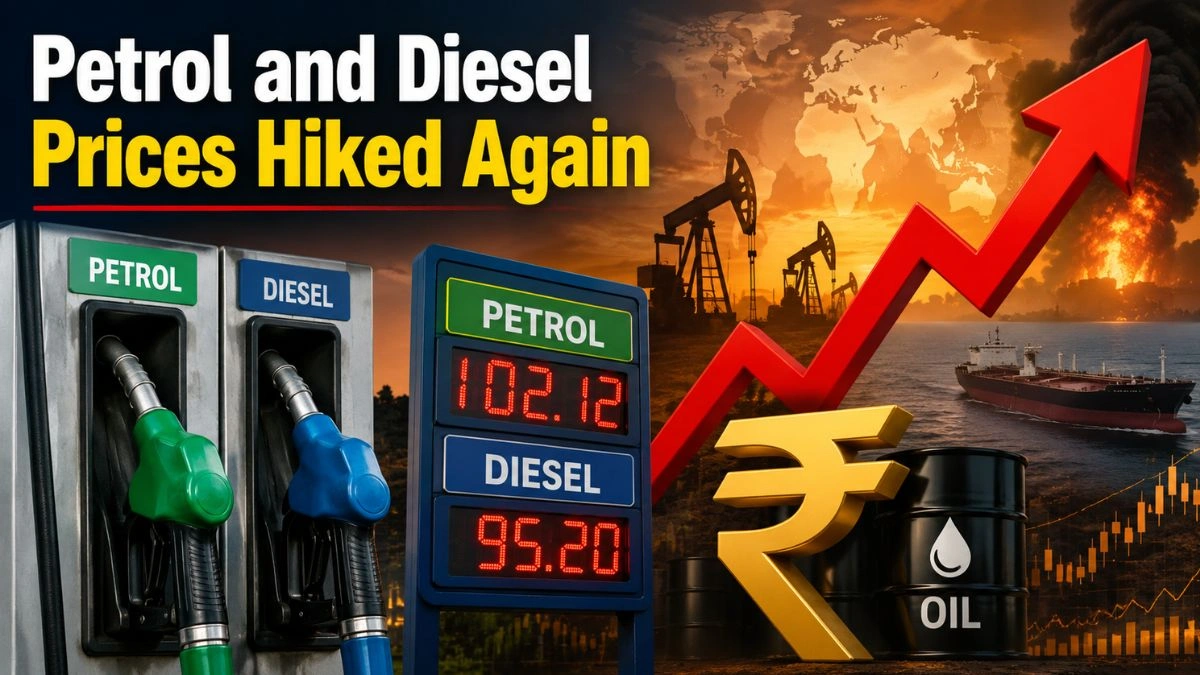
Delhi petrol price climbed to ₹102.12 per litre while diesel reached ₹95.20 after the fourth fuel hike in 11 days amid global oil tensions
New Delhi: Petrol and diesel prices were increased once again across India on Monday due to uncertainty caused by the ongoing Iran conflict and tensions in West Asia which continues to affect global oil supplies. This is the fourth fuel price hike in the last 11 days, and the latest increase has pushed petrol prices above ₹100 per litre again in Delhi.
State-run oil companies increased petrol prices by ₹2.61 per litre and diesel prices by ₹2.71 per litre. After the latest hike, petrol in Delhi now costs ₹102.12 per litre, while diesel is being sold at ₹95.20 per litre.
Fuel prices have been rising continuously since May 15 after oil companies restarted regular price revisions. In total, petrol and diesel prices have gone up by nearly ₹7.5 per litre within less than two weeks.
Latest Petrol Prices in Major Cities
- Delhi – ₹102.12 per litre (+₹2.61)
- Kolkata – ₹113.51 per litre (+₹2.87)
- Mumbai – ₹111.21 per litre (+₹2.72)
- Chennai – ₹107.77 per litre (+₹2.46)
Latest Diesel Prices in Major Cities
- Delhi – ₹95.20 per litre (+₹2.71)
- Kolkata – ₹99.82 per litre (+₹2.80)
- Mumbai – ₹97.83 per litre (+₹2.81)
- Chennai – ₹99.55 per litre (+₹2.57)
Iran War Affecting Global Oil Supply
The main reason behind the repeated fuel price hikes is the ongoing Iran warand West Asia Tensions, which has disturbed global crude oil supply and increased international oil prices.
One of the biggest concerns is the situation around the Strait of Hormuz, an important sea route through which a large portion of the world’s oil supply passes. Due to tensions and security threats in the region, oil transportation has been affected, causing crude oil prices to rise sharply across international markets.
Reports said Brent crude oil prices had crossed $120 per barrel during the peak of the crisis before falling below $100 per barrel recently.
Oil Companies Were Facing Huge Losses
India depends heavily on imported crude oil and imports nearly 85 percent of its oil needs from other countries. Even after international crude oil prices increased, India’s major oil companies — Indian Oil Corporation (IOCL), Bharat Petroleum Corporation Limited (BPCL), and Hindustan Petroleum Corporation Limited (HPCL) — continued selling petrol and diesel at older prices for several weeks.
Because of this, the companies reportedly suffered losses of more than ₹1,000 crore every day. Reports also said the total losses of these companies had reached nearly ₹1.98 lakh crore.
As the losses kept increasing, oil companies and the government finally decided to raise fuel prices several times during the last two weeks.
Daily Items May Become More Expensive
The latest fuel price hike is likely to increase inflation and make daily essentials costlier. Diesel is widely used in trucks, buses, farming equipment, and transportation services. When diesel prices rise, transportation becomes more expensive, which also increases the prices of food items and other products.
Reports said items like milk and bread were already becoming more expensive because of earlier fuel price hikes. Transport companies and cab services may also increase fares if fuel prices continue to rise.
Fuel Prices Increased Despite Fall in Crude Oil
Interestingly, the latest fuel price hike came even though Brent crude prices recently fell by more than five percent and slipped below $100 per barrel.
However, experts explained that fuel prices in India are based on average import costs over time and not on daily changes in global crude oil prices.
Previous Fuel Price Hike Announced on May 23
Before this latest increase, oil companies had already raised fuel prices on May 23. Petrol became costlier by 87 paise per litre, while diesel prices went up by 91 paise per litre. In Delhi, CNG prices also increased by ₹1 per kilogram, taking the rate to ₹81.09.
Focus Shifts Towards Alternative Energy
The ongoing fuel crisis has once again highlighted India’s dependence on imported oil. Experts believe the situation may encourage faster use of electric vehicles, ethanol-blended fuel, renewable energy, and other alternative fuel options in the future.
Analysts also warned that if tensions in the Middle East continue and global oil supply remains affected, fuel prices in India could rise further in the coming weeks.

khushisikarwar is an award-winning journalist and content creator who thrives on telling stories that matter. As a key contributor to Newsisland, [she] focus on cultural commentary, providing readers with thought-provoking insights.