
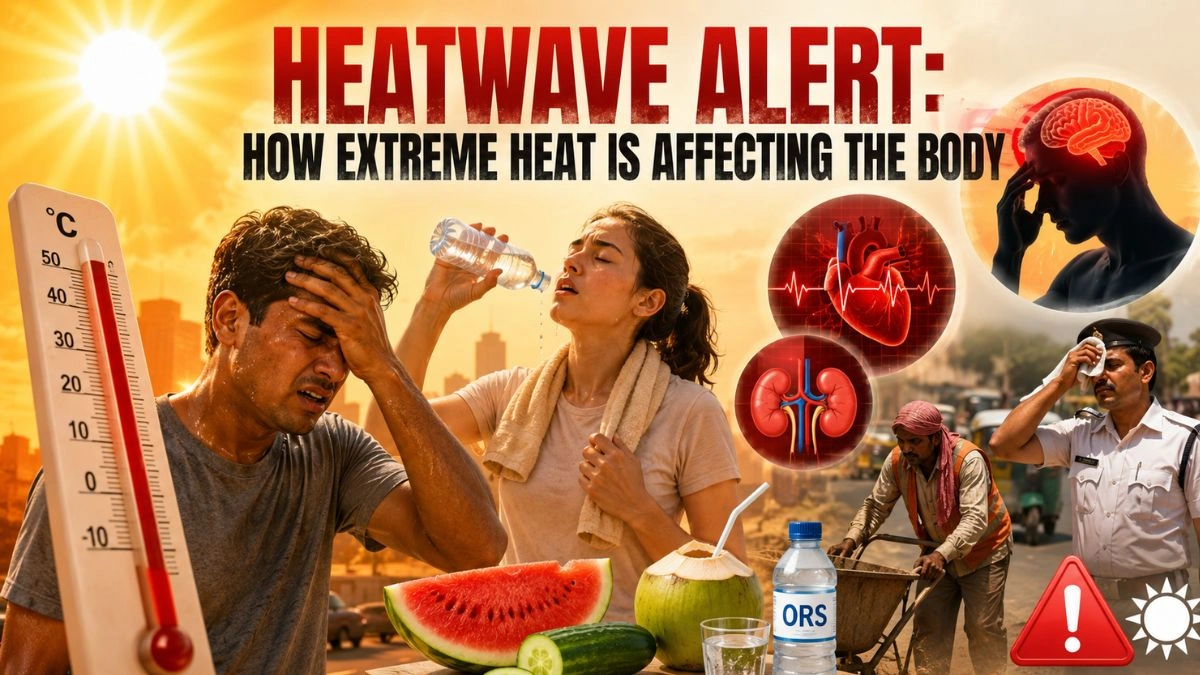
Extreme heat are affecting people’s health with dehydration, dizziness and weakness. Know the symptoms, health risks and summer safety tips
New Delhi: Extreme heat and rising temperatures across several parts of India are affecting people’s health, with many experiencing dehydration, low blood pressure, headaches and dizziness during the ongoing heatwave conditions.
Long exposure to heat can put extra pressure on the body and may even lead to serious conditions such as heat exhaustion and heatstroke if proper precautions are not taken.
The body naturally tries to cool itself during hot weather through sweating. However, excessive sweating also causes loss of water and important salts from the body. When these fluids are not replaced properly, dehydration starts affecting the body.
Dehydration has become one of the most common health problems during extreme heat. Early signs include dry mouth, excessive thirst, weakness, tiredness, headache and dizziness. Some people may also experience muscle cramps and confusion due to prolonged exposure to heat.
Severe dehydration can also lower blood pressure and reduce blood flow to important organs, increasing the risk of fainting and heat exhaustion.
Hot Weather Can Cause Low Blood Pressure
High temperatures can directly affect blood pressure levels. During extreme heat, blood vessels widen to help the body release heat and stay cool. However, this process may also lead to low blood pressure in some people, especially elderly individuals and those already taking BP medicines.
Also Read: IPL 2026 Playoffs: Full List of Teams Qualified, Matches, Venues and Final Details
Low blood pressure during summer can cause dizziness, blurred vision and sudden weakness while standing or walking. People with heart-related issues and blood pressure problems are advised to remain more careful during heatwave conditions.
Heat-Related Headaches Becoming More Common
Headaches caused by extreme heat are also becoming more common during summer. Dehydration, direct sunlight exposure and loss of salts due to excessive sweating are among the major reasons behind these headaches.
Many people experiencing heat-related headaches also complain of nausea, tiredness and difficulty concentrating. Continuous or severe headaches during extreme heat should not be ignored.
Extreme Heat Can Affect Vital Organs
Very high temperatures can also affect important organs such as the heart, kidneys and brain. During extreme heat, the body sends more blood toward the skin to cool itself down, which may reduce blood flow to internal organs.
This can increase pressure on the heart and kidneys, especially in people already dealing with health conditions. Children, elderly people, outdoor workers and people with existing medical issues are considered more vulnerable during heatwave conditions.
Outdoor Workers Face Higher Risk
Labourers, delivery workers, traffic police personnel and people working outdoors for long hours face a higher risk of dehydration and heat exhaustion during summer.
Heat exhaustion has become a common issue during extreme heat. Symptoms include heavy sweating, weakness, headache, nausea, fainting and fast heartbeat. If the body fails to cool down properly, heat exhaustion can quickly turn into heatstroke.
Heatstroke is considered a serious medical emergency and may cause confusion, seizures, extremely high body temperature and unconsciousness. Immediate medical attention becomes necessary in such situations.
Ways to Stay Safe During Extreme Heat
People are advised to drink enough water throughout the day to prevent dehydration. Waiting until thirst begins may already indicate that the body is losing fluids.
Drinks such as ORS, coconut water and lemon water can help maintain the body’s fluid and salt balance. People should also avoid going outdoors between 12 PM and 4 PM when temperatures are usually at their highest.
Wearing loose cotton clothes, using umbrellas or caps and staying in cool or shaded places can help reduce the impact of heat. Eating light meals and water-rich fruits like watermelon and cucumber may also help the body stay hydrated.
Medical help should be taken immediately if symptoms such as fainting, vomiting, breathing difficulty or very high body temperature appear. Ignoring severe heat-related symptoms can become dangerous and may seriously affect the brain, heart and kidneys.

khushisikarwar is an award-winning journalist and content creator who thrives on telling stories that matter. As a key contributor to Newsisland, [she] focus on cultural commentary, providing readers with thought-provoking insights.


