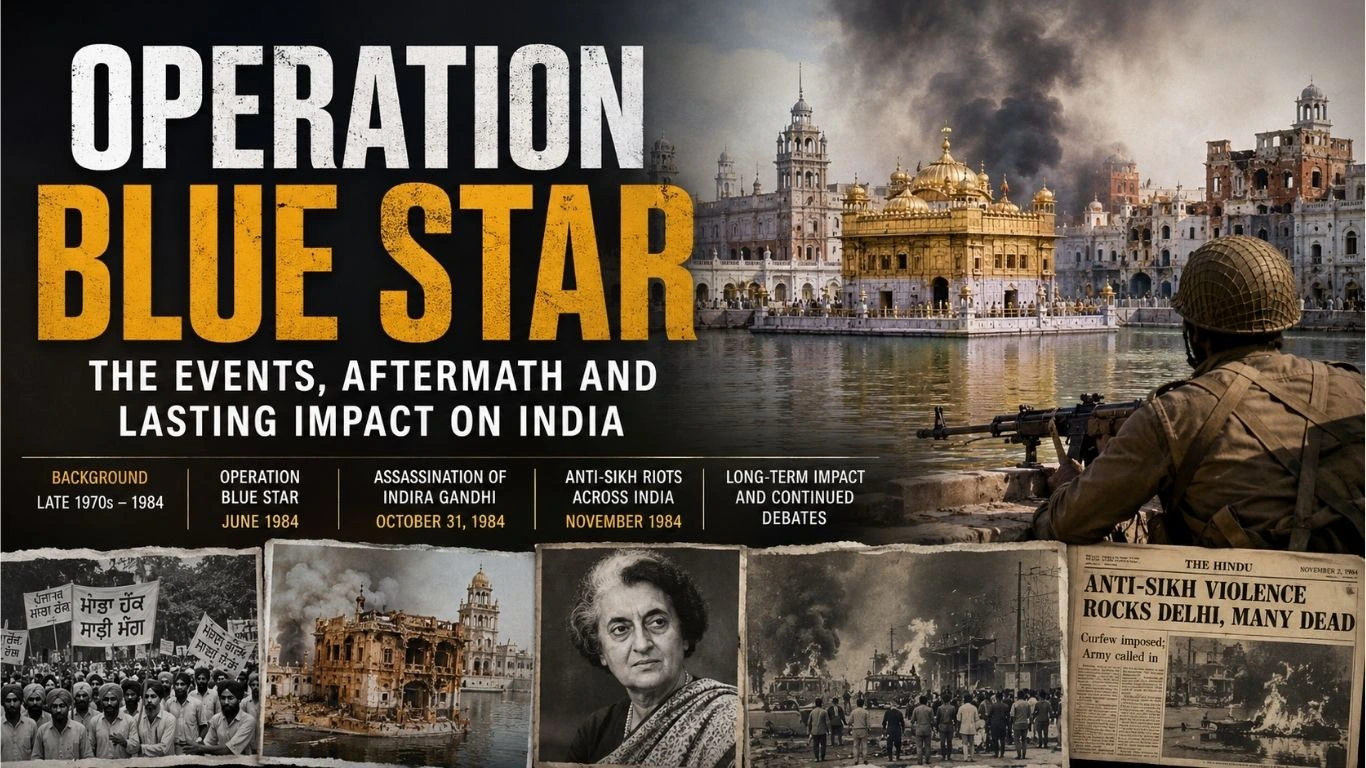
Decades later, the wounds of June 1984 remain deeply etched in India’s collective memory. Read an objective analysis of Operation Blue Star, the assassination of Indira Gandhi, and the anti-Sikh pogrom
New Delhi: Four decades later, Operation Blue Star continues to evoke strong emotions across India. For some, it was a difficult security operation carried out under extraordinary circumstances. For others, it remains a deeply painful episode that left lasting wounds within the Sikh community.
In June 1984, the Indian Army carried out a military operation inside the Golden Temple complex in Amritsar, Punjab, to flush out armed militants who had occupied the holy shrine.
The government called it a necessary step to restore law and order, but the decision and its execution left deep scars that are still felt today.
Background: Rising Tensions in Punjab
The roots of Operation Blue Star were laid in the late 1970s and early 1980s. During this time, several Sikh political and religious groups in Punjab began demanding greater autonomy, economic rights, and better protection of Sikh identity. Meanwhile, the state saw a sharp rise in militancy.
Armed groups became more active, and incidents of violence, including targeted killings and attacks on police and security forces, continued to increase. The deteriorating law-and-order situation put immense pressure on both the state and central governments.
In the middle of all this emerged Jarnail Singh Bhindranwale, a fiery religious preacher. While his supporters viewed him as a strong defender of Sikh rights, his critics accused him of promoting extremism.
Over time, Bhindranwale and his followers set up base inside the Golden Temple complex, which soon became the focal point of the entire conflict. As violence spread across Punjab, the central government faced growing calls to take strong action against the armed men holed up in the sacred complex.
Operation Blue Star
In early June 1984, the government led by Prime Minister Indira Gandhi launched Operation Blue Star. According to official statements, the objective was to remove heavily armed militants from the Golden Temple complex and restore order in Punjab.
Military action around the Golden Temple complex began on June 1, while the main assault was carried out between June 5 and June 6. Security forces entered the Golden Temple complex, where intense fighting lasted for several hours.
The militants had fortified positions inside the shrine and were well-armed. Jarnail Singh Bhindranwale was killed during the operation along with many of his followers. Several soldiers also lost their lives.
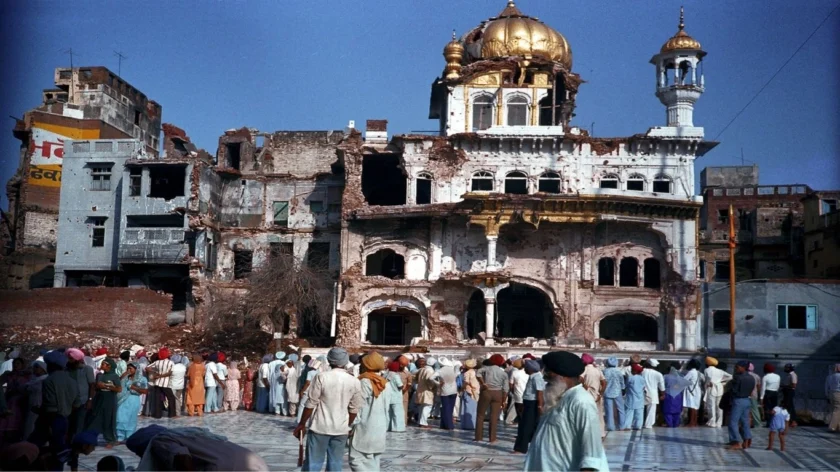
The operation caused significant damage to parts of the Golden Temple complex, including the Akal Takht, one of Sikhism’s most important institutions. Photographs showing damage to the Akal Takht spread rapidly through newspapers and television coverage, triggering anger, grief and disbelief among many Sikhs in India and overseas.
Casualties and Differing Accounts
Even today, there is no clear agreement on the exact number of casualties. Official figures and independent estimates vary widely, and this difference continues to fuel debate among historians, researchers, and human rights groups.
The government maintained that the operation was unavoidable and essential to remove the threat of armed militants. Those who supported the decision argue that the authorities had no other option left.
However, critics say that sending the army into Sikhism’s holiest place caused deep emotional and religious hurt. Many still question whether dialogue or other peaceful methods could have been tried before taking such a drastic step. As a result, Operation Blue Star continues to be viewed through different lenses depending on political, historical, and personal perspectives.
The Assassination of Indira Gandhi
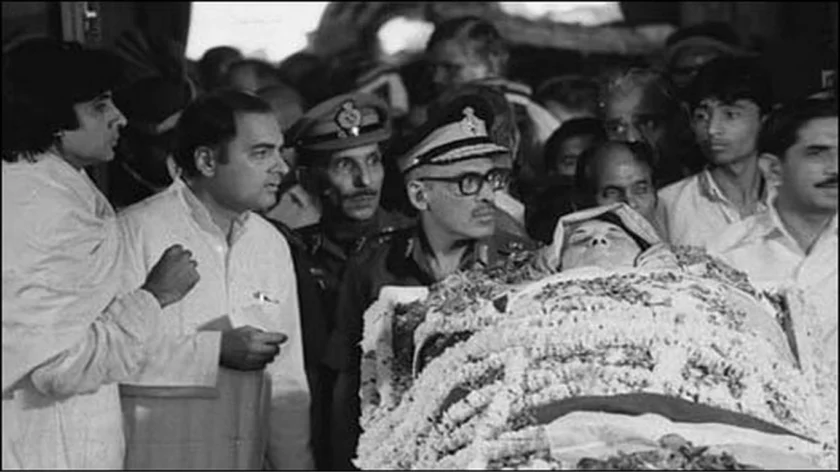
The consequences of Operation Blue Star came quickly. On October 31, 1984, Prime Minister Indira Gandhi was assassinated by two of her Sikh bodyguards at her official residence in New Delhi.
The assassination shocked the nation and marked one of the darkest moments in India’s political history. It also triggered a chain of events that would leave a lasting impact on the country.
Anti-Sikh Violence
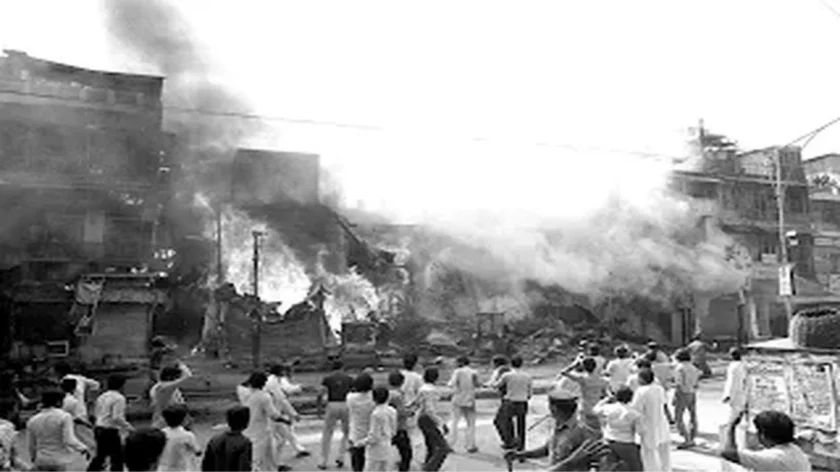
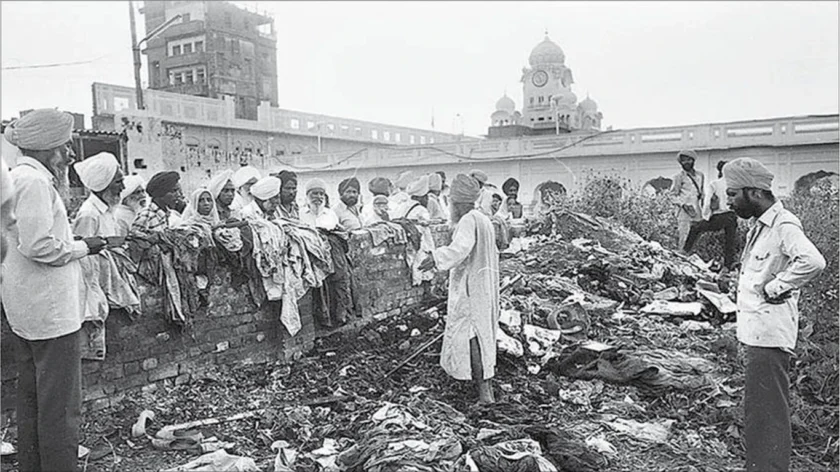
In the days that followed, organised mobs targeted Sikh neighbourhoods, businesses and places of worship in several cities. Thousands lost their lives, while many more were displaced or left traumatised by the violence.
Human rights groups and inquiry commissions have repeatedly pointed out serious failures in protecting Sikh citizens and delivering justice. Even after many years and multiple investigations, questions about accountability remain unanswered for many victims’ families.
Long-Term Impact on Punjab and Indian Politics
The years after 1984 were extremely difficult for Punjab. The state went through a long phase of militancy, counter-insurgency operations, and political instability that lasted until the early 1990s.
On a national level, the events changed how India looked at security issues, federalism, minority rights, and the relationship between religion and politics. For the Sikh community, Operation Blue Star and the 1984 violence remain deeply traumatic events that are still part of their collective memory.
A Debate That Continues
More than forty years later, Operation Blue Star is still hotly debated. Every year, its anniversary brings back strong emotions and fresh discussions about justice, accountability, and historical wounds.
While people have very different views on what happened and why, most agree that 1984 was a major turning point in India’s history, one that forced the country to confront difficult questions about governance, security, and communal harmony.