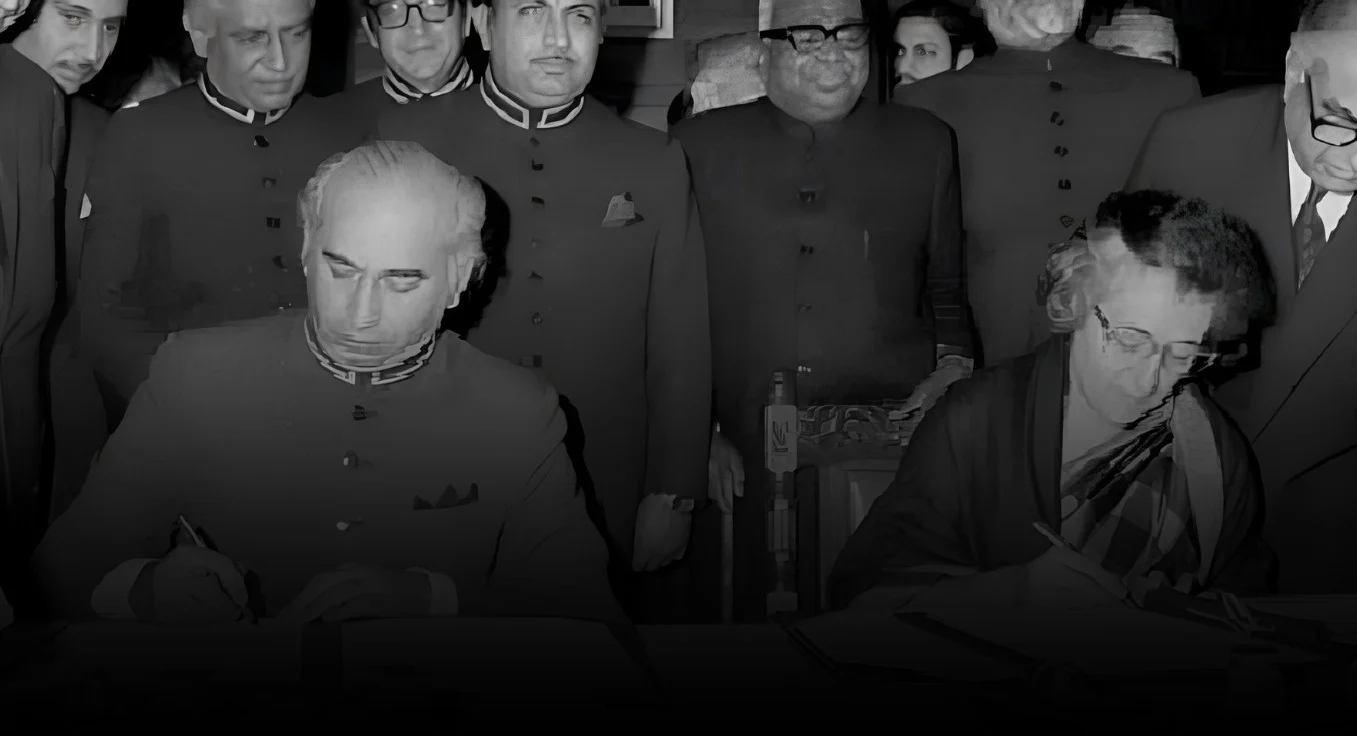
The agreement paved the way for the return of thousands of prisoners of war, civilians and displaced people after the 1971 war, marking an important step toward normalising relations in South Asia
New Delhi: August 28, 1973, holds an important place in the history of South Asia. On this day, in the aftermath of the 1971 war, the Delhi Agreement (New Delhi Agreement) was reached in New Delhi to address the humanitarian and political issues that remained between India, Pakistan and Bangladesh. One of its primary objectives was to facilitate the repatriation of prisoners of war, civilian internees and displaced people who had remained in countries other than their own after the 1971 conflict.
Although the agreement is often described on social media as a trilateral agreement signed directly by India, Pakistan and Bangladesh, historical records indicate that the August 28 agreement was formally between India and Pakistan, with Bangladesh’s concurrence. The three countries subsequently continued discussions regarding its implementation and other outstanding issues.
What Was the Situation After the 1971 War?
The creation of Bangladesh after the 1971 war resulted in a massive humanitarian crisis across South Asia. Large numbers of people found themselves separated from their homes and communities.
India was holding a large number of Pakistani prisoners of war and civilian internees. At the same time, many Bengali civilians were living in Pakistan, while Bangladesh was home to a large number of non-Bengali people, including Urdu-speaking communities, many of whom wanted to move to Pakistan.
The war had ended, but the unresolved question of prisoners, civilians and displaced populations had become a major obstacle to normalising relations between India, Pakistan and Bangladesh.
It was against this backdrop that negotiations began to find a humanitarian solution.
The Delhi Agreement Was Reached on August 28, 1973
The agreement created a framework for the parallel repatriation of three major groups.
First, Pakistani prisoners of war and civilian internees held in India were to be repatriated to Pakistan.
Second, Bengalis living in Pakistan were to be repatriated to Bangladesh.
Third, a large number of non-Bengali people in Bangladesh who had opted to move to Pakistan were to be transferred there.
The principle of simultaneous and parallel repatriation was central to the process. The return of people belonging to one group was therefore linked to the broader repatriation process involving the other groups.
The United Nations High Commissioner for Refugees (UNHCR) also played an important role in facilitating this large-scale humanitarian operation.
Why Were the 195 Pakistani Prisoners of War So Important?
One of the most sensitive issues surrounding the Delhi Agreement involved 195 Pakistani prisoners of war.
These prisoners were accused of serious crimes committed during the 1971 conflict, and Bangladesh wanted them to face trial.
Under the arrangements reached at the time, the issue of these prisoners was to be addressed through further discussions between the countries. The question became one of the most difficult diplomatic and legal issues arising from the aftermath of the war.
The matter was particularly significant because of the wider dispute over accountability for alleged war crimes during the 1971 conflict.
In April 1974, foreign ministers from India, Pakistan and Bangladesh met in New Delhi to discuss the remaining issues. Bangladesh subsequently agreed not to proceed with trials of the 195 prisoners, paving the way for their repatriation to Pakistan.
How Many People Were Repatriated?
The Delhi Agreement was not simply a prisoner exchange. It was part of a large-scale humanitarian repatriation programme involving hundreds of thousands of people.
According to United Nations records, arrangements were made for the movement of more than 200,000 people between India, Pakistan and Bangladesh.
By November 1973, UNHCR records indicated that around 70,000 people had already been transferred, while India was simultaneously carrying out the repatriation of prisoners of war and civilian internees.
Indian parliamentary records also noted that by December 1973, more than 80,000 people had returned to their respective countries.
The process continued into 1974. During discussions that year, around 6,500 Pakistani prisoners of war and civilian internees were still in India, with plans for their repatriation to be completed by the end of April 1974.
UNHCR Played a Key Role
Given the enormous scale and complexity of the operation, the United Nations was asked to assist with the repatriation process.
UNHCR played a significant role in facilitating the movement of people between Bangladesh and Pakistan, helping organise and coordinate the humanitarian aspects of the operation.
Some repatriations had already begun before the Delhi Agreement. In July 1973, for example, 452 Bengali sailors and students were transported from Karachi to Dhaka.
Following the Delhi Agreement, the process expanded considerably, eventually involving the movement of large numbers of civilians and prisoners across borders.
More Than an Agreement: An Attempt to Normalise Relations
The importance of the Delhi Agreement extended beyond the release and repatriation of prisoners.
Following the 1971 war, India, Pakistan and Bangladesh faced the difficult task of normalising diplomatic relations, resolving the problem of displaced populations and addressing the humanitarian consequences of the conflict.
The agreement represented an attempt to move the region away from the immediate consequences of war and toward a more stable political relationship.
The issue of Bangladesh’s recognition by Pakistan also became an important part of this wider process. In February 1974, Pakistan formally recognised Bangladesh. Two months later, in April, representatives of the three countries met again in New Delhi to address remaining humanitarian and political issues.
The Legacy of August 28, 1973
The Delhi Agreement of August 28, 1973, remains an important chapter in the post-1971 history of South Asia.
It came at a time when the region was attempting to move from war and confrontation toward peace, repatriation and diplomatic normalisation.
The agreement helped create a framework for the return of prisoners of war, civilian internees and displaced people, while also addressing one of the most complicated humanitarian crises created by the 1971 conflict.
However, questions surrounding the 195 Pakistani prisoners, the repatriation of non-Bengali communities and accountability for alleged war crimes remained deeply sensitive.
Even so, the Delhi Agreement stands as one of the most significant efforts after the 1971 war to reduce the humanitarian consequences of the conflict and establish a pathway toward normalising relations among the countries of the subcontinent.