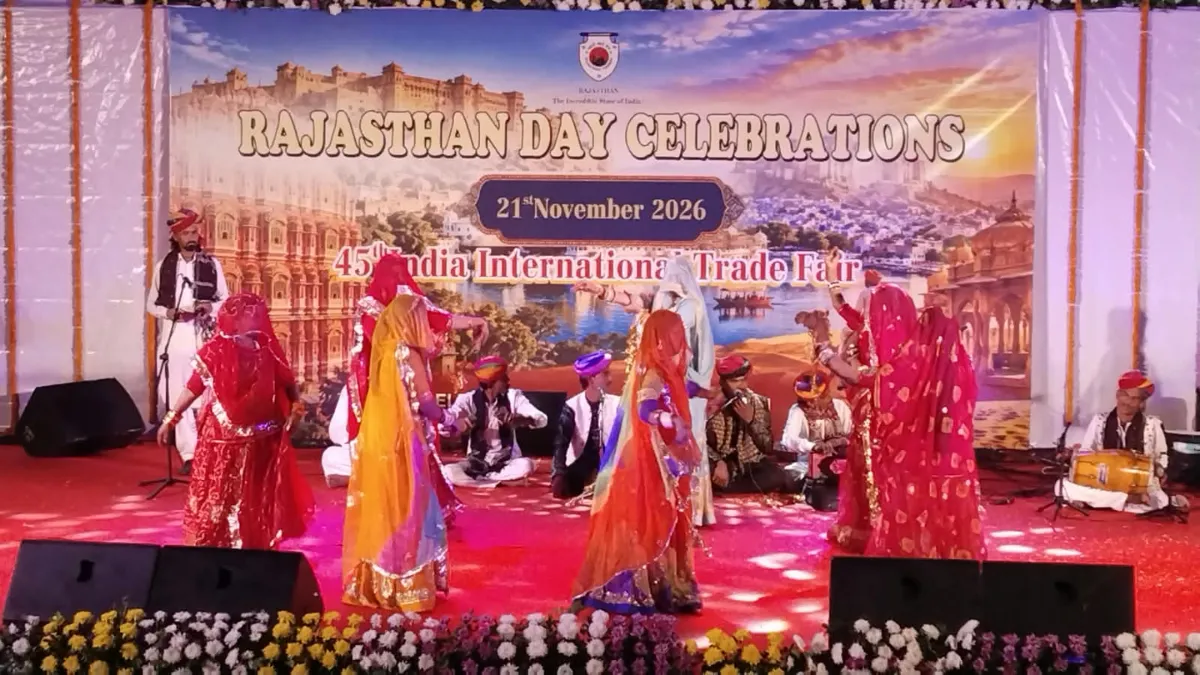
Rajasthan celebrated its rich heritage at IITF 2026 with Ghoomar, Kalbelia, Gair and Chari dances, folk music and traditional performances in New Delhi
New Delhi: Rajasthan presented its vibrant folk traditions and cultural heritage at the 45th India International Trade Fair (IITF 2026) through a special cultural evening at Pragati Maidan. Organised by the Rajasthan Tourism Department to celebrate Rajasthan Day, the programme featured traditional dances, folk music and performances by artists from different parts of the state.
The event began with the ceremonial lighting of the lamp by Principal Resident Commissioner Rohit Kumar, who attended as the Chief Guest. Harsh Sharma, Director of Rajasthan Pavilion; Dipali Sharma, Deputy Director, Tourism Department; Chhatrapal Yadav, Deputy Director (IT); and Manoj Sharma, Tourist Officer, were also present.
Traditional Dance and Folk Music Take Centre Stage
The cultural programme opened with Ganesh Vandana, followed by a Charkula dance performance by Mannu Sharma from Deeg. Hayat Khan Langa from Jaisalmer presented traditional Khartal music and folk singing, highlighting the state’s distinctive musical heritage.
Artists from across Rajasthan performed several traditional dance forms during the evening. Arushika from Kishangarh presented the Chari dance, while Zakir Khan Mewati from Alwar showcased the Bhapang instrument. Suresh Vyas from New Delhi performed Bhavai.
The audience also witnessed a Ghoomar performance by Riya Kanwar from Ajmer, Chang Daph by Gopal Gila from Churu and Gair dance by Gajendra Baniya from Barmer.
Kalbelia dance, performed by Sohan from Jodhpur, emerged as another major attraction. Vishnu Sharma from Deeg presented the traditional Mayur dance and Phoolon Ki Holi. Ashok Sharma from Dausa hosted the programme.
Rajasthan Promotes Its Cultural Heritage
Speaking at the event, Principal Resident Commissioner Rohit Kumar said the cultural evening gave tourists, traders and visitors from India and abroad an opportunity to experience Rajasthan’s folk traditions, music, art and dance forms.
He added that such programmes help bring the state’s cultural heritage to national and international platforms. They also support tourism promotion and introduce Rajasthan’s traditional art forms to a wider audience.