
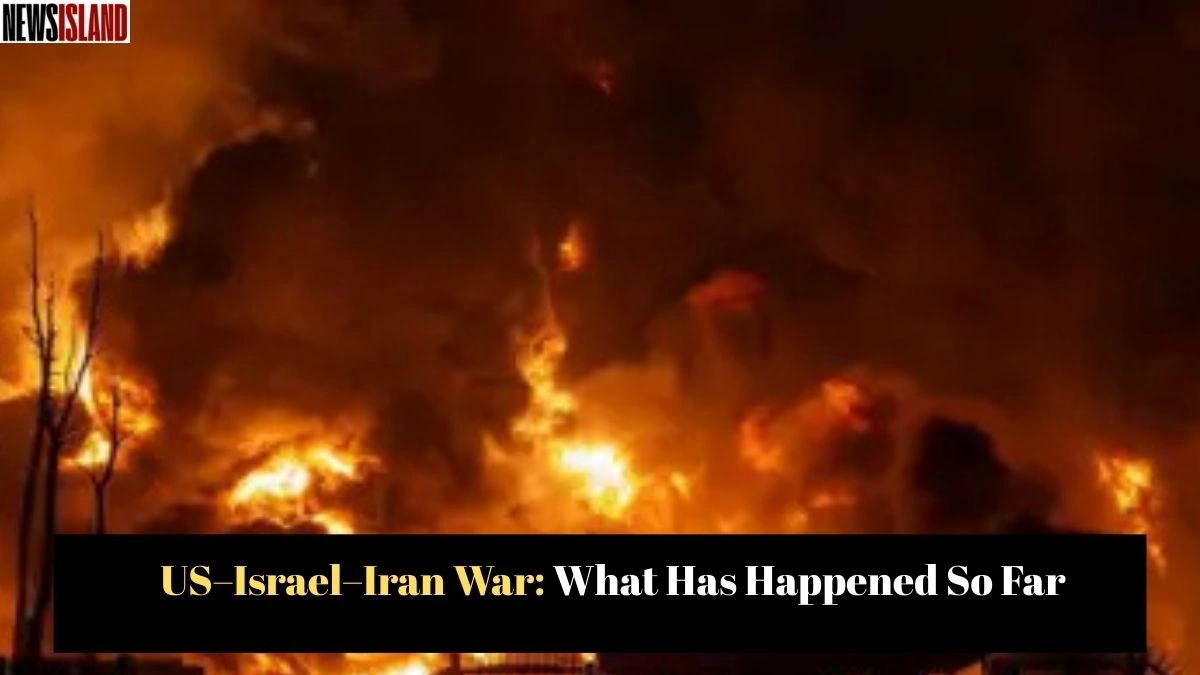
US–Israel–Iran war brings regional instability as Gulf countries face threats and airspace disruptions amid rising tensions
US–Israel–Iran: The war between the United States, Israel, and Iran has now entered its third week as of March 18, 2026. The war is still going on, with continuous airstrikes, missile attacks, and increasing destruction across the region. What began as a planned military strike has now turned into a larger regional conflict.
Here is a simple day-by-day explanation of what has happened so far, including attacks, leader deaths, casualties, and global impact.
Table of contents
- US–Israel–Iran war brings regional instability as Gulf countries face threats and airspace disruptions amid rising tensions
- How the War Started on February 28
- Day 2: Iran Fights Back, Deaths Increase
- Days 3 to 5: War Spreads to Other Regions
- Days 6 to 8: Infrastructure Attacked, Water Supply Hit
- Days 9 to 10: Strait of Hormuz Crisis and Oil Price Shock
- Days 11 to 12: Civilian Deaths Rise Sharply
- Day 13: Major Attack on Oil Facilities
- Days 14 to 15: New Supreme Leader Appointed
- Day 16: Military Becomes Most Powerful
- Day 17: Another Big Leadership Loss
- Day 18: Situation on March 18, 2026
- Leaders Killed in the War
- Total Deaths So Far
- Global Impact: Oil, LPG and Economy
- What Changed After Leaders Were Killed
- Attacks increased
How the War Started on February 28
The war began on February 28, 2026, when the US and Israel launched a large airstrike across Iran. They targeted nuclear sites, military bases, intelligence offices, and locations linked to top leaders in cities like Tehran, Natanz, and Isfahan.
This attack was planned to eliminate Iran’s top leadership in one move.
During these strikes, Ali Khamenei was killed. Moreover, many other senior officials also died. These included the Defence Minister, Armed Forces Chief, IRGC commander, and National Security head.
On the first day, around 200 to 300 people were killed. Moreover, this included civilians living near the targeted areas. The sudden loss of top leaders created confusion, and Iran quickly set up a temporary leadership system.
Day 2: Iran Fights Back, Deaths Increase
On March 1, Iran responded with missile and drone attacks on Israel and US bases in Gulf countries like Bahrain and the UAE.
Iran officially confirmed that its top leaders, including Ali Khamenei, had been killed, which shocked the country.
At the same time, the death toll in Iran quickly rose to more than 1,200 people, most of them civilians.
Iran formed a temporary leadership system, but the situation remained unstable.
Days 3 to 5: War Spreads to Other Regions
Between March 2 and March 4, the conflict spread beyond Iran. Iran attacked targets in Gulf countries, and Israel expanded its strikes to nearby areas like Lebanon.
Tensions also increased in the Strait of Hormuz, which is a very important route for global oil transport. Iran warned ships not to pass through the area, which began to affect shipping.
Civilian areas started facing more damage, and important infrastructure began to break down.
Days 6 to 8: Infrastructure Attacked, Water Supply Hit
From March 5 to March 7, the situation became worse. A major strike hit a desalination plant on Qeshm Island, cutting water supply to around 30 villages.
Also Read: Ayatollah Mojtaba Khamenei Promises Revenge, Warns Gulf Countries Amid Iran-US-Israel War
This showed that attacks were now targeting public infrastructure, not just military sites.
Shipping through the Strait of Hormuz dropped sharply, increasing concerns about global oil supply.
More civilians died as daily life became harder due to lack of water and basic services.
Days 9 to 10: Strait of Hormuz Crisis and Oil Price Shock
Between March 8 and March 9, the crisis became very serious. Moreover, Iran attacked commercial ships, and shipping in the Strait of Hormuz almost stopped.
Consequently, this had a major impact on global energy markets.
As a result, oil prices increased from around $100 to about $126 per barrel.
Furthermore, LPG and LNG supplies were badly affected in many countries.
Therefore, this became one of the biggest energy shocks in recent times.
Days 11 to 12: Civilian Deaths Rise Sharply
By March 10 and March 11, attacks on residential areas increased. Even schools were hit, causing heavy casualties.
In Iran alone, civilian deaths crossed 1,300.
Hospitals struggled to treat injured people, and the situation left many without shelter or medical help.
At this time, Iran still did not have a permanent Supreme Leader, which added to uncertainty.
Day 13: Major Attack on Oil Facilities
On March 13, US forces attacked Kharg Island, Iran’s main oil export center.
This strike damaged military and energy facilities and reduced Iran’s ability to export oil.
As a result:
Oil supply was affected again
LPG exports were disrupted
Global prices and market tension increased further
Days 14 to 15: New Supreme Leader Appointed
Around March 14 and 15, Iran appointed Mojtaba Khamenei, son of the late leader, as the new Supreme Leader.
After this, Iran took a stronger and more aggressive stand. The government declared the war very serious and focused on retaliation.
Iran also increased control over the Strait of Hormuz and warned that it could completely block oil movement.
Day 16: Military Becomes Most Powerful
By March 16, Iran’s military, especially the IRGC, became the most powerful force in the country.
With many leaders killed, the military started making major decisions. The government became stricter and more aggressive, and chances of peace talks became very low.
Even after losing many leaders, Iran’s system did not collapse.
Day 17: Another Big Leadership Loss
On March 17, a major airstrike killed Ali Larijani, who had become an important leader after Khamenei’s death.
Along with him, Basij chief Gholamreza Soleimani was also killed.
Larijani played a key role in managing the war, so his death created another major gap in leadership and planning.
Day 18: Situation on March 18, 2026
As of March 18, the war is still ongoing with continuous attacks.
Iran now has Mojtaba Khamenei as Supreme Leader, but most of the power is with the military, especially the IRGC.
The Strait of Hormuz is still heavily affected, and very few ships are passing through it.
Oil and gas supplies around the world remain under pressure.
Leaders Killed in the War
So far, more than 40 top Iranian officials have been killed.
Major names include:
- Ayatollah Ali Khamenei (Supreme Leader)
- Aziz Nasirzadeh (Defence Minister)
- Abdolrahim Mousavi (Armed Forces Chief)
- Mohammad Pakpour (IRGC Commander)
- Ali Shamkhani (Security head)
- Ali Larijani (Senior leader)
- Gholamreza Soleimani (Basij chief)
This is one of the biggest leadership losses seen in modern warfare.
Total Deaths So Far
- The war has caused heavy loss of life, especially among civilians.
- Iran: More than 2,000 deaths, including over 1,300 civilians
- Lebanon: 300+ deaths
- United States: 6 to 8 soldiers killed
- Israel: Around 10 to 15 deaths
- Total deaths across all areas are estimated to be above 3,000 or more.
- Most of those killed are civilians.
Global Impact: Oil, LPG and Economy
The Strait of Hormuz carries about 20% of the world’s oil supply. Because of the war:
- Shipping has almost stopped
- Oil prices increased from around $100 to about $126 per barrel
- LPG and LNG supplies have been disrupted
- Shipping and insurance costs have increased
- This has affected many countries, leading to higher fuel prices and supply shortages.
What Changed After Leaders Were Killed
Even after losing many leaders, Iran did not collapse. Instead:
- Power shifted quickly to the military
- A new Supreme Leader was appointed
- The government became more aggressive
Attacks increased
Internal security became stricter
After the death of Ali Larijani, decisions became more controlled by the military and less coordinated politically.
Conclusion
From February 28 to March 18, the war has changed from a targeted strike into a large regional conflict.
Key points:
- Many top Iranian leaders have been killed.
- Moreover, a new Supreme Leader has been appointed.
- Furthermore, the war has spread to other regions.
- Consequently, thousands of people, mostly civilians, have died.
- In addition, oil and LPG supplies have been badly affected worldwide.
- However, even after heavy losses, Iran continues to fight. Therefore, the situation remains very tense with no clear end in sight.
Estimated reading time: 6 minutes

khushisikarwar is an award-winning journalist and content creator who thrives on telling stories that matter. As a key contributor to Newsisland, [she] focus on cultural commentary, providing readers with thought-provoking insights.


