
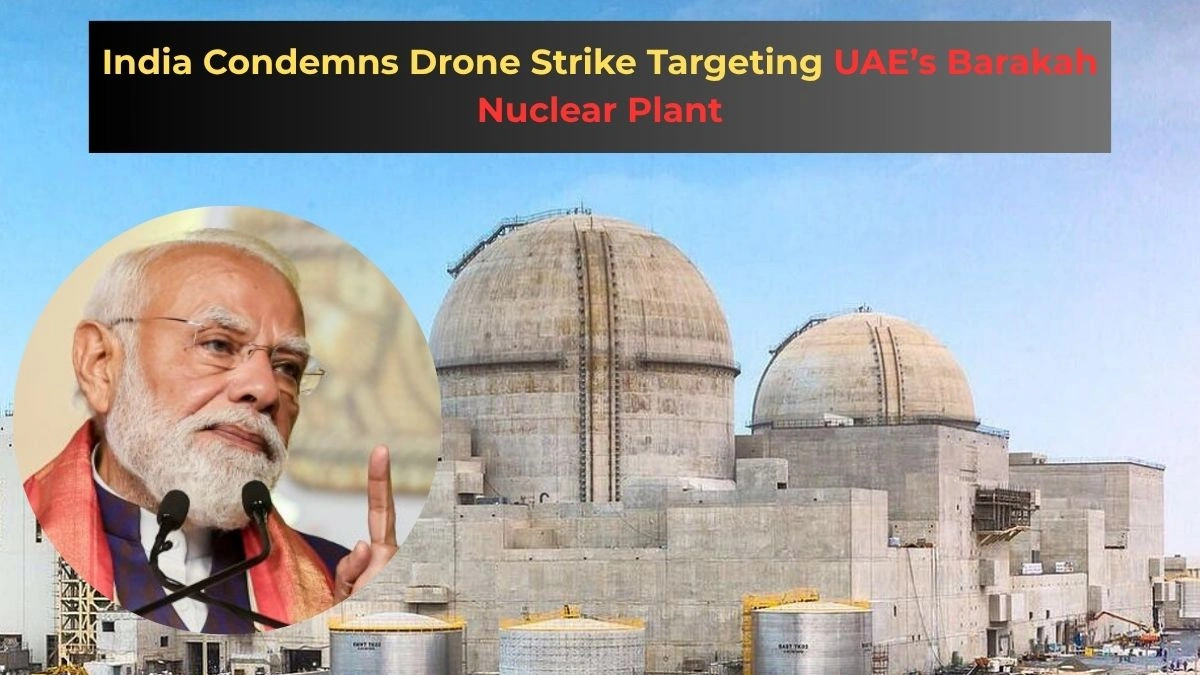
India condemned the drone attack targeting UAE’s Barakah nuclear plant while Trump warned Iran that “the clock is ticking.”
New Delhi: 18 May 2026
India strongly condemned the drone attack targeting the UAE’s Barakah Nuclear Power Plant and called the incident a “dangerous escalation” at a time when tensions are already rising across the Gulf region.
India’s Ministry of External Affairs (MEA) issued a statement, saying it was deeply concerned about the attack. The ministry warned that targeting sensitive nuclear infrastructure could seriously affect regional peace and international security.
The MEA said such attacks were unacceptable and appealed to all sides to avoid further escalation. India also urged countries involved in the conflict to return to dialogue and diplomacy.
What Happened Near the Nuclear Facility
The attack took place late on May 17 when three drones reportedly entered UAE airspace from the western border side.
According to UAE authorities, air defense systems intercepted two of the drones successfully. However, the third drone managed to hit an electrical generator located outside the secure perimeter of the Barakah Nuclear Power Plant in Abu Dhabi’s Al Dhafra region.
Officials said the strike caused a fire near the facility, but reactor operations were not affected. Authorities also confirmed that radiation levels remained normal and there were no casualties or radioactive leaks after the incident.
Also Read: KKR vs GT: Can Kolkata Stop Gujarat’s Winning Momentum?
Why the Barakah Plant Is Important
The Barakah Nuclear Power Plant is the first nuclear energy facility in the Arab world and is considered one of the UAE’s most important strategic projects.
The plant is located around 200 kilometers west of Abu Dhabi and has four reactors that supply a major share of the country’s electricity needs.
Experts and security analysts warned that any military activity near nuclear facilities is extremely risky, even if the reactors themselves are not directly damaged. They said attacks near such sites could increase instability in the region and create serious long-term security concerns.
UAE Blames Iran-Linked Groups
The UAE strongly condemned the attack and indicated that Iran or Iran-backed proxy groups could be responsible, although investigations are still continuing.
Emirati presidential adviser Anwar Gargash described the strike as a “dangerous escalation” and accused those behind the attack of violating international laws and putting civilian lives at risk.
UAE Foreign Minister Sheikh Abdullah bin Zayed Al Nahyan also informed the International Atomic Energy Agency (IAEA) about the incident.
IAEA Expresses Serious Concern
The International Atomic Energy Agency reacted with concern and repeated that nuclear facilities should never become targets during conflicts.
IAEA Director General Rafael Grossi reportedly expressed grave concern over the attack and said military operations threatening nuclear infrastructure were “unacceptable.”
The agency said radiation levels around the Barakah facility remained stable after the strike. However, it warned that continued instability in the region could lead to unpredictable and dangerous consequences.
Rising Tensions Across the Region
The drone attack came at a time of increasing tensions involving Iran, Israel, the United States and several Gulf countries.
Reports suggest that diplomatic efforts to revive ceasefire talks and broader regional negotiations have slowed in recent weeks.
US President Donald Trump also reacted strongly after the incident. He issued a sharp warning to Iran through a post shared on X, by the account @TrumpTruthOnX saying, “For Iran, the Clock is Ticking, and they better get moving, FAST, or there won’t be anything left of them. TIME IS OF THE ESSENCE!”
Several Gulf countries, including Saudi Arabia, Kuwait and Qatar, condemned the drone strike and expressed support for the UAE.
Saudi Arabia also reported intercepting drones entering its airspace from Iraq around the same time, increasing fears that the conflict could spread further across the region.
Governments in the Gulf are worried that continued escalation could threaten critical energy infrastructure, shipping routes and civilian facilities.
Why India’s Response Matters
India’s response is being seen as important because of its close strategic, economic and energy ties with Gulf countries.
Millions of Indians live and work in the Gulf region, including in the UAE. India also depends heavily on West Asia for oil supplies and trade routes.
New Delhi has consistently supported peace, dialogue and stability in the region while maintaining balanced relations with different countries involved in the conflict.
India’s strong statement reflects growing international concern over attacks involving nuclear-related infrastructure and the serious risks such incidents pose to regional and global security.

khushisikarwar is an award-winning journalist and content creator who thrives on telling stories that matter. As a key contributor to Newsisland, [she] focus on cultural commentary, providing readers with thought-provoking insights.


