New Delhi: Two weeks before what would have been his golden jubilee birthday, India’s shooting fraternity celebrates the legacy of a trailblazer whose fingerprints remain on the country’s biggest Olympic moments. one man shaped the sport’s modern history.
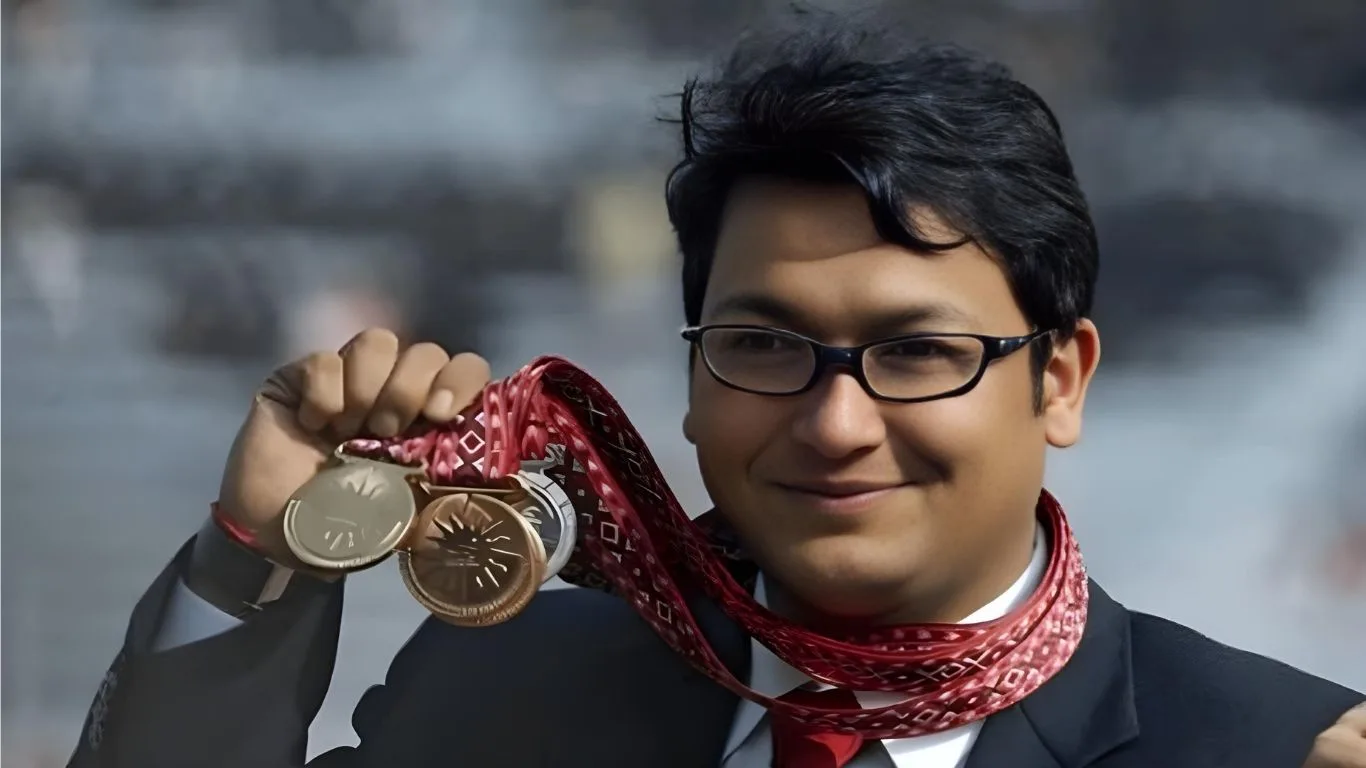
As a competitor, Jaspal Rana became the most successful Indian shooter in Commonwealth Games history. As a coach, he played the pivotal role behind Manu Bhaker’s historic double-bronze campaign at Paris 2024—a feat that made her the first Indian athlete in independent India to win two medals at a single Olympic Games.
The Trailblazer from the Hills
Born on June 28, 1976, in Uttarkashi, Uttarakhand, Rana grew up in an environment where discipline came first. At a time when shooting was a niche, largely inaccessible sport in India, a teenage Rana displayed an extraordinary natural gift for the pistol.
His breakthrough came in 1994. At just 18, he won gold at the Asian Games and claimed the Junior World title in the 25m standard pistol in Milan—results that captured the imagination of a country still years away from recognizing shooting as an Olympic priority.
The honors followed quickly: the Arjuna Award that same year, and the Padma Shri in 1997. Rana didn’t just walk a path in Indian sport—he cleared one for everyone who came after him.
The Golden Standard of Grit
Between 1994 and 2006, Rana became one of the most consistent medal-winners Indian sport has produced. Across four editions of the Commonwealth Games—1994, 1998, 2002, and 2006—he won 15 medals: 9 gold, 4 silver, and 2 bronze, a tally that still stands as the best by any Indian athlete in Commonwealth Games history.
His best single outing came at the 2002 Manchester Commonwealth Games, where he claimed six medals. He also added 8 Asian Games medals, including 4 gold, to his collection. His competitive masterpiece came at the 2006 Doha Asian Games, where, at 30 and competing in his fourth Asian Games, he swept three gold medals and a silver—one of the finest performances of his career in the 25m centre-fire pistol event.
Also read: Not Cristiano Ronaldo! Meet the Oldest Player to play in FIFA World Cup 2026
The Architect of Champions
After retiring from competition, Rana moved into coaching and quickly built a reputation as a no-nonsense mentor with zero tolerance for distraction. He kept his shooters away from social media and drilled into them a simple philosophy: anyone can shoot well on a good day, but a champion is defined by how they perform on a bad one. For his work as a mentor, he received the Dronacharya Award in 2020, India’s highest honor for coaches.
Over the years, he coached a string of India’s top pistol shooters, including Saurabh Chaudhary, Anish Bhanwala, and Chinki Yadav. His most consequential partnership, though, was with Manu Bhaker. Rana began coaching her in 2018, when she was a teenage prodigy, and the two parted ways before the Tokyo Olympics. They reunited in 2023 with a shared focus on the Paris 2024 Games.
Manu Bhaker has often credited that reunion as the turning point of her career. Reflecting on their partnership, she once said that seeing Rana in the lane gave her courage and confidence, and made her feel she could never give up. Under his guidance, she went on to win two bronze medals at the Paris Games, a result widely seen as validation of Rana’s coaching philosophy and his decades of work building India’s pistol-shooting culture.
A Legacy That Outlasts the Man
Tributes have continued to pour in from across Indian sport, underscoring just how far Rana’s influence reached. Five-time Olympian and Beijing gold medalist Abhinav Bindra, Rana’s former teammate, called him intense and gifted—a shooter who carried the pride of the country every time he stepped onto the range, and someone who helped shape an entire generation of Indian shooting.
As his birthday approaches, the conversation around Jaspal Rana isn’t just about the medals on his shelf—it’s about the medals he helped others win, and the mindset he instilled in a sport that didn’t always believe it could compete with the world. The fire he lit in 1994 is the same one that continues to burn on Olympic podiums today—an enduring legacy not just of personal achievement, but of a sporting culture transformed into believers.
Also read: 10 of the Weirdest Football Fan Celebrations That Prove Passion Knows No Limits