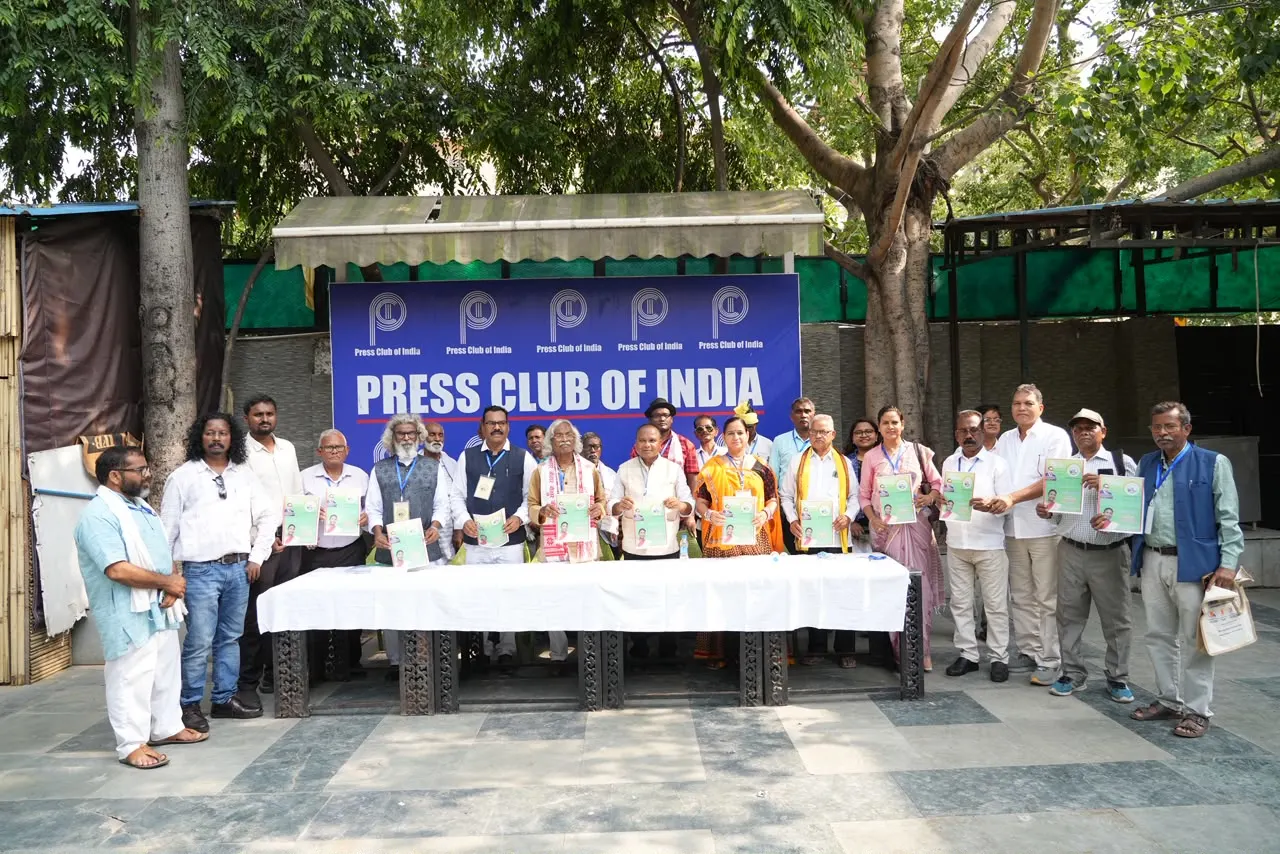
New Delhi: Seeking greater constitutional recognition and protection for India’s tribal communities, the Democratic Assembly of Representative Body for Adivasi Rights (DARBAR), which represents Adivasi organisations across the country, on Friday presented a 21-point memorandum to President Droupadi Murmu outlining key constitutional, cultural and administrative demands.
The press conference was led by Surya Singh Besra, prominent tribal leader, political activist, Founder Secretary of the All Jharkhand Students Union (AJSU) and founder of the Jharkhand People’s Party (JPP). Representatives from tribal communities across Rajasthan, Jharkhand, Assam, Chhattisgarh, Madhya Pradesh, Maharashtra, Gujarat, Odisha, Bihar and West Bengal participated in the event, presenting a united voice on issues affecting Adivasis across the country.
Addressing the media, Besra said the memorandum, addressed to the President of India on behalf of nearly 20 crore Adivasis, seeks recognition of tribal identity through constitutional and democratic means. He said the organisation’s demands are aimed at protecting the constitutional rights, cultural heritage and identity of indigenous communities.
The 21-point charter includes demands for a separate religion code for Adivasis in the upcoming Census, recognition of India’s indigenous tribal identity, preservation of tribal languages and cultures, proper implementation of the Forest Rights Act and the Panchayats (Extension to Scheduled Areas) Act (PESA), recognition of tribal freedom fighters in India’s Independence movement, Scheduled Tribe status for Assam’s Tea Tribes, protection of tribal land and forests, implementation of constitutional safeguards, and greater participation of tribal communities in decision-making processes.
Besra said if elected tribal representatives fail to raise constitutional issues concerning Adivasis in Parliament and state legislatures, DARBAR will intensify its democratic movement across the country. He said the organisation would review the role of tribal MPs and MLAs elected from reserved constituencies and mobilise public opinion if constitutional safeguards and tribal rights continue to be ignored.
Expressing concern over the condition of tribal communities, Besra alleged that Adivasis continue to face displacement, exploitation and, in some cases, are wrongfully branded in the name of extremism. He called for strict implementation of constitutional protections available to Scheduled Tribes.
Dr. Heera Meena from Rajasthan said the demand for a separate tribal religion code is about preserving the distinct identity of India’s indigenous communities.
“Every recognised religion in the country has its own identity. Tribal communities also have their own independent faith, traditions and cultural practices. We appeal to the President to ensure that Adivasis are given a separate religion column in the Census so that every tribal community can record its own religious identity. This is essential for protecting the identity and dignity of nearly 20 crore Adivasis,” she said.
Dr. Meena also appealed to President Droupadi Murmu, India’s first tribal President, to take historic steps towards safeguarding the constitutional rights and identity of tribal communities during her tenure.
The representatives also demanded that the contribution of tribal freedom fighters and uprisings before 1857 receive due recognition in India’s history.
The memorandum further calls for implementation of UNESCO’s International Decade of Indigenous Languages (2022–2032), preservation of India’s indigenous languages and support for tribal scripts, including Santali’s Ol Chiki script.
Prem Shahi Munda from Jharkhand said DARBAR has been conducting awareness campaigns and public meetings across the country, including Jantar Mantar in New Delhi, Nashik, Asansol, Raipur and other locations, to raise issues concerning tribal communities.
He said Adivasis should not be referred to as “Vanvasi”, arguing that they are the indigenous people of India with their own distinct faith, culture and traditions.
“We are Adivasis and followers of nature-based traditions. We should not be identified as Vanvasi. We have our own identity, heritage, culture and faith, and that identity deserves constitutional recognition,” he said.
The conference was also addressed by Vishwanath Wakade (Maharashtra), Smt. Rekha Soren (Bihar), Bhuvan Singh Koram (Madhya Pradesh), Manoranjan Mahali (Jharkhand), Praveen Pargi (Gujarat), and Ram Chandra Hansda (Odisha), who highlighted state-specific challenges faced by tribal communities and called for greater protection of constitutional rights.
The programme concluded with a vote of thanks by senior journalist Rakesh Kumar Singh of Jamshedpur, who coordinated the conference and thanked representatives from across the country and members of the media for participating in the dialogue on issues concerning India’s tribal communities.
DARBAR said its 21-point memorandum, addressed to the President of India, seeks recognition of tribal identity while strengthening constitutional protections and urged the President, the Central Government and state governments to take timely action through constitutional and democratic processes.