New Delhi: FFor generations, Indian women managed their periods with folded cloth. They washed it quietly, dried it indoors, and rarely spoke about it openly. Cloth was one of the earliest period products available, but it came with health risks when not cleaned properly. Cloth stored in dark, damp spaces can breed bacteria and fungi. Reusing it without thorough washing and drying in direct sunlight increases the risk of skin infections, irritation, and other hygiene-related problems that many women accepted as a normal part of menstruation.
The arrival of disposable sanitary pads transformed menstrual hygiene for millions of women. They no longer had to wash cloth or hide it from view. Disposable pads offered convenience, comfort, and better hygiene. They quickly became one of the most widely used period products in India because they were easy to use and increasingly affordable.
Today, however, convenience is no longer the only factor women consider when choosing the best period products. Questions about health, environmental impact, long-term cost, and sustainability are becoming just as important. Researchers are now comparing different menstrual products—including sanitary pads, menstrual cups, reusable cloth pads, period underwear, and tampons—to understand which options perform best in everyday life.
The Plastic Problem Behind Disposable Period Products
A major international study published in the journal Cleaner Environmental Systems in 2022 compared the complete environmental impact of seven different period products across India, France, and the United States. It was the first study of its kind to include India alongside Western countries, making its findings especially relevant for one of the world’s fastest-growing markets for disposable menstrual products.
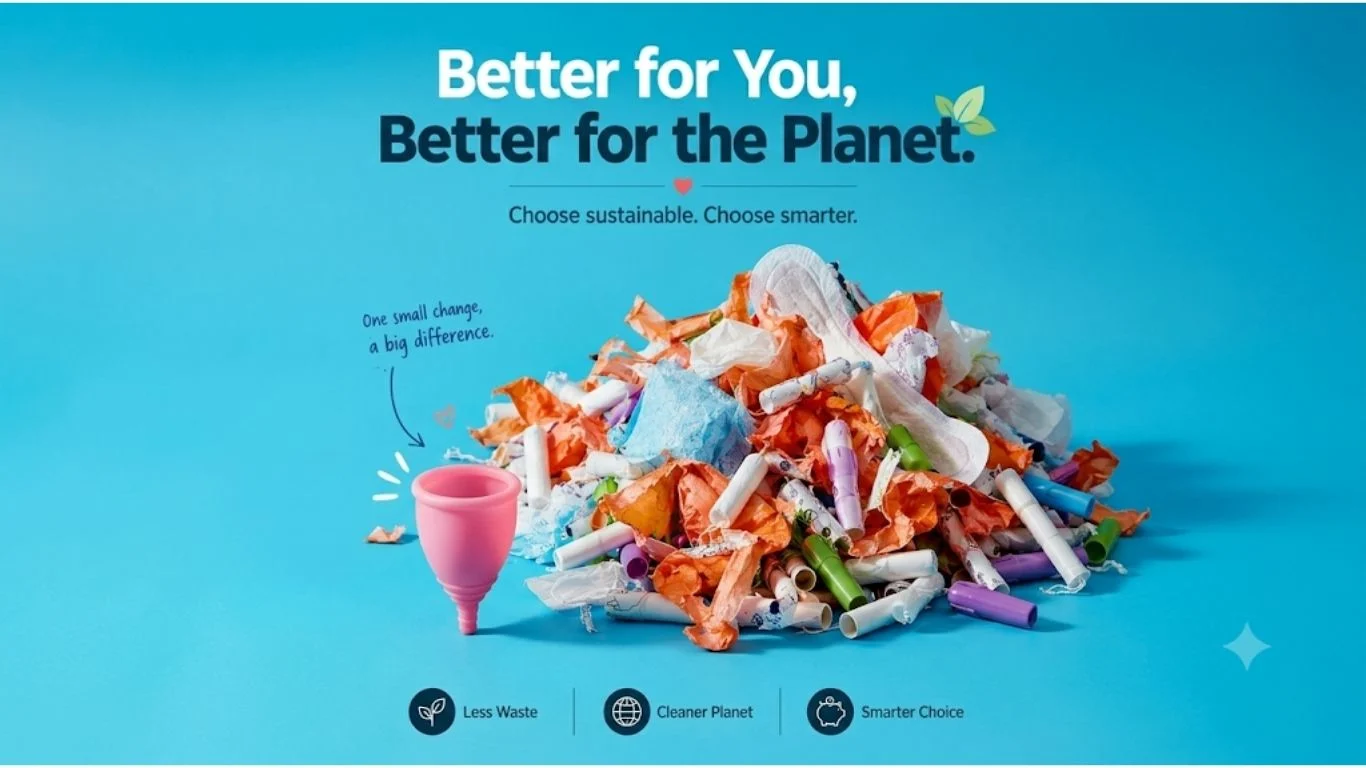
The findings about disposable sanitary pads are difficult to ignore. Conventional sanitary pads contain roughly 90 percent plastic. The backing layer, absorbent core, wings, adhesive, and packaging all contribute to that figure. Every pad thrown away adds plastic waste roughly equal to four plastic bags. Unlike a plastic bag, however, a sanitary pad can take between 500 and 800 years to break down in landfill conditions.
In India, around 76 percent of discarded sanitary pads end up in landfills. Much of this waste is never properly treated because waste management systems remain inadequate, particularly in smaller cities and rural areas. As disposable period products become more popular, their environmental impact continues to grow.
Are Organic Pads Among the Best Period Products?
Many consumers assume organic sanitary pads are automatically better for the environment. The 2022 study challenges that assumption.
Researchers found that organic disposable pads performed worse than conventional disposable pads in five of the eight environmental categories they measured. These included land use, freshwater toxicity, carcinogenic effects, acidification, and eutrophication—the process where excess nutrients from farming enter water bodies and damage aquatic ecosystems.
The main reason is cotton. Organic pads contain between 75 and 80 percent cotton by weight. Although organic farming avoids synthetic pesticides, growing cotton still requires large amounts of land and water. According to the researchers, organic cottonseed production accounted for more than 90 percent of the land-use impact and carcinogenic effects, around 80 percent of ecotoxicity, and more than 97 percent of eutrophication linked to these products.
The findings suggest that an organic label does not automatically make a product environmentally friendly. In this study, organic disposable pads ranked below conventional disposable pads across several environmental measures.
Also read: C-Section Account for One in Three Cases of Postpartum Haemorrhage, Lancet Series Finds
Best Period Products Ranked
Before looking at why each product ranks differently, here is how the study compared the best period products. The rankings remained consistent across India, France, and the United States.
- Menstrual Cup
- Period Underwear
- Reusable Cloth Pads
- Disposable Non-Organic Tampons
- Disposable Non-Organic Sanitary Pads
- Disposable Organic Sanitary Pads
Menstrual Cup
The menstrual cup ranked first because a single cup can last for several years. Since users do not need to replace it every month, manufacturing and waste remain significantly lower than with disposable products.
Period Underwear
Period underwear ranked second. Researchers found that its overall environmental impact stays low because it functions as both regular underwear and menstrual protection. Since most people would purchase underwear anyway, only the additional environmental impact of its menstrual protection was considered.
Reusable Cloth Pads
Reusable cloth pads ranked third and outperformed every disposable option. They do require washing after each use, so water and electricity contribute to their environmental footprint. The study found that machine washing caused around 16 percent more freshwater pollution than disposable pads in India.
However, hand washing with minimal water and drying the pads in direct sunlight significantly reduces both environmental impact and bacterial growth.
Disposable Tampons
Disposable tampons ranked fourth. They generally use less plastic than sanitary pads, but many applicators contain non-recyclable plastic. Each applicator adds another two to three grams of plastic waste.
Disposable Sanitary Pads
Conventional sanitary pads ranked fifth. Their high plastic content and the large number used over a lifetime contribute heavily to greenhouse gas emissions and fossil fuel consumption.
Researchers also examined combinations of different period products because many women use more than one option during their cycle. Across all three countries, the combination of a menstrual cup and period underwear consistently produced the lowest environmental impact.
What This Study Doesn’t Tell You About Your Health
Environmental impact is only one part of the picture when choosing the best period products.
Separate studies have found substances such as phthalates, dioxins, and endocrine-disrupting chemicals in some disposable sanitary pads and tampons. These chemicals can interfere with hormone function. Since menstrual products remain in contact with highly absorbent skin for several hours, researchers believe this area deserves more investigation.
The authors of the 2022 environmental study also acknowledged that standard life-cycle assessments cannot fully evaluate product safety or long-term health effects.
Menstrual cups have been linked to very few reported cases of toxic shock syndrome compared with tampons, although users must still follow proper hygiene practices.
None of this proves disposable pads are unsafe for every woman. Instead, it highlights the need for greater transparency from manufacturers and more research into product ingredients.
Cost Matters Too
Cost also plays a major role when choosing the best period products.
An average Indian consumer spends roughly ₹2,500 every year on disposable sanitary pads. A menstrual cup usually costs between ₹500 and ₹1,000 but can last for nearly ten years. Spread across its lifespan, that works out to only ₹100 to ₹250 per year. Reusable cloth pads also become inexpensive after the initial purchase.
Although India removed GST on menstrual products in 2018, reusable products remain considerably cheaper over the long term than relying entirely on disposable options.
Not Everyone Has the Same Choices
Choosing the best period products also depends on access and lifestyle.
Using a menstrual cup requires clean running water, private sanitation facilities, and time to become comfortable with the product. In many communities where menstruation remains surrounded by stigma, these conditions are not always available.
Cultural beliefs also influence menstrual choices. Concerns about virginity, limited awareness, and hesitation toward internal products continue to prevent many women from trying menstrual cups or tampons.
Period poverty remains another challenge. For women who struggle to afford any menstrual products, environmental sustainability often becomes a secondary concern. Expanding sanitation infrastructure, improving awareness, and making menstrual products more affordable remain equally important.
Which Is the Best Period Product for You?
There is no single answer that suits every woman.
Comfort, menstrual flow, lifestyle, affordability, access, and personal preference all influence the right choice. The study does not recommend that everyone switch to one product. Instead, it offers a clearer understanding of the environmental impact associated with each option.
For women looking to reduce waste, reusable period products such as menstrual cups and reusable cloth pads clearly outperform disposable alternatives.
If switching completely feels overwhelming, even introducing one reusable product into your monthly routine can make a meaningful difference. Reducing disposable period products—even gradually—helps lower both long-term costs and the amount of menstrual waste sent to landfills.