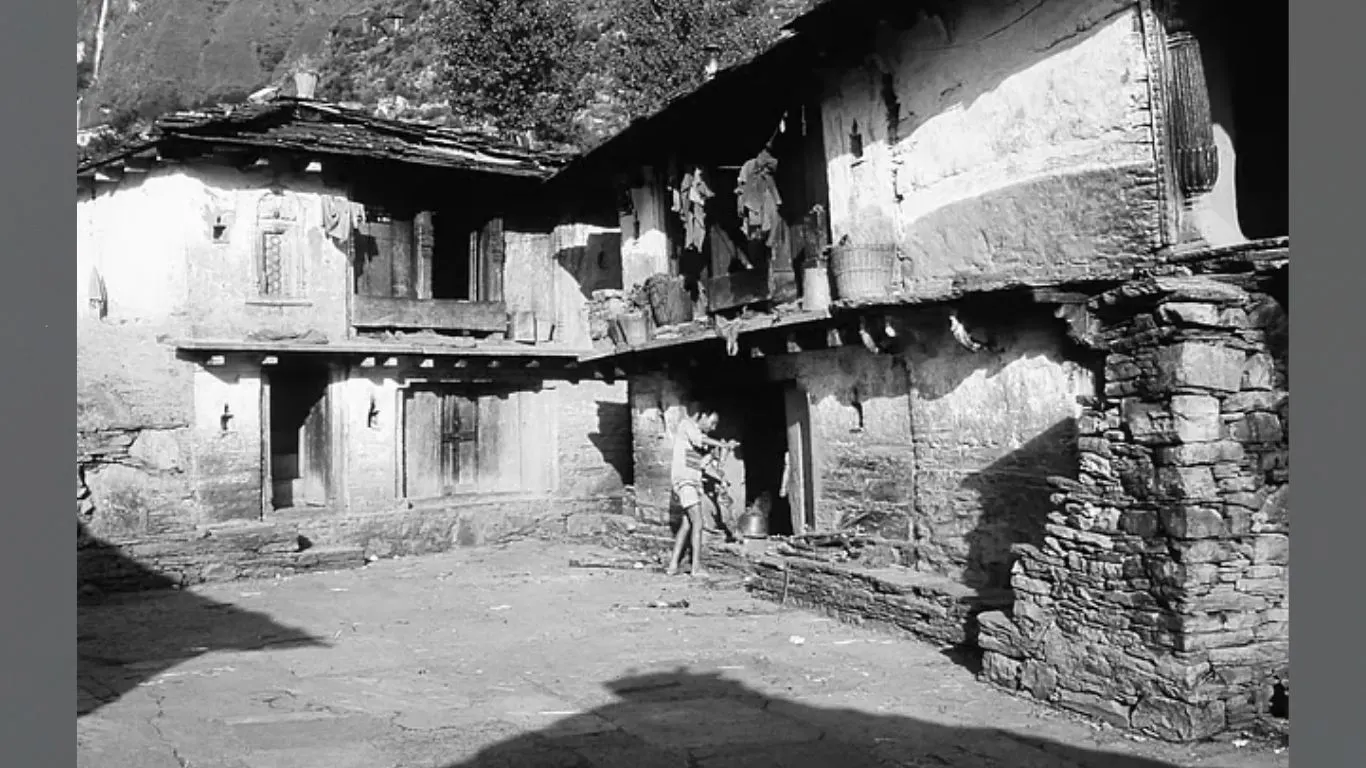
New Delhi: Every year, millions of travelers journey to Uttarakhand in search of faith, peace, or high-altitude adventure. They return home with photographs of ancient temples and majestic peaks. What many never see is the reality faced by the people who call these mountains home—a reality increasingly defined by shrinking opportunities, environmental strain, and the quiet emergence of ghost villages of Uttarakhand.
The truth is stark: the people born to this land are leaving. Not temporarily for seasonal work, but permanently. They are locking their ancestral homes and walking away from land their families have cultivated for generations. While Devbhoomi (the Land of the Gods) remains a bustling hotspot for outsiders, it is rapidly losing the very people who have kept its culture alive.
The Locked Doors of Devbhoomi: Inside the Ghost Villages of Uttarakhand
The numbers tell a story that no tourism brochure will ever print. The phenomenon of ghost villages of Uttarakhand—settlements left entirely uninhabited due to mass migration—has escalated drastically over the last two decades.
- The Data: According to the 2011 Census of India, 1,048 villages were already completely abandoned.
- The Current Crisis: Recent records from the state government and the Uttarakhand Rural Development and Migration Prevention Commission show that this figure has surged to between 1,700 and 1,800 ghost villages, with some estimates now approaching 2,000.
- The Human Outflow: Between 2018 and 2022, the Migration Commission recorded approximately 3.3 lakh people migrating out of the hills, with over 28,000 leaving permanently.
These are no longer just young men heading to the plains for temporary jobs. Entire families are pulling their children out of mountain schools and moving to Dehradun, Haridwar, or Delhi to build a life from scratch. The drivers are systemic: a total lack of reliable roads, accessible hospitals, quality schools, and sustainable employment, compounded by a history of delayed policy responses.
Joshimath: When Development Overburdens a Fragile Ecosystem
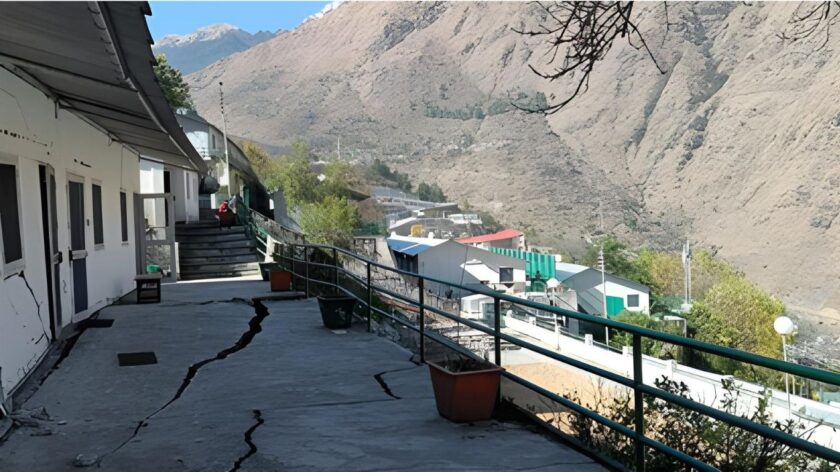
The crisis of the ghost villages of Uttarakhand is deeply tied to how infrastructure is managed in geologically fragile zones. Joshimath, situated at 6,000 feet, serves as the critical gateway to Badrinath and the Auli ski resort. For decades, its economy thrived on the relentless influx of pilgrims and tourists.
However, warnings were ignored for half a century. As early as 1976, the Mishra Committee Report explicitly warned that Joshimath sat on unstable ancient landslide debris in a highly active seismic zone. Heavy construction went unchecked regardless.
The Sinking Ground
In January 2023, the ground literally gave way. Deep cracks tore through hundreds of homes and roads, forcing mass evacuations. Satellite data released by India’s National Remote Sensing Centre (ISRO) revealed the terrifying speed of the subsidence:
- April – November 2022: Joshimath sank 8.9 centimeters.
- Dec 27, 2022 – Jan 8, 2023: In just 12 days, it sank an additional 5.4 centimeters.
Despite government relief packages and building restrictions, long-term rehabilitation housing remains severely insufficient. Faced with a lack of viable alternatives, some families moved back into homes declared unsafe, while many others made the harder choice—they joined the exodus, abandoning the town permanently.
The Pilgrimage Economy and Its Hidden Ecological Cost
The sheer volume of tourism places unprecedented pressure on the state’s environment. In 2025, the Char Dham Yatra drew over 51 lakh pilgrims to Kedarnath, Badrinath, Gangotri, and Yamunotri.
Peak Strain: In 2026, daily visitor counts at Kedarnath alone crossed 32,000 people—extraordinary numbers for a high-altitude ecosystem never designed to absorb such density.
To sustain this traffic, the Char Dham road-widening project has undergone extensive blasting and slope-cutting across roughly 825 to 890 kilometers of highways. Environmental experts have repeatedly warned that these heavy-engineering interventions significantly increase landslide risks and disrupt natural drainage systems.
During the monsoon, these vulnerabilities turn deadly. Roads wash away, landslides bury farmland, and remote villages are cut off for weeks. While tourism generates seasonal revenue, it has failed to fix the chronic lack of year-round healthcare, educational stability, and basic infrastructure for local residents.
Climate Change and the Governance Gap
The emergence of ghost villages of Uttarakhand is being further accelerated by climate change. Scientists have documented shifting rainfall patterns, increased climate variability, extreme weather events, and rapid glacier retreat across the Himalayan region. These environmental stressors trigger acute water scarcity and agricultural failure, making traditional mountain livelihoods nearly impossible to sustain.
Despite continuous petitions, protests, and warnings from environmentalists and locals alike, policy responses have consistently lagged behind the accelerating degradation.
A Land Leaving Itself: The Cultural Loss
When a village becomes a “ghost village,” the loss extends far beyond empty brick and mortar. Mass outmigration is dismantling the cultural fabric of the Central Himalayas. As these communities empty out, centuries of heritage hang in the balance:
- Language: The slow erasure of unique local dialects of Garhwal and Kumaon.
- Knowledge: The loss of traditional agricultural practices and indigenous ecological knowledge.
- Community: The collapse of ancient folk traditions and community institutions that cannot be replicated in urban plains.
The Path Forward
The people of Uttarakhand built a resilient civilization in one of the harshest landscapes on earth. They deserve infrastructure built to last, accessible medical care, functional schools, and a governance model that proactively mitigates disasters rather than reacting after the damage is done.
Until tourism is balanced with ecological realities and basic civic rights for locals, the doors of Devbhoomi will continue to lock, one by one. Travelers will keep arriving in search of the divine, while the locals quietly pack what they can carry—leaving behind empty valleys and the vanishing history of Uttarakhand’s hills.
Also read: Raji Tribe of Uttarakhand: One of India’s Smallest Indigenous Communities