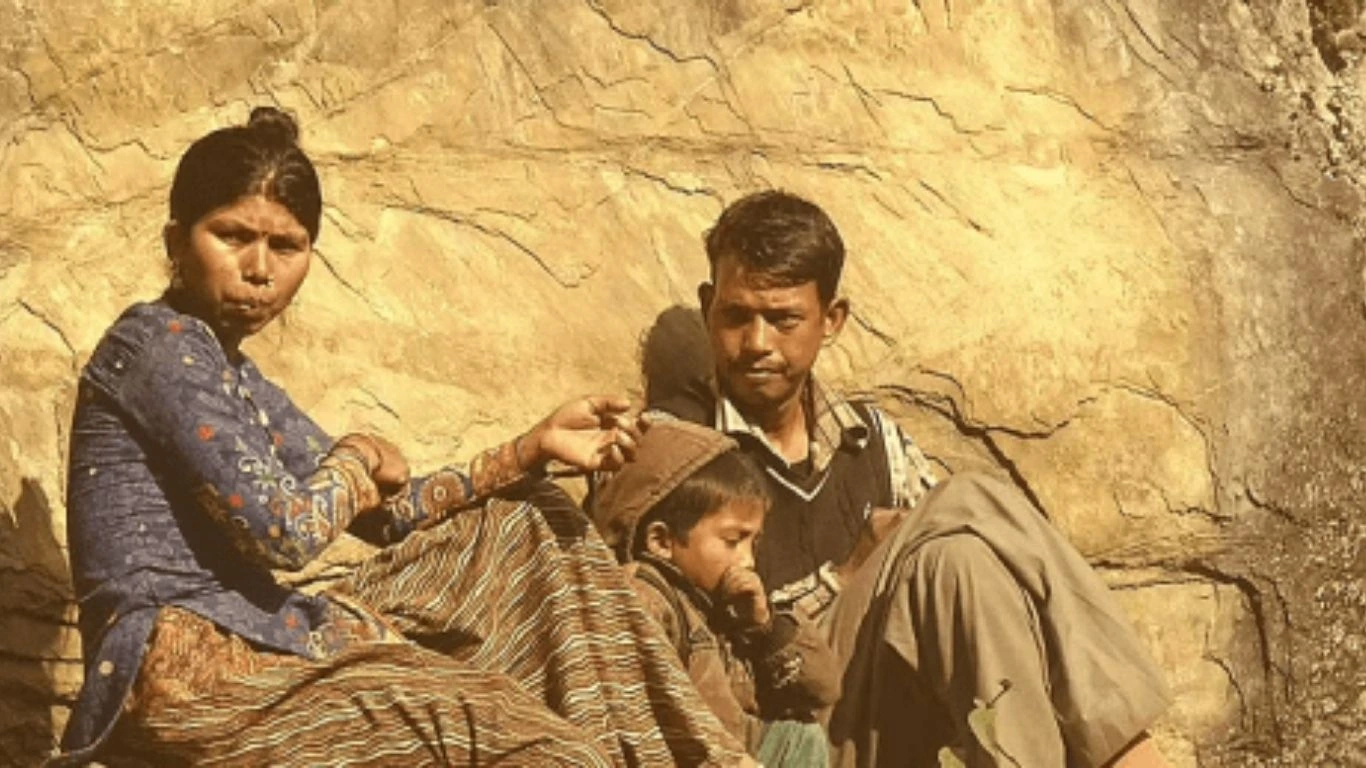
India is home to hundreds of tribal communities, but only 75 are classified as Particularly Vulnerable Tribal Groups (PVTGs) — communities considered especially at risk because of their small populations, low literacy levels, fragile livelihoods and limited access to basic services. Among them is the Raji tribe of Uttarakhand, one of the country’s smallest indigenous communities, with fewer than 1,100 people remaining.
Living primarily in Pithoragarh and Champawat districts, the Raji have undergone dramatic social and economic changes over the past few decades. A petition before the Uttarakhand High Court has recently drawn attention to the community’s limited access to healthcare, education and basic services, while researchers and community advocates warn that the Raji language, traditional knowledge and cultural practices face an uncertain future.
Who Are the Raji People?
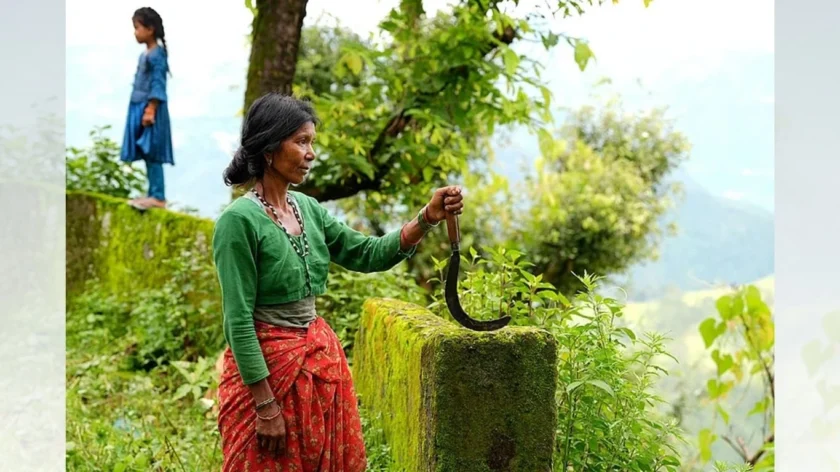
The Raji, also known as Van Raji, Banrawats or Van Rawat, live primarily in the eastern parts of Pithoragarh district and parts of Champawat. The names are generally understood to mean “people of the forest. A small number also live across the border in western Nepal, where the 2011 census recorded 4,235 Raji speakers, though researchers note significant overlap and undercounting across both countries.
The Indian government classifies the Raji as a Particularly Vulnerable Tribal Group (PVTG) — a category reserved for communities that combine a pre-agricultural way of life, a declining population, low literacy, and a subsistence-level economy. The Raji are also recognised as a Scheduled Tribe, making them eligible for a range of constitutional protections and welfare programmes. Community oral traditions trace their ancestry to a Rajput prince who is said to have chosen life in the forest after being exiled from his homeland.
From Forest Nomads to Settled Villages
For most of recorded history, the Raji lived as nomadic hunter-gatherers. They hunted porcupine and bats, dug wild yams known locally as Dioscorea, and gathered tubers, fruits and medicinal plants according to the season. Their shelters were lightweight and temporary, built quickly and abandoned when the group moved on. Death often triggered relocation, as a dwelling was considered spiritually impure after a community member died.
A Life Largely Hidden From Outsiders
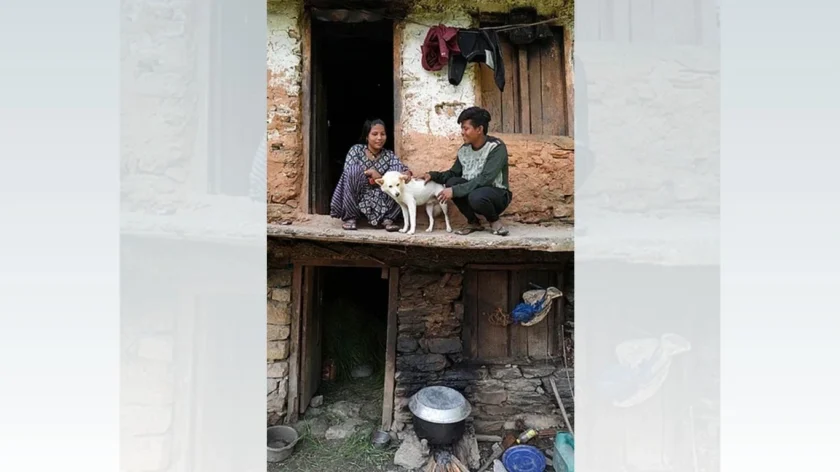
Trade provided the Raji’s main connection with the outside world. Craftsmen carved wooden bowls, ploughshares and building planks, which they exchanged with Bhotiya traders along trans-Himalayan trade routes. Oral traditions also describe the Raji as a highly secluded community.
During periods of food scarcity, some families reportedly left bundles of firewood, handmade wooden items or forest produce outside village homes at night. Villagers would leave grain or other essentials in return, allowing exchanges to take place without direct contact. Though remembered mainly through oral histories, these accounts reflect the isolation that once characterised Raji life in the forests of Kumaon.
That changed in the 1980s, when the Government of India began resettling Raji families into permanent villages. The programme aimed to improve access to schools, farmland and healthcare. Many families now cultivate small plots and keep livestock. However, researchers note that the transition from forest nomadism to settled agriculture occurred within a single generation, while many promised services arrived slowly or remained inadequate.
Villages such as Kimkhola and Bhagtirwa in Askot Wildlife Sanctuary remain closely connected to the community’s traditional relationship with the land. Yet their location inside a protected wildlife area has also brought restrictions on hunting, gathering and other forest-based practices that once formed the foundation of Raji life.
Keeping Traditions Alive
For the Raji, culture is not preserved in textbooks or archives. It survives through memory, daily practice and oral tradition. Elders pass down stories of migration, forest life and ancestry through conversation rather than written records. Folk songs, local legends and traditional knowledge of the forest have long served as a living repository of community history.
Marriage customs also reflect a distinct social identity. Traditionally, weddings are community affairs and do not necessarily require the involvement of priests. The community itself witnesses and validates the union. Older accounts of Raji life also describe strong kinship networks and collective decision-making, where elders played an important role in resolving disputes and guiding social customs.
Many traditional beliefs remain closely tied to nature. Forests, winds, mountains and local spirits occupy an important place in the Raji worldview. These beliefs coexist with elements of Hindu practice, creating a religious tradition that is both unique and adaptive.
Researchers who have worked with the community warn that language loss threatens more than communication. As fewer young people learn Raji, knowledge embedded within the language—including stories, ecological knowledge and cultural practices—also becomes vulnerable. For a community with limited written documentation, every fluent elder represents a living archive.
An Endangered Language
The Raji speak Raji, a Tibeto-Burman language that linguists classify within the Raji-Raute subgroup of the Sino-Tibetan family. In Pithoragarh, speakers call it Bat-Kha. In Champawat, they say Bot-Kha. Linguists assign it the ISO code rji, placing it in the same small language cluster as the Raute language spoken in Nepal.
The language has no widely used writing system and no formal teaching institution. Younger Raji now grow up bilingual in Hindi and Kumaoni, which gives them access to education and employment but accelerates the erosion of the mother tongue.
Researchers and community advocates say documentation efforts remain limited. A handful of academic papers have recorded vocabulary and grammatical structures, but community members and researchers alike say this falls well short of what a genuine preservation effort would require.
The Case Before the High Court
The Uttarakhand State Legal Services Authority’s petition highlighted poor access to basic services in Raji settlements across Pithoragarh and Champawat. It pointed to limited healthcare facilities, a lack of nearby schools, missing legal documents such as identity cards and land records for many residents, and concerns over the implementation of the Forest Rights Act, 2006.
The Uttarakhand High Court directed the state government to improve infrastructure and service delivery in Raji areas. However, community advocates say progress on the ground remains slow. The petition argued that gaps in healthcare, education and documentation continue to affect the community’s access to welfare schemes and other government benefits.
Traditional Knowledge at Risk
Among the Raji’s most valuable cultural assets is their knowledge of medicinal plants and forest ecology. Community elders identify roots that reduce fever, bark preparations that treat skin wounds, and tubers with anti-inflammatory properties. Researchers who have spent time in Raji communities describe this pharmacological knowledge as detailed, highly localised, and built over generations of direct observation of the Kumaon Himalayan ecosystem.
Much of this knowledge survives through oral tradition, passed from one generation to the next through direct instruction and practice. As forests shrink, as elders die, and as younger Raji spend more time in schools and towns, each generation inherits less of this store of knowledge than the last. Researchers documented this erosion in a 2024 study, finding that many plant uses known to elderly Raji community members were already unknown to adults in their thirties and forties.
Development workers have responded by organising workshops that teach Raji families modern horticultural and cultivation techniques, with the goal of helping them grow medicinal plants more reliably and potentially sell them as a commercial crop. Participants have responded positively, but the programmes remain small and dependent on external funding.
Beliefs Rooted in the Forest
The Raji practice a form of religion that does not map neatly onto any established category. They worship supernatural beings that inhabit the forest and the sky. A wind deity called Daru travels along the breeze. A spirit called Latiya Bar can cause a person to lose the power of speech. The weather itself carries spiritual agency.
These beliefs sit alongside, rather than against, Hindu practice. Raji families sometimes refer to ancestral deities using Hindu terms like Isht or Bhaiyar when speaking in front of outsiders, while maintaining their own theological vocabulary at home.
Calls for Action
Organisations working with the Raji community have identified three immediate priorities. The first is legal: full implementation of the Forest Rights Act, which would give Raji families formal title to the land they occupy and legal protection for their forest use. The second is infrastructural: health centres and schools within accessible distance of Raji villages. The third is cultural: a funded, community-led documentation project for the Raji language, before the last generation of fluent elders dies.
Over the decades, the Raji have experienced major social and economic changes, including resettlement, shrinking forest access and declining use of their language. With fewer than 1,100 people remaining, community advocates say efforts to improve healthcare, education and language preservation can no longer be delayed.