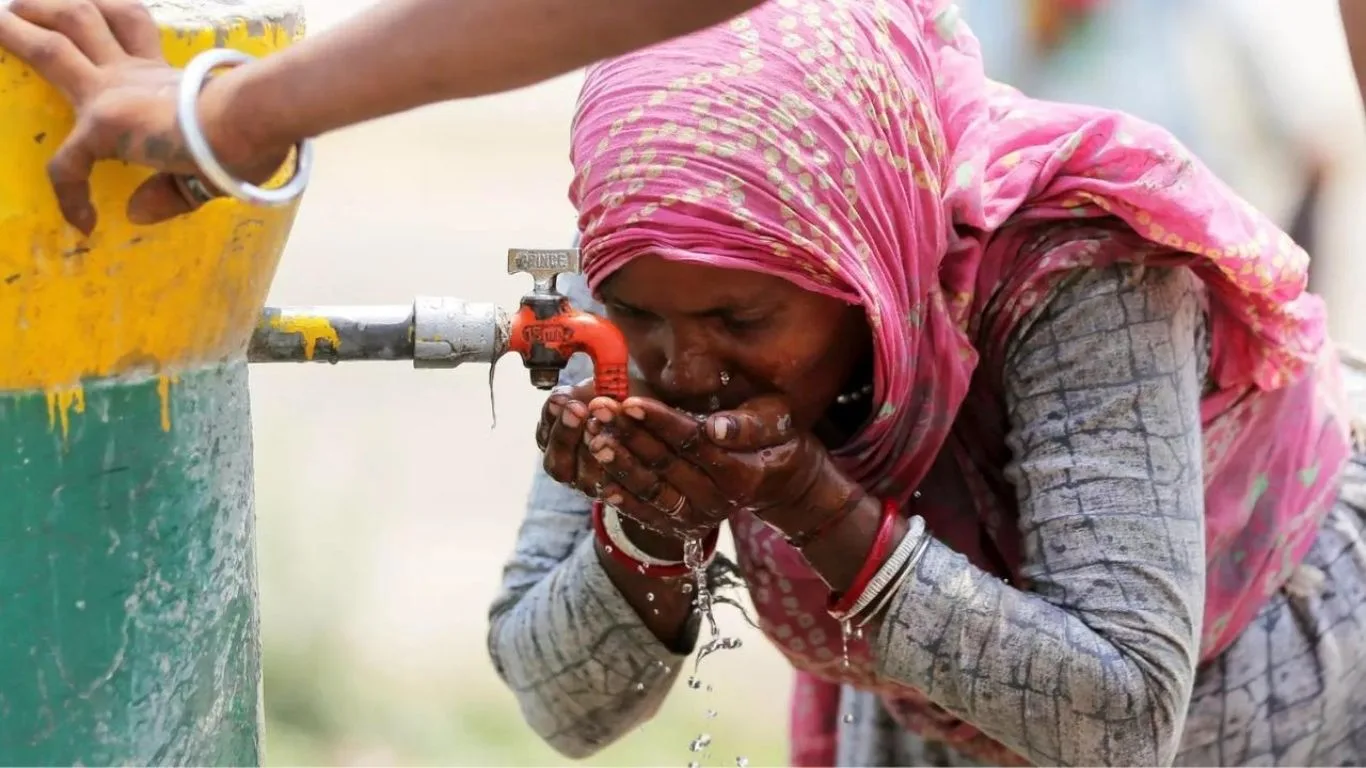
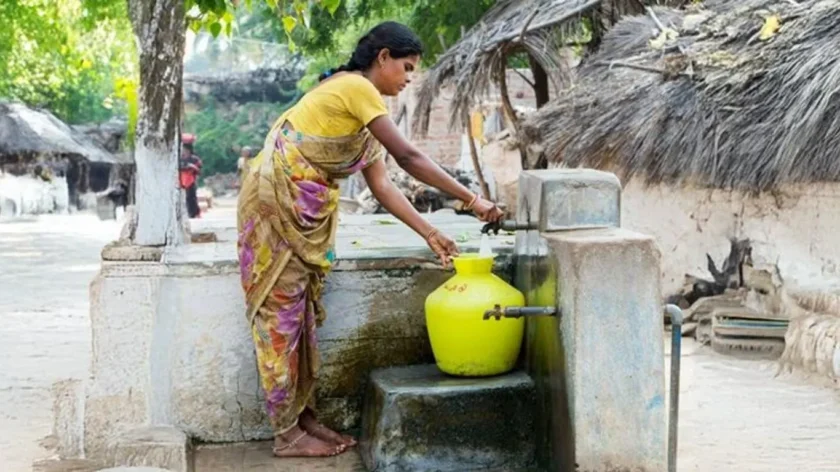
New Delhi: India has spent the past seven years putting tap-water connections into millions of rural homes. But having a tap is not the same as having a reliable water supply. Since the launch of the Jal Jeevan Mission, rural household tap-water coverage has risen sharply, crossing 81% from just 16.7% in 2019. Yet government surveys, audits and investigations suggest that the real challenge now lies beyond installation: ensuring that these connections actually deliver clean, safe and regular water.
As the mission moves towards its extended 2028 deadline, questions around non-functional connections, incomplete projects, weak procurement and alleged corruption are becoming increasingly important. The numbers show impressive progress, but the bigger question is whether that progress is translating into a dependable service for rural households.
Tap Connections Don’t Always Mean Reliable Water
Jal Jeevan Mission was never designed merely to put a tap inside every rural home. Its stated service standard is 55 litres of potable water per person per day, supplied regularly and meeting prescribed quality standards. The distinction between infrastructure and actual service is where the biggest gap appears.
A government-commissioned Functionality Assessment covering nearly 2.37 lakh rural households across 19,812 certified “Har Ghar Jal” villages in 761 districts found that 98.1% of surveyed homes had tap connections. But only 76% met all functionality standards covering quantity, quality, and regularity of supply.
Only around 80% of households received the minimum 55-litre quantity norm, while about 76% received water considered safe. Just 83% reported receiving water through their taps at least once in the seven days before the survey. In simple terms, roughly one in four households with a tap could not reliably count on receiving water that met all the mission’s standards.
A village can receive the designation once the required infrastructure and household connections are in place. But a pipeline and a tap do not automatically mean a dependable water supply. Ground reporting from Mahoba district in Uttar Pradesh illustrated this gap.
The official JJM dashboard showed 100% household tap coverage across 385 villages, while on-ground checks found villages where central pipelines were missing and some homes had neither pipes nor taps. These have been described as “paper taps” — infrastructure recorded in official systems but not necessarily functioning on the ground.
The problem, therefore, is not simply how many taps have been installed, but whether those connections actually translate into a reliable public service.
Questions Over Infrastructure and Project Execution
The gap becomes even more significant when we examine how authorities award and execute JJM projects. CAG performance audits across states have repeatedly flagged weaknesses in tendering, contractor selection, documentation, and implementation.
In Karnataka, a CAG audit examining the mission’s implementation against its original 2024 target found problems with tendering transparency. Auditors examined 9,342 single-bid tenders and found that 791 carried tender premiums exceeding 5%. They also found that authorities awarded thousands of projects without adequately assessing contractors’ technical capabilities.
The audit further found that several districts had not implemented tripartite agreements designed to establish accountability among district missions, gram panchayats and village water committees.
The state government defended some of these decisions by citing time constraints. But the broader concern remains: when authorities create infrastructure through weak procurement and accountability systems, how sustainable can the resulting water network be?
Jharkhand’s audit raised similar concerns. In a sample of 39 tenders, auditors found that authorities had awarded seven to the same contractor or agency. They also flagged documentation gaps and suspected collusion in several cases. One contractor won a ₹54-crore tender despite submitting complete financial accounts for only two of the five years required.
In Chhattisgarh, auditors flagged a different problem: funding and sustainability. The Centre released no funds during 2025-26 to complete existing schemes, while around 90% of the state’s single-village schemes relied on groundwater sources whose long-term sustainability authorities had not adequately assessed.
National execution data highlights the scale of the challenge. Authorities sanctioned 6,38,550 piped water supply schemes across India, but completed only about 86,447, leaving the rest under implementation. In Maharashtra alone, nearly 22,000 of around 51,000 approved schemes remained incomplete as of 2026, with funding and execution constraints cited among the reasons.
Rajasthan Jal Jeevan Mission Scam
In Rajasthan, an alleged ₹960-crore Jal Jeevan Mission scam has led to arrests involving senior political and bureaucratic figures. The Rajasthan Anti-Corruption Bureau, followed by the CBI and Enforcement Directorate, has alleged that two contractors — Shree Ganpati Tubewell Company and Shree Shyam Tubewell Company — used forged experience certificates purportedly issued by IRCON International to qualify for tenders from the state Public Health Engineering Department.
Investigators have also alleged that the firms bought stolen material from Haryana for JJM works and paid bribes to secure tenders, clear bills and cover up irregularities. The probe later expanded up the administrative and political chain.
Retired IAS officer Subodh Agarwal, a former Additional Chief Secretary, was arrested in 2026 after a two-month, multi-city manhunt spanning more than 100 locations across 21 cities. Authorities have also attached assets worth more than ₹11 crore.
The confirmed case involves hundreds of crores, while analysts tracking the wider alleged tender-manipulation network estimate that contracts worth as much as ₹20,000 crore may have been affected.
A separate policy research report recorded more than 17,000 complaints involving procurement lapses and missing infrastructure across Rajasthan and Uttar Pradesh. Rajasthan is not alone. In Gujarat, audits identified a taxpayer loss of ₹120.65 crore, prompting authorities to debar 112 agencies and arrest nine people, even as the state continued to report strong coverage figures.
The Government Has Acknowledged the Gaps
The Centre itself has acknowledged that the mission still faces complaints and incomplete delivery. In the Rajya Sabha in March 2026, Union Jal Shakti Minister C.R. Patil said the Centre had received around 18,000 complaints under the mission and that action had been taken against more than 1,000 officials.
He also acknowledged that water had still not reached homes in several areas. The Centre’s position, however, is that primary responsibility lies with state governments because water supply is a state subject. States are responsible for preparing detailed project reports, tendering, execution and much of the implementation process.
The Centre’s response has increasingly shifted towards making future funding conditional on stronger verification. Proposed measures include state-level MoUs, unique scheme identification numbers and proof of 15 continuous days of water supply before certification. That represents an important change in emphasis: from counting connections to verifying service.
The Challenge of Maintaining the Water Supply?
Even where authorities successfully build infrastructure, maintenance remains a major challenge. Pipelines break. Pumps fail. Borewells dry up. Groundwater levels fall. Water sources become contaminated. Without regular testing, repairs and funding, a working connection can eventually become useless.
Karnataka offers a clear example of the gap between coverage and functionality. The state pursued “Har Ghar Jal” status, but a functionality survey found that 42% of rural households did not have fully functional tap connections. Concerns over contaminated water and related illnesses have added to the pressure.
Experts have repeatedly highlighted the same problem. Building infrastructure is not enough. Authorities must also ensure sustainable water sources and regular maintenance. Groundwater recharge, water-quality testing, pump and pipeline repairs, and local management capacity are essential to keep connections functional after construction.
The policy framework for long-term maintenance has also developed unevenly. Only 12 states had notified Operation & Maintenance policies by 2022-23. By early 2026, the number had risen to 23. This still leaves a substantial part of the country without a clear post-construction maintenance framework for JJM infrastructure.
From Tap Connections to Reliable Water Supply
There is no question that Jal Jeevan Mission has transformed the scale of rural water infrastructure in India. More than 12 crore additional rural households have reportedly been connected to tap water in less than seven years.
But the mission’s original 2024 deadline has already been pushed to 2028, reflecting the difficulty of ensuring that these connections continue to deliver safe and regular water.
A tap is infrastructure. Water is a service. The real test of “Har Ghar Jal” is therefore not how many taps appear on a dashboard, but whether, when a rural household turns that tap on, clean, safe water actually comes out — regularly.