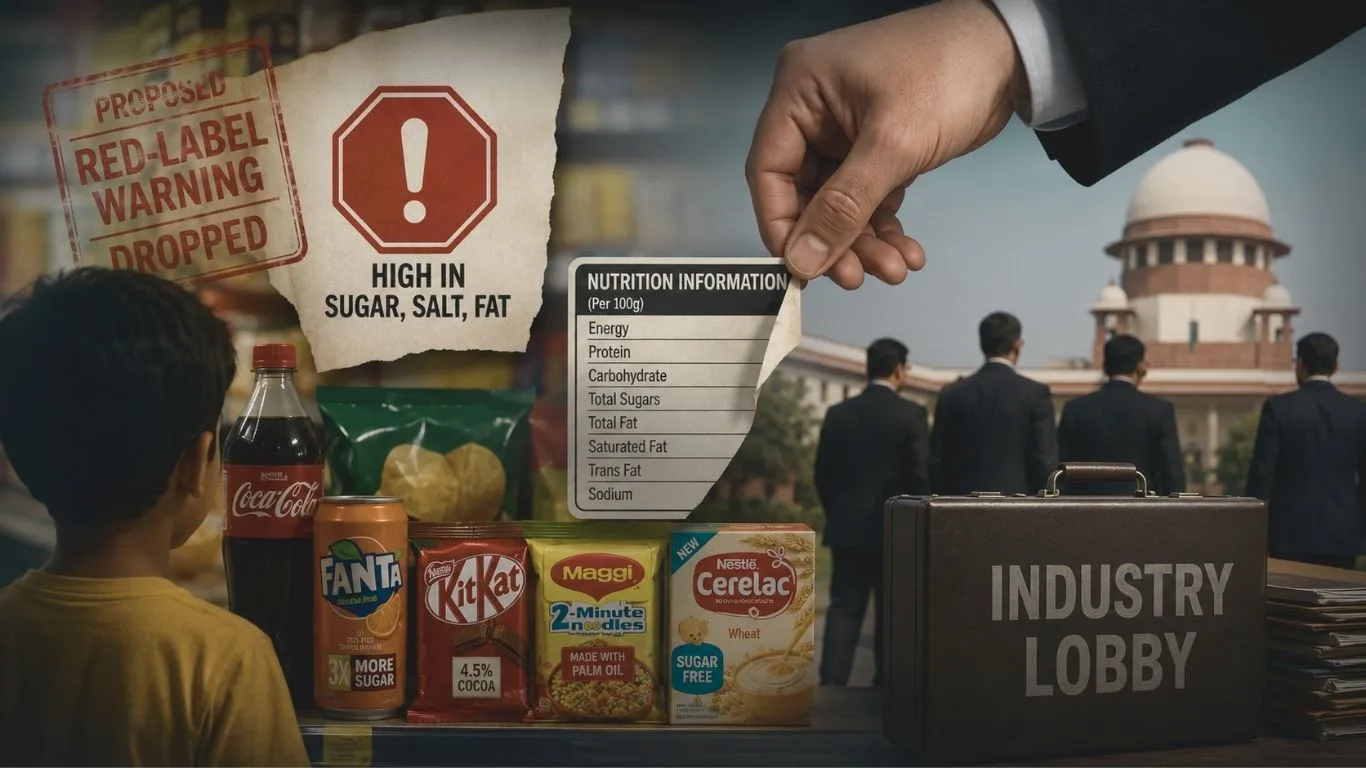
India’s food safety regulator drops proposed colour-coded warning labels on packaged foods high in sugar, salt and fat; Supreme Court examines the move
New Delhi: India’s food safety regulator has dropped its plan to introduce colour-coded warning labels on the front of packaged foods high in sugar, salt and fat. The move followed strong opposition from the food and beverage industry. The Supreme Court is examining the decision after a petition filed by public health activists.
The Food Safety and Standards Authority of India (FSSAI) has instead proposed a black-and-white table showing nutrient content on food packaging. The regulator has argued that colour-coded warnings do not account for the intensity of flavours commonly used in Indian cuisine.
Reuters reported details of the regulatory discussions and the industry’s response. The report was based on recordings of a closed-door meeting held on March 19 between regulators and industry executives. Reuters also reviewed hundreds of pages of government and corporate documents and spoke with industry executives and health experts.
Major food and beverage companies have opposed mandatory front-of-pack warning labels in India since regulators first proposed the idea in 2017.
Industry resistance at closed-door meeting
At the March meeting, Coca-Cola India executive Mili Bhattacharya argued that warning symbols would not significantly change consumer behaviour. According to the Reuters report, she also said Indian doctors already advise patients about foods they should avoid.
Coca-Cola and its bottling partners have voluntarily introduced traffic-light-style nutrition labels in about two dozen European markets. Nestlé, which is part of Indian industry groups that opposed the labelling proposals, has used similar interpretive labels in Britain since 2013. Both companies declined to comment on the report.
Industry estimates suggest that nearly 80% of products in India’s packaged food and beverage market could qualify as high in fat, sugar or salt. The market is estimated to be worth more than $100 billion.
Deepak Jolly, chairperson of the Indian Food and Beverage Association (IFBA), which represents companies including PepsiCo, told regulators that near-universal labelling could leave packaging almost entirely red.
The IFBA has called for greater regulatory clarity. It said the current proposals could trigger high-sugar warnings even on products such as coconut water, which contains only natural sugars.
Supreme Court’s intervention
Acting on a petition, the Supreme Court directed the FSSAI in February to consider front-of-pack warning labels. It also asked the regulator to examine Israel’s red-and-green labelling system.
Weeks after its March meeting with industry representatives, the FSSAI told the court in August that aligning India’s system with international labelling standards would be difficult.
The bench responded sharply, observing that India’s concern for the health of its citizens should be evident to the world. Public health experts have long argued that clear front-of-pack warnings can help consumers make more informed food choices.
A study published in The Lancet projects that nearly 450 million Indians could be obese or overweight by 2050. Roughly 20 countries have already adopted some form of interpretive food labelling.
Simone Pettigrew, who heads food-policy research at Australia’s George Institute for Global Health, has said that delays benefit the industry by postponing clear disclosures about the healthiness of products. She also noted that similar lobbying has slowed regulatory action in several countries.
Differences in Indian and international products
Several companies have also taken legal action against social media influencers who have criticised their marketing practices. Content creator Revant Himatsingka, known as “Food Pharmer”, has built a following of more than five million across YouTube and Instagram. He often highlights differences between the ingredients used in Indian and international versions of popular products.
In 2023, a Delhi court ordered the removal of one of his videos after PepsiCo alleged that it contained false claims about its Sting energy drink. Separately, Indian regulators in July directed PepsiCo and other companies to stop marketing such beverages as “energy drinks” within 90 days.
Also Read: Morari Bapu Calls for Preserving India’s Sacred Texts During Ram Katha at Harvard
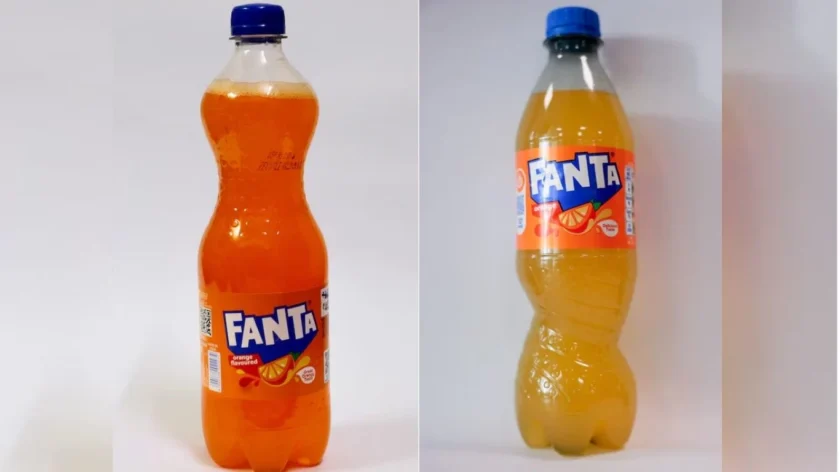
The Reuters report also highlighted differences in product formulations. A can of Fanta sold in Britain contains 63 calories. The Indian version has roughly three times as much sugar and includes an artificial dye. The dye carries a prominent warning in Europe but appears only in small print in India.
Indian KitKat bars contain 4.5% cocoa solids, compared with at least 22% in the Australian version. Nestlé’s Maggi instant noodles sold in India use palm oil. Many versions sold in Britain, including some manufactured in India, use sunflower oil and carry red front-of-pack labels warning about high salt content.
In 2024, Nestlé announced plans to introduce sugar-free Cerelac baby food in India. The move came after activists, including Himatsingka, highlighted that the sugar-free version had been available in other markets for decades.
The FSSAI has declined to comment, citing the ongoing Supreme Court proceedings.