IIT Delhi student Rishikesh Kumar’s death has sparked protests, with students demanding an independent probe, accountability, ₹1 crore compensation and stronger mental-health support
New Delhi: Protests erupted at the Indian Institute of Technology (IIT) Delhi after 31-year-old MSc Physics student Rishikesh Kumar died on August 22, 2026, following a fall from the sixth floor of the institute’s Lecture Hall Complex (LHC). Kumar died after the fall and Delhi Police are investigating the circumstances of his death. The incident took place on August 22 at IIT Delhi, with police receiving a PCR call at around 8:33 am. Kumar was a second-year MSc Physics student at the institute. Students allege that issues related to hostel accommodation, academic opportunities and institutional support may have contributed to his isolation and distress. Following protests and demands for accountability, IIT Delhi has constituted a five-member external inquiry committee and announced additional support measures for Kumar’s family and students.
What Happened to Rishikesh Kumar?
Rishikesh Kumar died on August 22 after falling from the sixth floor of IIT Delhi’s Lecture Hall Complex. According to police, no suicide note was recovered. Investigators are examining relevant evidence, including available records, to establish the circumstances surrounding his death.
The death triggered concern among students, particularly over Kumar’s reported mental-health difficulties and his circumstances after returning to the institute.
According to IIT Delhi, Kumar joined the MSc Physics programme in July 2025 and performed well during his first semester.
In March 2026, he experienced mental-health difficulties. The institute’s counsellor and psychiatrist advised him to remain under parental supervision. His request to withdraw from the second semester was approved. He then stayed outside the campus with his parents.
Kumar returned to IIT Delhi in July 2026. The institute reviewed his medical records again and advised him to continue under parental supervision. The Physics Department later approved his request to withdraw from the third semester.
Students Raise Questions Over Hostel and Academic Support
The circumstances surrounding Kumar’s return to campus have become a central issue in the protests.
Students allege that Kumar faced difficulties in securing hostel accommodation and an academic or research project. They argue that these problems were particularly serious because he was already dealing with mental-health challenges.
Students have described the alleged treatment as “moral profiling”, arguing that a student’s mental-health history should not become a reason for restricting access to accommodation, academic opportunities or other institutional resources.
The allegations, however, remain subject to investigation. The institute has presented its own account of Kumar’s medical history and semester withdrawals, while students have demanded that the administration’s decisions regarding his hostel accommodation and academic arrangements be independently examined.
Also Read: Morari Bapu Calls for Preserving India’s Sacred Texts During Ram Katha at Harvard
Protests Spread Across IIT Delhi
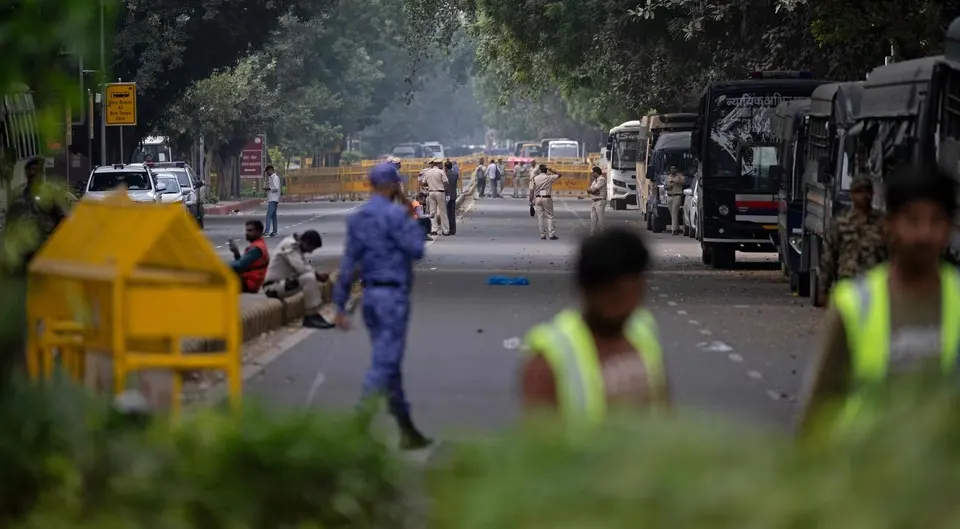
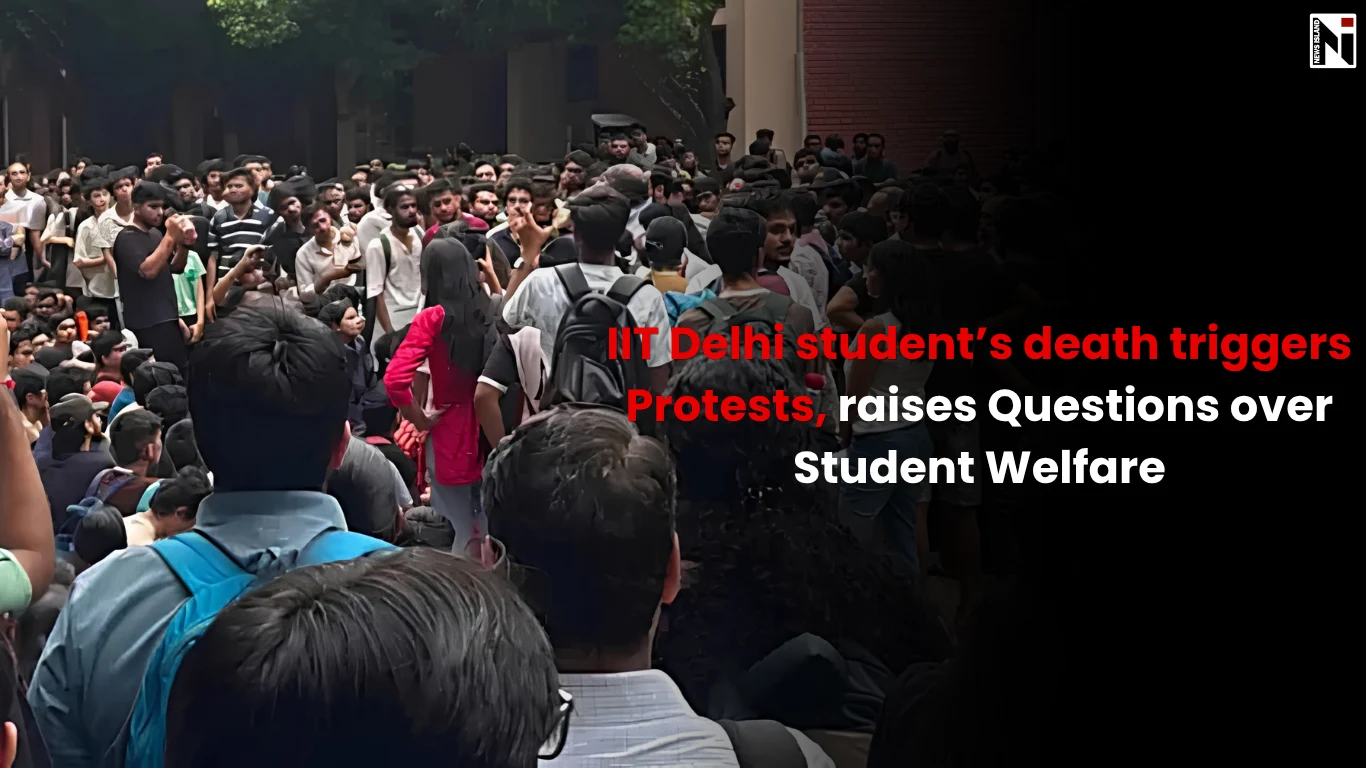
Following Kumar’s death, students began protesting on campus. On August 24, students gathered outside the Lecture Hall Complex, held a sit-in and boycotted classes. The protest later moved towards the Director’s Office as students sought answers from the administration.
The protesters have raised three central demands: investigation, resignation and compensation.
They have demanded an independent inquiry into the circumstances surrounding Kumar’s death, accountability of senior officials and compensation for his family. Students have also called for greater transparency in the institute’s mental-health and student welfare systems.
The administration cancelled classes scheduled for August 24 amid the protest. Students continued their demonstrations on August 25, maintaining that an inquiry alone would not be enough and that officials responsible for decisions affecting Kumar should also be held accountable.
Students Demand ₹1 Crore Compensation
One of the major demands raised by the protesting students is ₹1 crore in compensation for Kumar’s family.
IIT Delhi has announced that it will reimburse the family’s medical expenses and provide financial assistance through its Benevolent Fund. The institute also said it would establish a separate fund through voluntary contributions from faculty members, students and staff to support the family.
Students, however, have maintained that the financial assistance should be accompanied by institutional accountability and a transparent investigation.
IIT Delhi Constitutes External Inquiry Committee
In response to the protests, IIT Delhi Director Rangan Banerjee announced the formation of a five-member External Inquiry Committee.
The committee includes former Uttarakhand Director General of Police Ashok Kumar, an IIT Delhi alumnus and Vice Chancellor of Sports University Haryana. It also includes Professor Pratap Sharma, Head of the Department of Psychiatry at AIIMS, New Delhi, and two student representatives. The IIT Delhi Registrar will serve as the secretary and convenor.
The committee will speak with relevant students and faculty members. It will also examine the functioning of the concerned administrative offices and review existing protocols and procedures. Based on its findings, the panel will make recommendations.
Importantly, the committee has been given two weeks to submit its report.
Institute Announces Additional Support Measures
Apart from the inquiry, IIT Delhi has announced several measures aimed at strengthening student support.
The institute plans to appoint an external Ombudsperson to examine grievances that cannot be resolved through existing internal mechanisms. The framework for the position is expected to be developed in consultation with student representatives.
IIT Delhi has also proposed an additional faculty-and-student mentoring system for students who require greater support, including students advised to remain under parental supervision.
The measures are intended to address concerns over mental-health support and provide students with another channel through which they can raise grievances.
Why the Protest Matters
The controversy at IIT Delhi has brought student mental health and institutional support back into focus.
Students argue that counselling services alone are not enough. They say students facing mental-health challenges may also need support with accommodation, academics and access to institutional resources. They want the institute to establish clearer and more transparent procedures for supporting vulnerable students.
However, allegations against specific officials and claims that institutional decisions contributed directly to Kumar’s death have not been established. The police investigation and the external committee’s findings will be important in determining what happened. They will also help establish whether any institutional shortcomings contributed to the tragedy.
What Happens Next?
The external inquiry committee now faces the task of examining the circumstances surrounding Kumar’s death and reviewing the institutional processes involved. Its two-week deadline makes the report particularly significant for both students and the administration.
For the protesting students, the key issues remain accountability, transparency and institutional reform. They have made it clear that they want more than an investigation and are continuing to demand action against officials they believe were responsible for decisions affecting Kumar.
For IIT Delhi, the challenge is to ensure that the inquiry is independent, transparent and credible enough to restore confidence among students.
Ultimately, the case is not only about determining the circumstances surrounding one student’s death. It has also raised broader questions about how premier educational institutions respond when students face mental-health difficulties, and whether their welfare systems are strong enough to ensure that vulnerable students do not feel isolated from their academic and social communities.