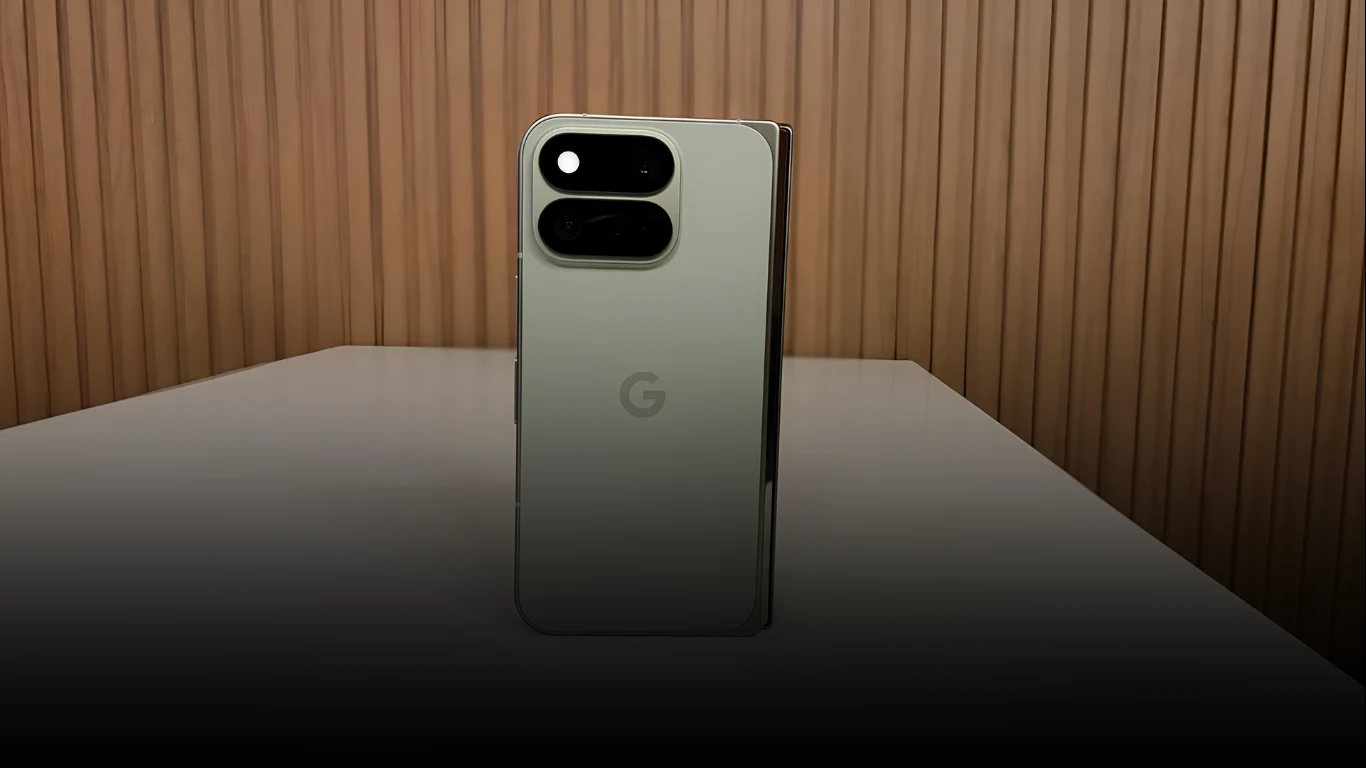
New Delhi: Google Pixel 11 Pro Fold is the third-generation device in Google’s foldable smartphone lineup. This time, Google has focused on making the phone lighter, slimmer, and better overall. The phone comes with several upgrades, including an improved camera, faster charging, and updated software. However, the big question is whether these changes are enough to put it ahead of rivals such as Samsung and Motorola in the increasingly competitive foldable smartphone market.
Starting at $1,899, the Pixel 11 Pro Fold aims to deliver a premium experience in several areas. However, based on reviews, the phone’s biggest challenges are not just its price but also its limited design changes and performance-related shortcomings.
Slimmer and Lighter Design
The biggest design improvement on the Pixel 11 Pro Fold comes in terms of thickness and weight. When folded, the phone measures around 10.1mm thick, making it the slimmest Pixel foldable yet. Compared with the previous model, it is around 1mm thinner and approximately 20 grams lighter.
The reduced weight makes the phone more comfortable for everyday use. Weight has always been an important consideration with foldable smartphones, and Google has made meaningful progress in this area.
However, the design is not completely flawless. There is a slight difference in the thickness of the two sides of the phone. As a result, the device has a somewhat unusual profile, with a slight bulge that can be felt when holding it. In other words, Google has managed to make the phone thinner, but that improvement appears to come with a minor design compromise.
Strong Build and IP68 Rating
Durability is one of the biggest concerns when buying a foldable smartphone. The Pixel 11 Pro Fold performs well in this department. Its build quality feels solid, and the device appears capable of handling the demands of everyday use.
One of its notable features is its IP68 rating. IP68 protection is still not common across the foldable smartphone segment. This rating provides better protection against dust and water, adding another layer of durability to the device.
This could be particularly useful for users who are concerned about the long-term durability of a foldable phone.
Higher Price, Tougher Competition
The Pixel 11 Pro Fold is priced at $1,899, around $100 more than the previous model. Google is positioning the higher price around the improvements made to the phone’s hardware and features.
The phone is slimmer and lighter than before. It also gets a new main camera, faster charging, and updated software. However, the bigger challenge is that the foldable smartphone market has become far more competitive.
Companies such as Samsung and Motorola continue to introduce new foldable devices. In such a market, simply reducing the weight and adding a few hardware upgrades may not be enough. At a price close to $1,900, consumers expect a phone that delivers a top-level experience across design, camera, performance, and software.
Camera Remains a Strong Point
The Pixel series has long been known for its camera capabilities, and the Pixel 11 Pro Fold continues that tradition. The phone features a triple rear-camera setup.
It includes a 48MP wide camera, 10.8MP telephoto camera, and 10.5MP ultrawide camera. One of the camera system’s biggest strengths is its natural image output. Photos do not appear to rely excessively on processing or artificial-looking enhancements.
This makes the phone an appealing option for users who prioritize photography. Google’s computational photography remains one of the Pixel lineup’s biggest strengths and helps the device stand out in the foldable segment.
High Expectations From Tensor G6, But Performance Raises Questions
One of the most talked-about aspects of the phone is its new Tensor G6 chipset. Naturally, a new-generation chip is expected to deliver better performance. However, its performance in some games does not appear to be as impressive as expected.
Some games that ran well on the previous-generation Pixel 10 Pro Fold also perform similarly on the new device. This raises questions about optimization on the Tensor G6. If the new chipset does not provide a clear performance advantage in certain scenarios, it could become a concern for Google.
There is, however, a positive side to this. The phone’s heat management appears to be good. Even when performance drops, the device does not seem to get excessively hot. This suggests that Google has done a good job with thermal management, although there is still room for improvement in performance optimization.
Should You Buy the Pixel 11 Pro Fold?
Overall, the Google Pixel 11 Pro Fold is a foldable smartphone built on a solid foundation. It offers strong build quality, a reduced weight, a capable camera system, and a software experience that remains one of its biggest strengths.
However, its biggest drawback is that the design changes are not particularly significant despite the higher price. In addition, the Tensor G6’s gaming and overall performance capabilities do not appear to be as impressive as expected from a new-generation flagship chipset.
If your priorities are camera quality, software, strong build quality, and a lighter foldable design, the Pixel 11 Pro Fold could be an interesting option. But if you are looking for the fastest performance and a truly redesigned foldable, it is difficult to ignore the alternatives from Samsung and Motorola at this price point.
Calling the Pixel 11 Pro Fold a bad foldable would therefore be unfair. It performs well in several important areas, but in this year’s increasingly competitive foldable market, being a good phone may simply not be enough to make it the winner.