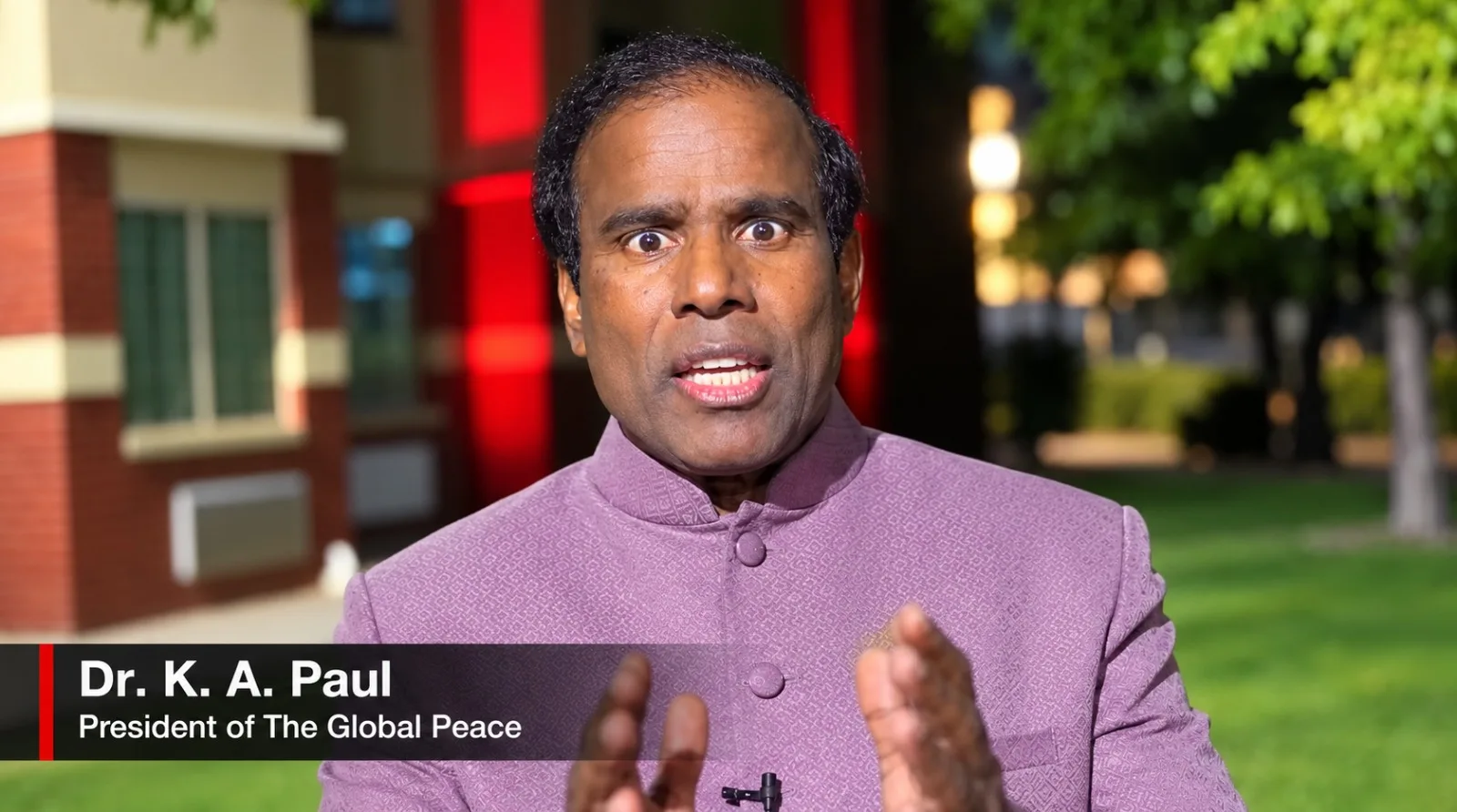
Dr. K. A. Paul warns of the Iran war’s humanitarian costs and urges Israel, Iran and the US to pursue peace talks and political accountability
WASHINGTON, D.C.: Peace advocate Dr. K. A. Paul has warned that the conflict involving Iran, Israel and the United States could have serious humanitarian and economic consequences worldwide. He has called for urgent diplomatic efforts, political accountability and negotiations to end the war.
Dr. Paul, founder of the Global Peace Initiative, said the international community must look beyond military developments and consider how prolonged conflict affects ordinary people. He highlighted concerns about food affordability, fuel prices, economic stability and access to essential resources.
He also urged Israelis to unite for peace and consider political change through democratic means on October 27, while criticising Prime Minister Benjamin Netanyahu’s approach to the conflict.
Iran War Raises Concerns Over Food Prices and Livelihoods
Dr. Paul said the effects of the conflict could reach families, workers, farmers and vulnerable communities far beyond the Middle East.
He highlighted the pressure that rising food prices can place on households with limited incomes. He warned that families already facing financial hardship may struggle to afford sufficient food, clean water and essential nutrition.
Dr. Paul urged governments, humanitarian organisations and religious institutions to assess the war’s impact on vulnerable populations and strengthen efforts to protect people facing food insecurity.
He said the consequences of war should be measured not only by battlefield casualties but also by displacement, hunger, lost livelihoods and the disruption of everyday life.
Dr. Paul Criticises Netanyahu’s Approach to Iran
Dr. Paul blamed Netanyahu’s policies and support for military confrontation for contributing to the regional crisis. He argued that military action could intensify hostility without delivering a lasting political settlement.
He also questioned whether the prospect of regime change influenced President Donald Trump’s decisions on Iran.
Dr. Paul said his visits to Iran had informed his understanding of the country and its people. He argued that military strikes and the killing of political leaders could deepen tensions rather than guarantee political transformation.
He called for a transparent assessment of the decisions that led to the conflict and the opportunities available for diplomatic engagement.
Dr. Paul also urged Israeli voters to evaluate the government’s record and consider whether its policies had improved the country’s long-term security.
Mike Johnson and US Leadership in Peace Efforts
Dr. Paul praised US House Speaker Mike Johnson for what he described as efforts to find a peaceful resolution. He encouraged American political leaders to continue exploring diplomatic options.
He said the US administration should explain how it reached its decisions on military action, what alternatives it considered and whether diplomatic proposals received adequate attention.
Dr. Paul also called for a transparent examination of potential conflicts of interest involving individuals engaged in Middle East diplomacy. He said any concerns should be assessed through reliable documentation and evidence.
Fifteen-Point Peace Proposal Seeks Attention
Dr. Paul said he submitted a 15-point peace proposal on March 15 to help end the Iran war. He urged the relevant governments and negotiating parties to review the proposal and determine whether its provisions could support a settlement.
He said international leaders should examine credible diplomatic initiatives rather than allow political disagreements or personal interests to obstruct efforts to stop the fighting.
Dr. Paul called on Israel, Iran, the United States and international partners to begin or strengthen negotiations aimed at ending hostilities, protecting civilians and addressing security concerns.
October 27: Appeal for Peace and Political Accountability
Dr. Paul urged Israelis to raise their voices peacefully and use democratic processes to seek political change. He called on citizens to consider the consequences of Netanyahu’s leadership and demand accountability for government decisions.
He emphasised that criticism of a government or its policies should not be directed at Jewish people as a religious or ethnic community.
His appeal, he said, reflected a broader concern for the safety of Israelis, Palestinians, Iranians, Americans and other communities affected by regional instability.
Global Peace and Prayer Meeting Scheduled in Dallas
Dr. Paul also invited media representatives and international leaders to a Global Peace and Prayer Meeting scheduled for October 25, 2026, from 6 pm to 9 pm at Prismo Colinas in Dallas, according to his statement.
He called on political and religious leaders to put human life and diplomatic engagement ahead of prolonged military confrontation.
Dr. Paul reiterated his commitment to working with political, religious and humanitarian leaders to pursue peace. He urged the international community to consider credible proposals, protect vulnerable populations and work towards a negotiated agreement.
He said a lasting resolution would require dialogue, security assurances and a willingness to address the causes of the conflict.