

Rare lunar eclipse and Bhadra timing are creating confusion about the correct Holika Dahan muhurat this year
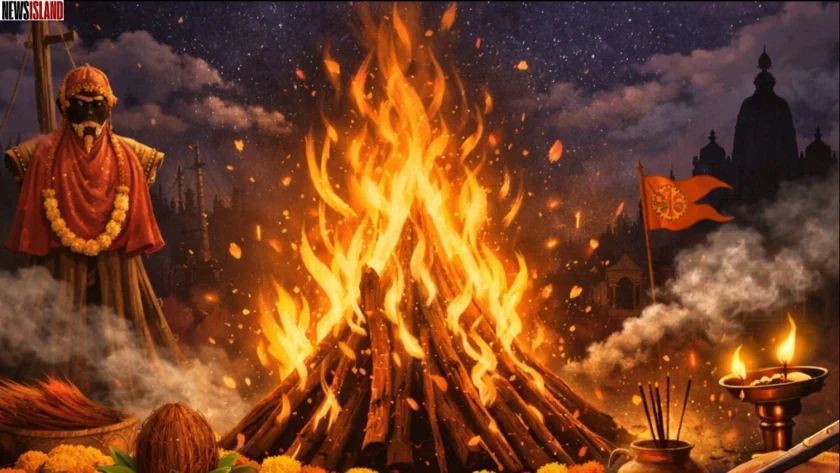
New Delhi: Holika Dahan is an important Hindu festival celebrated on the night before Holi. It represents the victory of good over evil and is connected to the story of Prahlad and Holika.
According to Hindu mythology, Prahlad was a strong devotee of Lord Vishnu. His aunt Holika had a special boon that protected her from fire. However, when she tried to kill Prahlad by sitting with him in a burning fire, she was reduced to ashes, while Prahlad remained safe because of his faith in Lord Vishnu. This story teaches that truth, devotion and goodness always defeat evil and arrogance.
In 2026, Holika Dahan will be observed on March 2 and March 3, depending on regional calendars and religious calculations. The ritual is performed on the full moon night (Phalguna Purnima) of the Hindu month of Phagun, just before the festival of colours, Holi.
Date and Muhurat Details
According to Panchang timings:
- Phalguna Purnima begins at 5:55 PM on March 2, 2026.
- Phalguna Purnima ends at 5:07 PM on March 3, 2026.
This year, the timing has become slightly complicated because Bhadra and a total lunar eclipse (Chandra Grahan) are also occurring around the same time.
Bhadra Period
- Bhadra begins at 5:58 PM on March 2, 2026.
- Bhadra ends at 5:30 AM on March 3, 2026.
In Hindu tradition, Holika Dahan should not be performed during Bhadra, as it is considered inauspicious for this ritual.
Lunar Eclipse and Sutak
- A total lunar eclipse will take place on March 3, 2026.
- The eclipse begins at 3:20 PM IST.
- The maximum eclipse will occur between 6:33 PM and 6:40 PM IST.
- The eclipse ends at 6:47 PM IST.
The Sutak period, which is considered inauspicious before a lunar eclipse, begins at 6:23 AM on March 3, 2026, and continues until the eclipse ends.
Recommended Muhurat Options
Because of Bhadra and Sutak, priests and astrologers suggest two safe time windows:
Option 1: March 2 Before Bhadra
Devotees can perform Holika Dahan on March 2 before 5:58 PM, after Purnima starts and before Bhadra begins.
Option 2: Early Morning March 3
Another suitable time is between 5:30 AM and 6:23 AM on March 3, after Bhadra ends and before Sutak begins.
Rituals should be avoided:
- During Bhadra (March 2 evening to March 3 early morning)
- During Sutak and eclipse hours on March 3
- People who strictly follow Vedic rules usually prefer performing the ritual after Bhadra ends and before Sutak begins.
Spiritual Importance
Holika Dahan has deep spiritual meaning. The bonfire represents the burning away of negativity, ego, jealousy and hatred. People believe the sacred fire purifies both the environment and the mind.
Families pray for happiness, good health, prosperity and protection from problems in the coming year. The festival also brings people together, as communities gather around the fire and celebrate as a group.
Ritual Preparations
Families begin the day by taking a holy bath and wearing clean clothes. They prepare the Holika bonfire in an open space using dry wood and traditional materials.
Before lighting the fire, they arrange a puja thali with all the necessary sacred items. While offering prayers, devotees usually face east or north, as these directions are considered auspicious.
In some traditions, families prepare symbolic garlands for ancestors, Lord Hanuman, Goddess Sheetala and their own household. They move these garlands around the fire during the ritual.
Also Read: Blood Moon 2026 Date and Time: Full City-Wise Schedule for Total Lunar Eclipse in India
Complete Puja Samagri List
To perform Holika Dahan properly, devotees collect several traditional items, including:
- Dry firewood and cow dung cakes for the bonfire
- Ghee (clarified butter) to make the fire strong and pure
- Camphor to light the fire
- Fresh flowers such as marigolds
- Fruits like bananas and other seasonal fruits
- Sweets such as gujiya, laddoo and jaggery
- Gulal (colour powder)
- Haldi (turmeric)
- Akshat (unbroken rice)
- Grains like moong and jau
- A kalash filled with water
- Betel leaves and coconut
- Incense sticks and kapur
After completing the ceremony, families distribute prasad among everyone present.
Although customs may vary slightly from region to region, these items are commonly used in Holika Dahan rituals.
Steps of the Ritual
Devotees first arrange the pyre using wood and cow dung cakes. At the chosen muhurat, they light the fire with ghee and camphor.
After the fire starts burning, they perform parikrama by walking around the bonfire three times while praying for blessings. They then offer grains, flowers, fruits, sweets and turmeric into the flames while chanting mantras.
After finishing the ritual, they apply tilak on their foreheads and share prasad with family members and neighbours.
Also Read: When Is Holika Dahan 2026? Check Date, Auspicious Timing and Significance
Items Offered in the Fire
During Holika Dahan, people pour ghee into the fire and offer grains like moong and jau for prosperity. They offer flowers and fruits to express gratitude. Some families also offer coconuts and sweets to pray for happiness and success in the coming year.
Devotees believe that by offering these items, they burn away negativity and welcome positive energy into their lives.
Effect of Lunar Eclipse
The lunar eclipse on March 3, 2026, makes it very important to choose the correct timing. In Hindu belief, eclipses are sensitive periods when auspicious rituals are usually avoided.
That is why priests advise devotees to carefully check Bhadra and Sutak timings and perform Holika Dahan only during the recommended muhurat.
Following the correct timing ensures that the ritual remains spiritually meaningful and effective.
Cultural Significance
Holika Dahan is not just a religious ritual but also a social celebration. People gather in neighbourhoods around large bonfires, sing devotional songs, share sweets and spend time together.
The celebration strengthens community bonds and promotes unity. It also marks the beginning of the main Holi festival the next day, known as Rangwali Holi, when people play with colours and celebrate joyfully.
Conclusion
Holika Dahan 2026 will be observed on March 2 and March 3, with specific muhurat windows because of Bhadra and the lunar eclipse.
By performing the ritual at the correct time and with devotion, families pray for peace, prosperity and protection. The festival combines mythology, faith and community spirit, reminding everyone that good always wins over evil.

khushisikarwar is an award-winning journalist and content creator who thrives on telling stories that matter. As a key contributor to Newsisland, [she] focus on cultural commentary, providing readers with thought-provoking insights.


