From coconut oil to multani mitti, discover homemade remedies that gently remove Holi colors without damaging your skin
Holi will be celebrated on March 3 and 4 throughout India. The festival brings joy, colour, music, and entertainment. However, after the celebrations, many people are left with strong color stains on their skin and hair. Some Holi colors include strong chemicals that adhere to the skin and can cause dryness, irritation, rashes, and even allergies.
Skin experts say you do not need to scrub your skin harshly to remove these stains. You can use simple and natural remedies at home to remove colour safely without harming your skin.
Why Colours Stick
Holi powders, also called gulal or abir, contain bright pigments. These pigments mix with sweat and water and settle into the skin and hair. When colours stay on the body for many hours, they become harder to remove with normal soap and water.
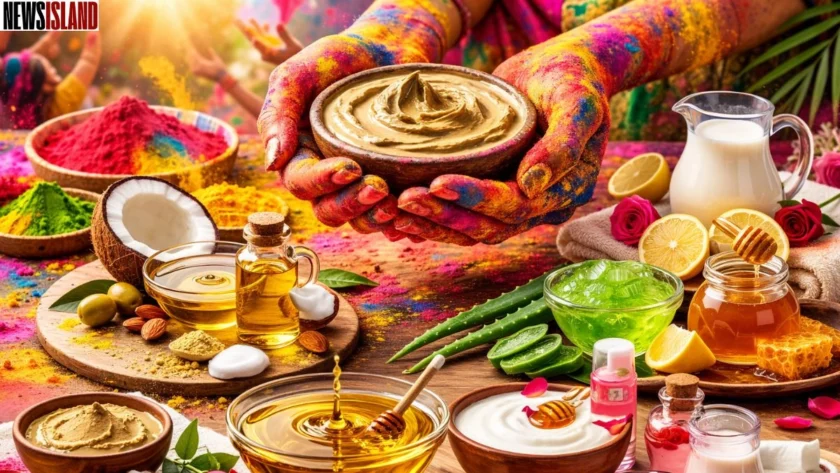
Doctors warn that strong scrubbing can damage the skin’s natural protective layer. This can cause redness and irritation. Instead, they advise using gentle and moisturising methods to remove the colours slowly and safely.
Oil Massage First
Natural oils are one of the most effective ways to remove Holi colors. Coconut oil, olive oil, almond oil, and apricot oil can all help break down color pigments.
Apply enough oil on the stained areas and massage gently in circular movements for 5 to 10 minutes. After that, wipe it off with a soft cloth or cotton and rinse with lukewarm water. Oil also keeps the skin soft and prevents dryness.
Also Read: Why Solo Travel Is Becoming the New Self Care Trend
Besan Yogurt Pack
A homemade paste of gram flour (besan) and yogurt works as a gentle cleanser. Gram flour helps absorb extra colour, while yogurt keeps the skin moisturised.
Apply this paste evenly, leave it on for 10 to 15 minutes and then wash it off with lukewarm water. This method removes colour without harming the skin.
Milk Honey Cleanser
Raw milk works as a natural cleanser and helps soften stubborn stains. Dip the cotton in milk and gently wipe the colored spots.
You can also mix milk with honey for better moisture and soothing effect. This remedy works well for people with sensitive skin and prevents dryness.
Aloe Rose Mix
Aloe vera gel helps calm irritation and redness caused by chemical colours. When mixed with rose water, it refreshes the skin and helps loosen colour particles.
Apply the mixture to the skin, let it sit for 10 to 20 minutes, then gently rinse. This approach works especially well for delicate or inflamed skin.
Lemon For Lightening
Lemon juice contains natural bleaching capabilities that can help lighten color stains, particularly on hands and feet. Lemon juice combined with honey lessens dryness.
However, lemon should not be used on sensitive or broken skin, since it might cause irritation.
Multani Mitti Mask
Multani mitti, commonly known as Fuller’s earth, aids in the extraction of color pigments from the skin. Combine it with rose water to get a consistent paste.
Apply it for 20 to 30 minutes and then wash it off. It deeply cleans the skin while keeping the oil balance normal.
Baking Soda Paste
A simple paste made with baking soda and water can remove deep colour stains. It works as a mild scrub.
Use it gently and do not rub too hard because baking soda can make the skin dry if used too much.
Rice Flour Scrub
Rice flour acts as a natural scrub that removes dead skin cells and fades colour patches. It becomes more gentle on the skin when combined with honey.
Apply it in light circular movements and wash it off gently.
Hair Care Tips
Holi colours also stick strongly to hair. Massaging mustard oil on the scalp and hair helps loosen the colour before washing.
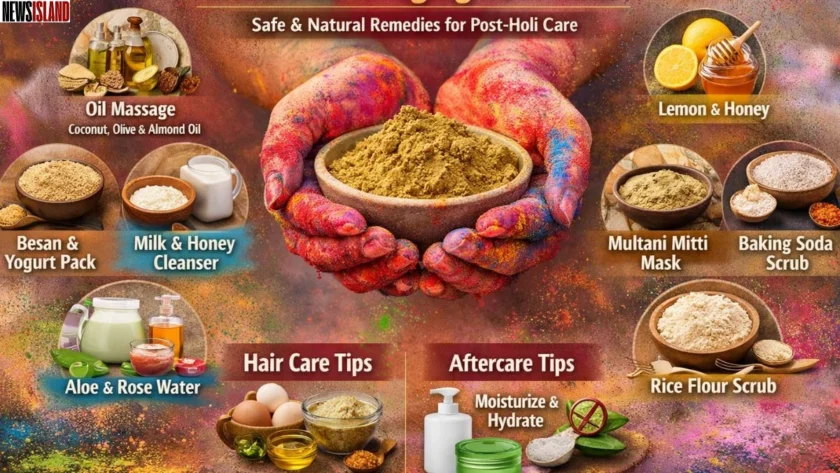
You can also apply a 30-minute egg and curd hair mask before rinsing with a gentle shampoo. Aloe vera gel applied to hair for 10 minutes can also help remove colour and nourish the scalp. Some people use vinegar and milk to gradually remove color from their hair.
After Care Steps
After removing colours, wash your skin with lukewarm water and a mild cleanser. Avoid strong soaps.
Apply a good moisturiser or aloe vera gel immediately to restore moisture and protect the skin barrier.Doctors also recommend drinking enough of water to help your skin recover from dryness.
Also Read: When Is Holi 2026? Know Dates, Stories, Meaning and How India Will Celebrate
Expert Safety Advice
Do not scrub your skin aggressively.
Always moisturise after cleansing.
Do a patch test before trying any remedy.
Use herbal or chemical-free colours during Holi to reduce skin damage.
Holi is a festival of joy and colours. With these simple and natural remedies, you can remove stubborn Holi colours safely and keep your skin and hair healthy even after the celebrations end.

khushisikarwar is an award-winning journalist and content creator who thrives on telling stories that matter. As a key contributor to Newsisland, [she] focus on cultural commentary, providing readers with thought-provoking insights.