Discover the inspiring stories of Indian photojournalists who won the Pulitzer Prize, including Danish Siddiqui, Adnan Abidi, Sanna Irshad Mattoo and others.
New Delhi: A photograph does more than capture a moment. It can tell an entire story. Whether it shows war, riots, a pandemic, displacement, a natural disaster or everyday life, photojournalism brings these events closer to people. It often conveys emotions more powerfully than words.
Several Indian photojournalists have brought such stories to audiences around the world. Their work has earned global recognition for Indian photojournalism and taken India’s stories to the prestigious Pulitzer Prize.
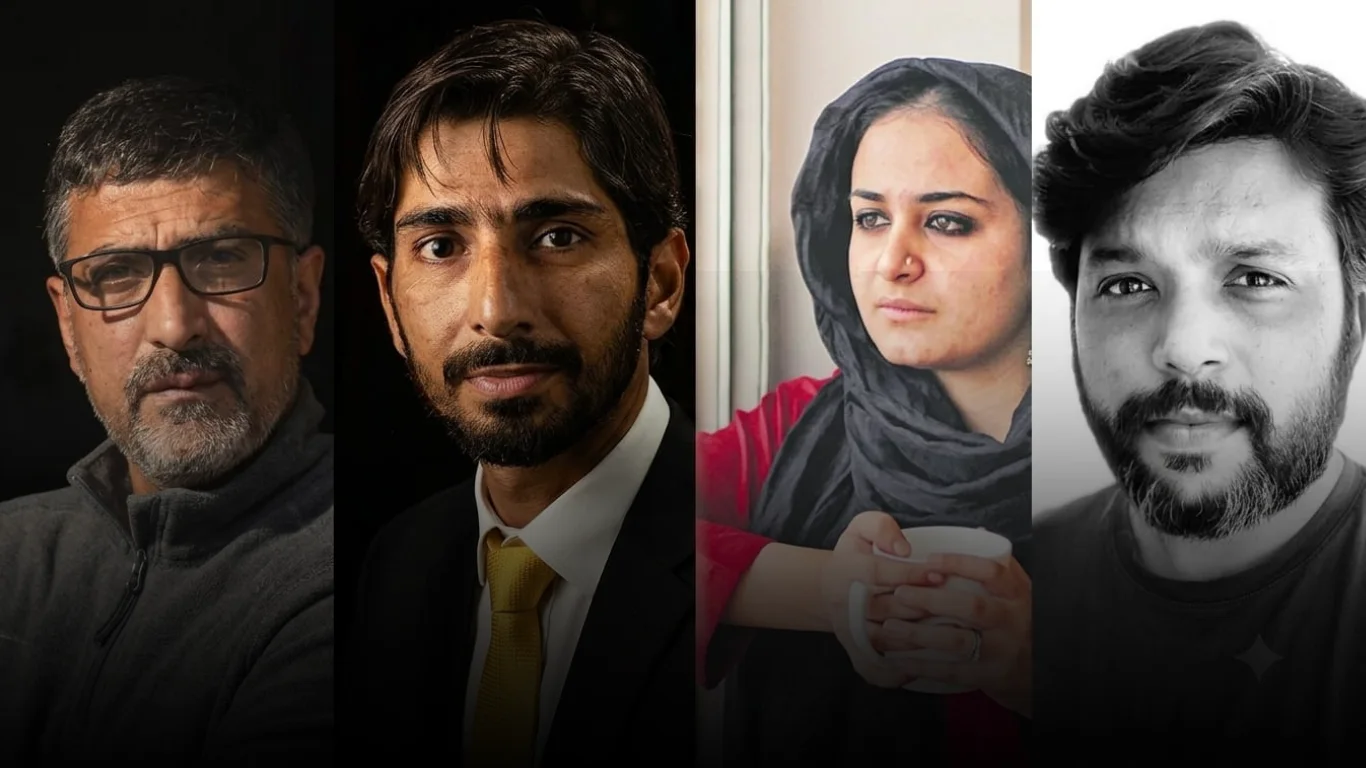
Among them, Danish Siddiqui, Adnan Abidi, Sanna Irshad Mattoo, Amit Dave, Channi Anand, Mukhtar Khan and Dar Yasin stand out. Their photographs have documented major events, including the Rohingya refugee crisis, the communications blackout in Kashmir and the COVID-19 pandemic in India.
What is the Pulitzer Prize?
The Pulitzer Prize is a prestigious American award that recognises excellence in journalism, literature, drama and music. In journalism, it is considered one of the world’s most respected honours.
The award holds a special place in photojournalism. It recognises more than technically strong photographs. It honours visual storytelling that powerfully captures important events, human experiences and social realities.
The major photography categories include Feature Photography and Breaking News Photography. In some cases, a photo story may also be moved from one category to another by the jury.
Danish Siddiqui: The Human Story Behind the Images
When talking about Indian photojournalism, it is impossible to leave out the name of Danish Siddiqui. One of Reuters’ prominent photojournalists, Danish Siddiqui documented several major events in India and around the world through his camera.
In 2018, Danish Siddiqui was part of the Reuters team that won the Pulitzer Prize for Feature Photography. The award recognized their coverage of the Rohingya refugee crisis. The team documented the violence and hardships faced by Rohingya refugees who fled Myanmar for Bangladesh. According to the Pulitzer, the photographs showed the scale of the violence and displacement suffered by the Rohingya people.
Danish’s photographs did not show only the event itself. They also captured the human pain behind those events. This was one of the greatest strengths of his photojournalism.
Posthumous Recognition for COVID-19 Pandemic Coverage
Danish Siddiqui lost his life in 2021 while reporting on the conflict in Afghanistan. However, his legacy in journalism continued.
In 2022, Danish Siddiqui was posthumously awarded the Pulitzer Prize for Feature Photography. He shared the award with Reuters photographers Adnan Abidi, Sanna Irshad Mattoo and Amit Dave. The team was recognised for documenting the devastating impact of COVID-19 in India. The Pulitzer praised their work for capturing both the scale of the crisis and the personal suffering of those affected.
Their COVID-19 coverage showed several aspects of the crisis, including shortages in hospitals, the oxygen crisis, cremations, infected families and the lives of ordinary people during the pandemic.
Adnan Abidi: Part of Two Pulitzer-Winning Photography Packages
Adnan Abidi is one of the prominent names in Indian photojournalism. He began his career as a darkroom assistant in 1997 and later joined Reuters.
Adnan Abidi was part of the Reuters team that covered the Rohingya crisis and received the Pulitzer Prize in Feature Photography in 2018.
He was also part of another Pulitzer-winning team in 2022. This time, the recognition came for photographs documenting the impact of the COVID-19 pandemic in India. In this way, Abidi became part of two different Pulitzer-winning photography packages.
A key strength of his photography has been his ability to show major events not simply as news stories, but also to capture the human emotions and circumstances within those events.
Sanna Irshad Mattoo: From Kashmir to the Pulitzer
Sanna Irshad Mattoo has emerged as an important voice of the new generation of Indian photojournalists. A photographer from Kashmir, Mattoo’s work reflects the social and human life of the region.
In 2022, Sanna Irshad Mattoo won the Pulitzer Prize in Feature Photography along with Adnan Abidi, Amit Dave and the late Danish Siddiqui. The award was given for photographs documenting the impact of COVID-19 in India.
According to Pulitzer’s information, Mattoo’s work captures the contrast between everyday life in Kashmir and the tense atmosphere surrounding the region.
Her achievement is particularly significant because it shows that journalists from smaller cities and remote regions can also establish themselves at the global level in modern Indian photojournalism.
Amit Dave: Three Decades of Experience and Pulitzer Recognition
Amit Dave was also part of the Reuters team that won the Pulitzer in 2022. He has worked in photojournalism for nearly three decades and began his career at the local level.
He later worked with major organisations such as the Indian Express and Reuters.He has covered several important events, including riots, earthquakes, droughts and natural disasters in India.
During the COVID-19 pandemic, his photographs also played a role in showing the health crisis in India and the condition of people affected by it to audiences around the world.
Photographs from Kashmir Also Won the Pulitzer
The 2020 achievement of Channi Anand, Mukhtar Khan and Dar Yasin is also extremely important in the international recognition of Indian photojournalism.
The three Associated Press photojournalists received the 2020 Pulitzer Prize in Feature Photography. The award recognised photographs documenting people’s lives in Kashmir during a communications blackout.
The coverage became an important visual record for understanding the circumstances at the time. The photographs documented the lives of ordinary people, their struggles and the changing social environment during the communications blackout.
One Camera, Many Stories
There is one common thread in the stories of all these photojournalists: the camera was not merely a tool for taking photographs, but a means of documenting the truth.
Photographs of the Rohingya crisis told the story of displacement and violence. Images from Kashmir showed the lives of ordinary people during a communications blackout. Meanwhile, photographs from the COVID-19 pandemic brought one of India’s most difficult health crises to the attention of the world.
In these photographs, there was never just one face or one story. Behind every frame were the lives, pain, struggles and hopes of thousands of people.
Why Is This Achievement Important for Indian Photojournalism?
International recognition such as the Pulitzer Prize is important for Indian photojournalism because it proves that Indian journalists and photographers can earn a place on some of the biggest platforms in global journalism.
These awards have also shown that good photojournalism is not simply about having an expensive camera, working for a large organisation or possessing technical skills. The ability to recognise the right moment, the courage to take risks, sensitivity and a strong sense of storytelling matter the most.
A photojournalist often has to work in situations where an ordinary person may not even want to go. From hospitals and cremation grounds during the pandemic to conflict zones, these journalists witnessed events from close range and brought them to the world.
What Can the New Generation Learn?
Today, in the age of smartphone cameras and social media, almost everyone can take a photograph. But photojournalism goes far beyond taking a good picture.
An impactful photograph should have a story. It should have context and, most importantly, sensitivity towards the people and circumstances involved.
The journey from Danish Siddiqui to Sanna Irshad Mattoo gives an important message to the new generation of photographers: a camera is not just technology; it is a language of storytelling.
Sometimes, a photograph can say more than a thousand words, and these Indian photojournalists have provided one of the strongest examples of this through their cameras.