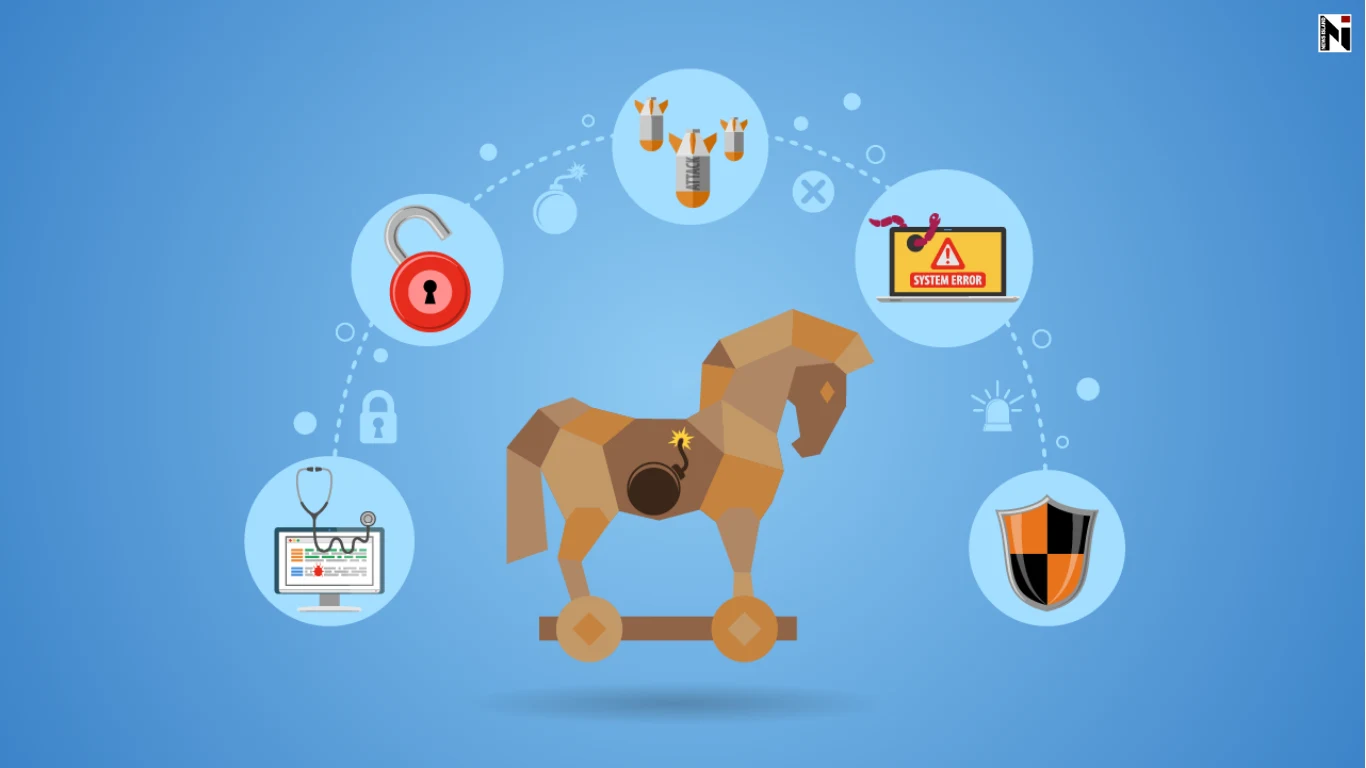
New Delhi: If you use the internet, you’ve probably heard terms like virus, hacking, or malware. Among the most well-known of these threats is the Trojan Horse. It is a type of malware that disguises itself as a trusted app, file, or link to gain access to your computer or smartphone. Once inside the system, it can silently steal personal information, destroy data, or even give hackers complete control over your device.
But have you ever wondered why this digital threat is called a “Trojan Horse”? The answer lies in a story from nearly 3,200 years ago. This is not just the story of a computer virus—it is the story of one of history’s greatest acts of deception, which taught the world that sometimes the biggest danger does not come from outside, but arrives disguised as something trustworthy.
The City of Troy and the Ten-Year War
The story begins in ancient Greece and the famous city of Troy, believed to have been located in present-day Turkey. At the time, Troy was renowned for its massive fortifications. With its towering walls and strong defenses, the city was considered nearly impossible to conquer.
A great war broke out between the Greeks and the Trojans. The Greek army surrounded Troy from all sides, expecting victory within a short time. But things did not go as planned. The people of Troy remained safely inside the city’s walls while the Greek soldiers waited outside.
Days turned into months, and months turned into years. Before long, ten years had passed. The Greek army was exhausted, and many soldiers wanted to return home. It seemed as though winning the war was no longer possible.
The Wooden Horse and History’s Greatest Deception
When military strength failed, the Greeks turned to strategy. They built a gigantic wooden horse that appeared to be a gift or an offering. Hidden inside the horse, however, were carefully selected Greek soldiers.
The Greek army then pretended to abandon the war and sail back home. The next morning, the people of Troy saw that their enemies had disappeared, leaving only the enormous wooden horse behind.
Some wise citizens warned that it might be a trap, but the excitement of apparent victory drowned out their voices. Believing it to be a symbol of triumph, the Trojans brought the wooden horse inside their city.
That night, after the city had fallen asleep, the soldiers hiding inside the horse emerged. They secretly opened the city’s main gates and signaled the Greek army, which had been waiting offshore.
Within hours, the Greeks stormed Troy, and the once-mighty city was completely destroyed.
From that day onward, the Trojan Horse became one of history’s greatest symbols of deception and betrayal.
From Ancient History to the Digital World
Centuries later, as computer technology evolved, cybersecurity experts adopted the name Trojan Horse for a particular type of malware.
The reason was obvious. Just as the people of Troy welcomed the wooden horse into their city, modern users often trust and download attractive-looking files, free software, games, emails, or links onto their computers and smartphones.
That is exactly when a Trojan Horse begins its real work.
It appears to be a legitimate program, but behind the scenes it opens a backdoor for hackers. In many cases, users remain unaware for a long time that their systems have already been compromised.
Also read: Sam Altman Says “We Are in the Singularity”: What the OpenAI CEO’s Statement Really Means
The First Trojan-Like Program
In 1975, the world saw what is widely regarded as one of the earliest examples of a Trojan-like program. It was called Animal.
Animal was a simple computer game that asked users around 20 questions to guess an animal they were thinking of. On the surface, it looked like harmless entertainment.
However, it was accompanied by another program that quietly copied itself to other computers.
Although it was not designed to cause damage, it demonstrated an important concept—that a seemingly innocent program could secretly perform hidden actions.
When Computer Viruses Began Causing Real Damage
In 1986, two brothers from Pakistan developed a special piece of code to prevent unauthorized copying of their medical software.
The code spread through floppy disks and gradually reached other computers. Over time, it began behaving like a virus, affecting numerous systems.
This marked a turning point, making the world realize that computer viruses were no longer just technical experiments—they had the potential to cause widespread damage.
How Does a Trojan Horse Work?
Today’s Trojan Horses are far more dangerous than their early predecessors. They typically reach users through free applications, fake banking messages, email attachments, games, movie download links, or fraudulent promotional offers.
The moment a user opens the infected file, the Trojan becomes active inside the system.
It can then perform a wide range of malicious activities, including:
- Stealing passwords and banking credentials.
- Copying personal photos and confidential documents.
- Accessing your device’s camera and microphone.
- Recording every keystroke you type.
- Giving hackers complete remote control of your computer or smartphone.
One of the biggest challenges is that even antivirus software may not detect certain Trojans immediately.
Pegasus: The Modern-Day Digital Trojan
When discussing the most infamous spyware of modern times, Pegasus is often the first name that comes to mind.
It was developed by the Israeli company NSO Group, which states that the software is supplied exclusively to government agencies to combat terrorism and serious crime.
However, over the years, Pegasus has faced numerous allegations. Various reports have claimed that it has also been used to monitor journalists, human rights activists, opposition leaders, and other prominent individuals.
Pegasus is considered particularly dangerous because, in some cases, it can infect a smartphone without the user clicking on any link. This technique is known as a Zero-Click Attack.
Once a phone is compromised, Pegasus can access messages, calls, emails, photos, videos, contact lists, location data, and even activate the device’s camera and microphone.
For this reason, many leading technology companies and cybersecurity experts have expressed serious concerns about its capabilities.
How to Protect Yourself from Trojan Malware
As cybercrime continues to rise, a few simple precautions can significantly reduce your risk.
- Never click on unknown or suspicious links.
- Download apps only from official websites or trusted app stores.
- Keep your computer and smartphone software up to date.
- Use strong, unique passwords for different accounts.
- Always enable Two-Factor Authentication (2FA).
- Avoid opening suspicious emails or unexpected attachments.
- Use reliable antivirus and security software.
Around 3,200 years ago, the people of Troy welcomed a wooden horse into their city, believing it was a symbol of victory. That single decision ultimately led to the destruction of their civilization.
Today, the same story is repeated in the digital world. The only difference is that the wooden horse has been replaced by fake apps, malicious links, suspicious files, and dangerous malware.
As technology continues to advance, cybercriminals are evolving just as rapidly. That is why your strongest defense is not just antivirus software it is awareness.
Remember: not every attractive link is safe, and not everything free is trustworthy. In the digital age, staying alert is your most powerful shield against cyber threats.
Also read: Why the World Can’t Stop Loving iPhones