Uttarakhand’s migration crisis is changing shape as residents leave remote hills for towns, while jobs, land laws and development struggle to keep villages alive
New Delhi: Nearly 26 years after Uttarakhand was carved out of Uttar Pradesh, the state’s migration crisis remains unresolved. The number of people permanently leaving the state has fallen sharply, but that does not mean the hills have stopped losing population. Increasingly, residents are moving from remote villages to nearby towns and district headquarters, changing the nature of migration rather than ending it.
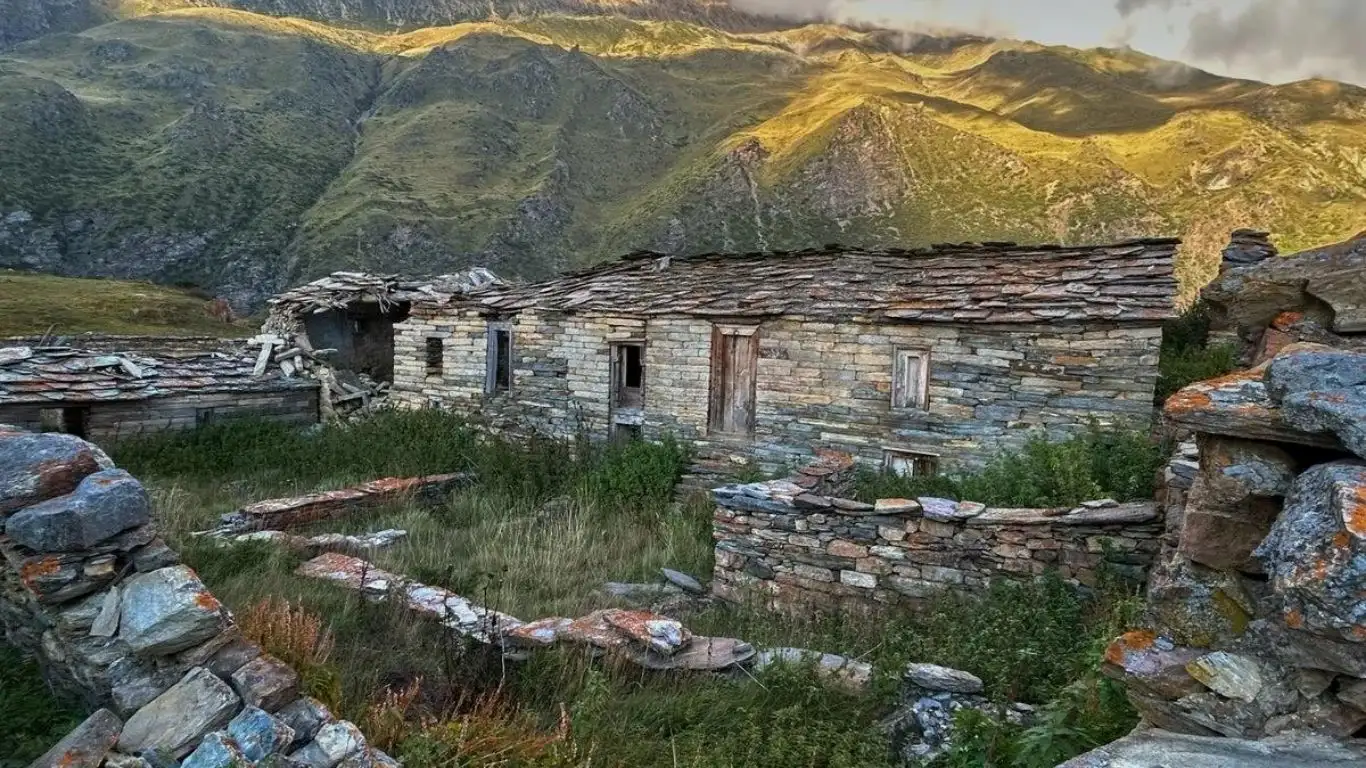
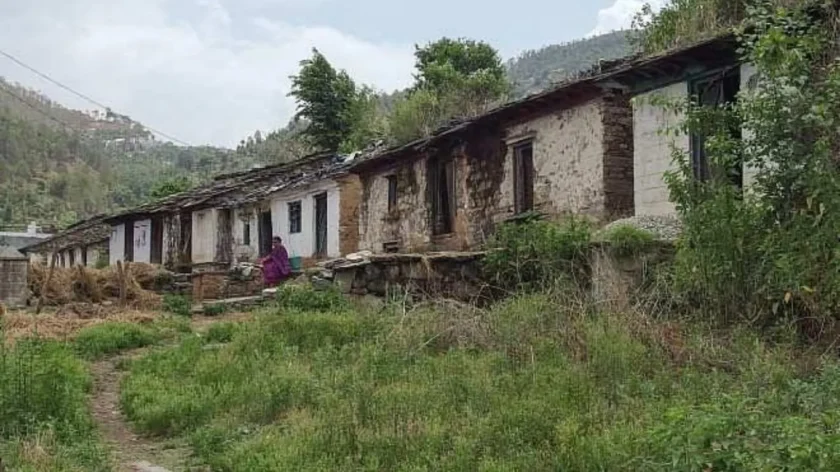
The transformation is visible across the mountain districts. In parts of Pauri Garhwal, Tehri Garhwal and Almora, locked homes, abandoned fields and villages with only a handful of residents have become familiar signs of a long-running demographic shift.
A State Born to Keep Its Hills Alive
The demand for a separate Uttarakhand was closely linked to the belief that the hill districts had distinct economic, geographical and administrative needs that were not being adequately addressed under the larger state of Uttar Pradesh.
For communities spread across difficult terrain, access to government services, roads, schools, healthcare and employment was a persistent challenge.
The movement for statehood therefore carried an expectation that a government based closer to the mountains would be better placed to address those problems. Migration became one of the clearest tests of that promise. If a separate state could create enough opportunities for people to build sustainable livelihoods in their home districts, the expectation was that fewer families would need to leave.
The First Signs of Emptying Villages
The 2011 Census provides the first major benchmark for understanding the scale of the problem after statehood. It recorded 16,793 villages in Uttarakhand, of which 1,048 had no residents. That meant roughly 6.2% of the state’s census villages were uninhabited at the time.
The state began systematically tracking migration several years later. In 2017, it established the Rural Development and Migration Commission, popularly known as the Palayan Aayog, to examine migration patterns across districts and identify the reasons behind them.
Its first major assessment, covering the period from 2011 to 2018, found that another 734 villages had become uninhabited. A subsequent survey covering 2018 to 2022 identified 24 additional villages that had emptied. These figures need to be read carefully because “uninhabited village” and “ghost village” are not always interchangeable terms.
A village with no permanent residents is different from one where only a few families remain or where residents migrate seasonally for work. Even with that distinction, the trend is clear: parts of Uttarakhand’s mountain belt have experienced sustained population loss over the past two decades.
Migration Has Fallen — But It Has Not Disappeared
Migration data shows an important shift in Uttarakhand. The state is no longer seeing the same level of permanent migration as before. According to the Migration Commission, 1,18,981 people permanently migrated from villages between 2008 and 2018. This number fell to 28,531 between January 2018 and September 2022.
The Commission linked part of this decline to government efforts to create local jobs. One such initiative is the Mukhya Mantri Swarojgar Yojana. It supports activities such as dairy, poultry, fisheries and other small businesses. These programmes have given some residents more opportunities to earn near their villages.
However, permanent migration tells only part of the story. Between 2018 and 2022, 3,07,310 people from 6,436 gram panchayats across 92 blocks were recorded as temporary migrants. Many moved to nearby towns, block headquarters or district headquarters. They did not permanently sever their ties with their native villages.
This shift is important. People do not have to leave Uttarakhand to contribute to the depopulation of remote villages. A family may still own a house and farmland in its native village. Yet, they may spend most of the year in a nearby town. Better access to jobs, education and healthcare often drives this move.
The Districts Losing People Fastest
The migration crisis is also highly uneven across the state. Almora, Tehri Garhwal and Pauri Garhwal recorded the highest numbers of permanent migrants during the 2018–2022 period. Almora recorded 5,926 departures, followed by Tehri Garhwal with 5,653 and Pauri Garhwal with 5,474.
The difference becomes more apparent when these figures are compared with the plains. Nainital recorded 2,014 permanent departures during the same period, while Chamoli, Pithoragarh, Champawat and Bageshwar recorded figures in the broader range of around 1,400 to 1,750. Udham Singh Nagar, by comparison, recorded only 82 permanent departures in the Commission’s data.
The pattern is similar at the village level. Of the 24 villages identified as having become completely uninhabited between 2018 and 2022, nine were in Tehri Garhwal, five in Champawat, three each in Pauri Garhwal and Pithoragarh, and two each in Almora and Chamoli.
Academic research covering the earlier 2011–2018 period also showed significant differences between districts. Out-migration to other states was highest among migrants from Almora, accounting for 47% of migration from the district, followed by Pauri at 34% and Champawat at 33%.
At the same time, districts such as Chamoli, Tehri and Rudraprayag recorded a larger proportion of migrants relocating within Uttarakhand. That pattern foreshadowed the later shift towards migration from villages to towns and district centres.
Why Are People Leaving the Hills?
Across government reports and independent research, one factor appears consistently at the centre of the migration story: the lack of stable local employment. For young people in remote villages, opportunities are often concentrated in towns and cities. Higher education can require relocation, while formal-sector employment is rarely available within or near many small mountain settlements.
Employment is not the only factor. Limited access to quality healthcare, higher education and other essential services can make permanent residence in remote villages increasingly difficult for families, particularly those with children or elderly members.
Connectivity has also played a role. Roads have expanded significantly across Uttarakhand since statehood, but difficult terrain continues to leave some settlements relatively isolated. For residents of remote villages, distance from schools, hospitals and markets can translate directly into higher costs and fewer opportunities.
Agriculture adds another layer to the problem. Small landholdings, low returns from traditional farming, crop damage by wildlife and changing weather patterns have made agriculture increasingly difficult as a sole source of income for many households.
Climate-related risks further complicate the picture. Changes in rainfall, extreme weather, landslides, and flash floods can affect both farming and infrastructure in mountain districts. For many families, therefore, migration is not driven by a single decision. It is the cumulative result of limited employment, education, healthcare, agricultural income, and access to services.
The 2025 Land Law: A New Attempt to Protect the Hills
In 2025, the Uttarakhand government made a major change to its land-purchase rules. The Uttarakhand Legislative Assembly passed the Uttarakhand (Uttar Pradesh Zamindari Abolition and Land Reforms Act, 1950) (Amendment) Act, 2025. The Governor gave assent on April 30, 2025. The law came into force immediately.
Under the amended law, non-residents cannot buy agricultural or horticultural land in 11 of Uttarakhand’s 13 districts. Haridwar and Udham Singh Nagar are excluded from this restriction.
The rules for residential land remain different. Non-residents can purchase up to 250 square metres for residential purposes. However, they must submit an affidavit. It must state that they or their family have not already purchased more than the permitted residential land elsewhere in the state.
The law has also raised questions about migration. Critics argue that restricting land purchases may not address the deeper causes of migration. They say it could push some demand towards the exempted plains districts, especially Haridwar and Udham Singh Nagar.
Can Land Restrictions Actually Stop Migration?
Unchecked land purchases and rapid construction can alter the character of mountain settlements. Rising land values can make it harder for residents to acquire property, while poorly planned development can place additional pressure on fragile mountain ecosystems.
But people do not leave the hills simply because land is being purchased by outsiders. They leave because the economic and social incentives to stay are often weak. A land law can regulate ownership. It cannot, by itself, create enough jobs, improve school quality, make farming profitable or provide specialised healthcare in every remote settlement. That is why the migration crisis ultimately remains a development challenge.
The Hills Are Emptying Differently Now
Nearly 26 years after statehood, Uttarakhand’s founding promise — that a separate hill state could create conditions for people to remain in their mountain communities — remains only partly fulfilled. Permanent migration has slowed substantially, and that is an important change. But the decline in permanent migration should not be mistaken for an end to population loss from remote villages.
More residents are moving towards nearby towns and district headquarters, where they can access jobs, education, healthcare, and markets while maintaining some connection with their native villages. But if most working-age residents spend their lives elsewhere, the village can gradually lose the people and economic activity required to sustain it.
The 2025 land law is the latest attempt to address one part of that transformation by tightening rules around land ownership. Whether it can reverse a migration crisis driven primarily by employment, education, healthcare, agriculture, and connectivity is a far more difficult question.
For Uttarakhand, the larger challenge is not simply preventing people from buying land. It is creating enough reasons for those who grew up in the hills to believe they can build a secure future there. Until that happens, the state’s ghost villages will remain a visible reminder that migration has not disappeared.