
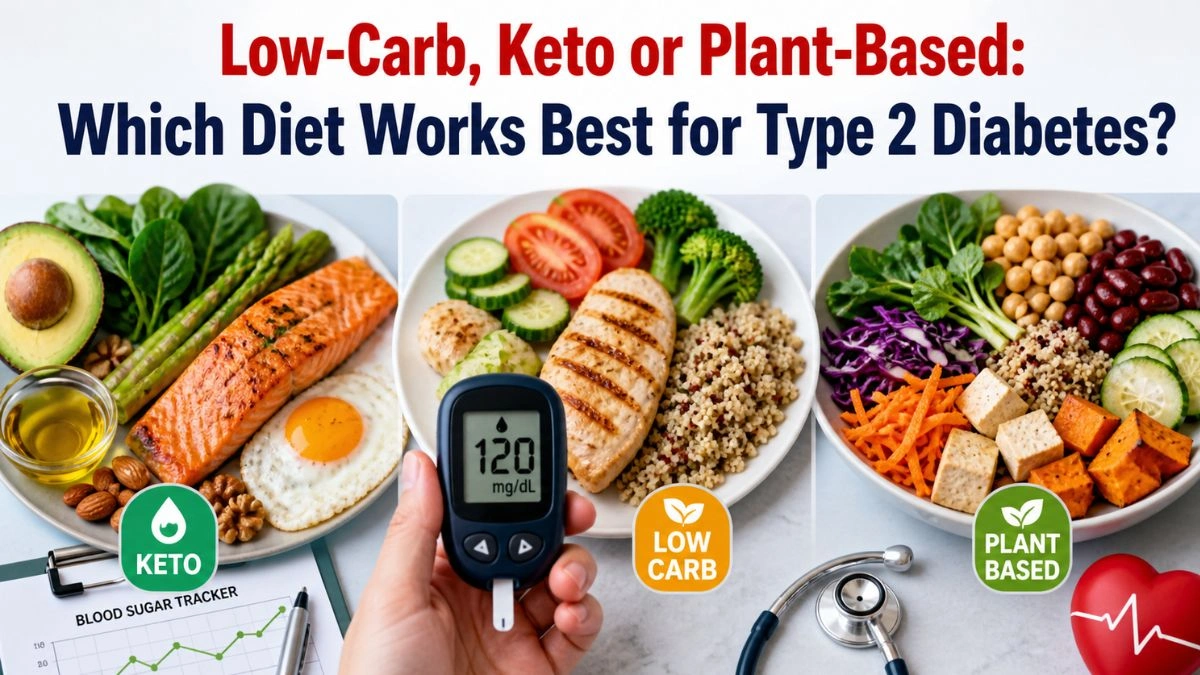
Managing Type 2 Diabetes? Discover how keto, low-carb and plant-based diets compare and what doctors recommend
New Delhi: As Type 2 Diabetes cases keep rising, many patients feel confused about what they should eat to control their blood sugar. Keto, low-carb, and plant-based diets all claim to be the best. Experts say the truth is simple, there is no single perfect diet. The right plan depends on your body and your lifestyle.
Many people still ask: which diet actually works best—keto, low-carb, or plant-based?
Recent studies give an answer: not a single type of diet suits everybody. Thus, the aim is to select a diet that keeps blood sugar low and is sustainable.
Why Diet Is So Important
According to medical researchers, Type 2 Diabetes results in a person’s inability to use insulin properly, leading to increased blood sugar level. Therefore, carbohydrates become a critical factor in Type 2 Diabetes management.
Better diet leads to improved HbA1c, insulin action, and weight loss. Scientists add that food quality is equally important to total amounts of carbs and fats consumed.
Keto Diet
Ketogenic diet involves high consumption of fats and very low amounts of carbohydrates, causing the body to get into the state called ketosis.
Such nutrition was proven effective in quickly lowering the patient’s blood sugar and improving their HbA1c index. Moreover, some patients reduced doses of drugs upon consultation with a doctor.
However, doctors warn that such dieting can lead to deficiency of some nutrients due to the low presence of fruits and cereals. Besides, it may result in fatigue and vertigo at first and elevated cholesterol in the long term. Safety of this regime in the long run is unknown, and it is difficult to follow.
Also Read: Hantavirus Deaths Raise Alarm: A Silent Threat in Dust in Closed Spaces
Low-Carb Diet
This regime is less severe than ketogenic as it permits consuming some carbohydrates. Such an approach seems easier to follow.
Recently, scientists have discovered that it reduces patients’ blood sugar and HbA1c, especially during the initial months. Still, after a while, its effects diminish.
Scientists argue that this diet is combined with regular physical activity to be more efficient. Unbalanced dieting results in reduced consumption of fiber, and outcomes may vary between individuals.
Plant-Based Diet
Plant-based diets include fruits, vegetables, grains, nuts, seeds, legumes, etc.
Medical studies proved they can manage the disease and prevent it at the same time. It was noted they positively influence blood sugar, decrease inflammation and improve patients’ cardiovascular systems.
Nevertheless, poor planning can make people deficient in proteins and vitamins. Besides, highly processed plant foods still increase blood sugar if consumed excessively.
Findings From Studies
Recent researches prove each of these types of diets to be helpful but in different ways:
- Ketogenic diet is fast-acting yet rigid;
- Low-carbohydrate is flexible;
- Plant-based is beneficial in the long term.
One major study conducted in 2025 has shown that no single diet is superior for everyone. Health organizations, such as the American Diabetes Association, recommend personalized nutrition regimes.
Focus On Food Quality
Experts emphasize that dietary restrictions matter, yet the key point is in the type of consumed food. A study lasted decades, proving that any balanced food with whole ingredients lowers heart disease probability by around 15% regardless of whether it contains low amounts of carbohydrates or fats. Specialists recommend having only whole and unprocessed foods, balancing nutrients and sticking to the plan chosen.
What Should You Do?
Doctors advise selecting a nutrition regime according to one’s schedule and possibilities of implementation. Eliminate sugars and refined carbohydrates, consume healthy foods and consult professionals.
Depending on individual needs, some people may benefit from ketogenic diet for its rapid effects. However, other patients might opt for the low-carb or plant-based ones.

khushisikarwar is an award-winning journalist and content creator who thrives on telling stories that matter. As a key contributor to Newsisland, [she] focus on cultural commentary, providing readers with thought-provoking insights.


