
Read the complete story of Operation Grand Slam, which began on September 1, 1965. Know why Pakistan targeted Akhnoor, how the change in command affected the operation, and how India responded.
New Delhi: When Rising Tensions Along the Border Moved Toward a Major Conflict, 61 years ago, in September 1965, tensions between India and Pakistan had reached a point where limited military action could potentially turn into a larger war. The dispute over Kashmir had remained a longstanding source of tension between the two countries, and in 1965 Pakistan attempted to increase pressure on India over the issue. However, the developments that followed brought both countries into a much wider battlefield.
The First Attempt Was Infiltration in Kashmir
To understand these developments, it is important to go back a few weeks. In August 1965, Pakistan launched Operation Gibraltar. Under the operation, a large number of armed infiltrators were sent into Indian-administered Jammu and Kashmir. The objective was to create instability in Kashmir and encourage a local uprising against India.
However, the strategy did not succeed as Pakistan had expected. Information provided by local residents and action by Indian security forces prevented the infiltration campaign from gaining the anticipated level of local support. Pakistan then moved toward a more direct military option to take the conflict forward.
Operation Grand Slam Began on September 1
Pakistan launched Operation Grand Slam on September 1, 1965. The main area of the operation was the Chhamb-Jaurian sector of Jammu and Kashmir. The Pakistani Army launched a major offensive in the area, using large numbers of troops, artillery and armoured vehicles against Indian military positions.
The strategic objective of the operation was to advance toward Akhnoor. Akhnoor was important not simply as a town but because of its geographical significance for Indian military logistics and communications connecting the Jammu region with areas further into Kashmir.
Why Was Akhnoor So Important?
Akhnoor is located in the Chenab River region and, because of its proximity to important communication routes connecting it with Jammu, held considerable strategic importance during the 1965 war. An important part of Pakistan’s plan was to put pressure on the Akhnoor area because this could potentially disrupt Indian military logistics and communications in Jammu and Kashmir.
Some military analyses and historical accounts have described Akhnoor as a “jugular” or lifeline of the Indian position. However, this should not be interpreted to mean that the capture of Akhnoor would automatically have ended India’s control over Kashmir. It would certainly have created a serious strategic risk.
Pakistan Gained an Initial Advantage
During the early phase of Operation Grand Slam, Pakistani forces advanced rapidly and put significant pressure on Indian defensive positions. Pakistan had heavy artillery and armoured capabilities, including Patton tanks. The Indian Army had to respond to the offensive while strengthening its defensive positions.
The initial advance created serious concerns about the security of Akhnoor. However, the outcome of a war is not determined solely by an early battlefield advantage. Strategic decisions taken over the following hours and days significantly influenced the course of the operation.
Change in Command and the Loss of Momentum
A significant change took place in the Pakistani command structure during Operation Grand Slam. Major General Akhtar Hussain Malik was replaced by Major General Yahya Khan as the commander of the operation. The change in command caused a disruption in the offensive, resulting in the loss of valuable time.
Several historical analyses consider this pause to have been a strategic problem for Pakistan. It gave the Indian Army time to strengthen its positions and mobilise additional military resources. However, saying that the change in command alone was the only reason for the failure of Operation Grand Slam would oversimplify the complex circumstances surrounding the campaign.
India Opened a New Front
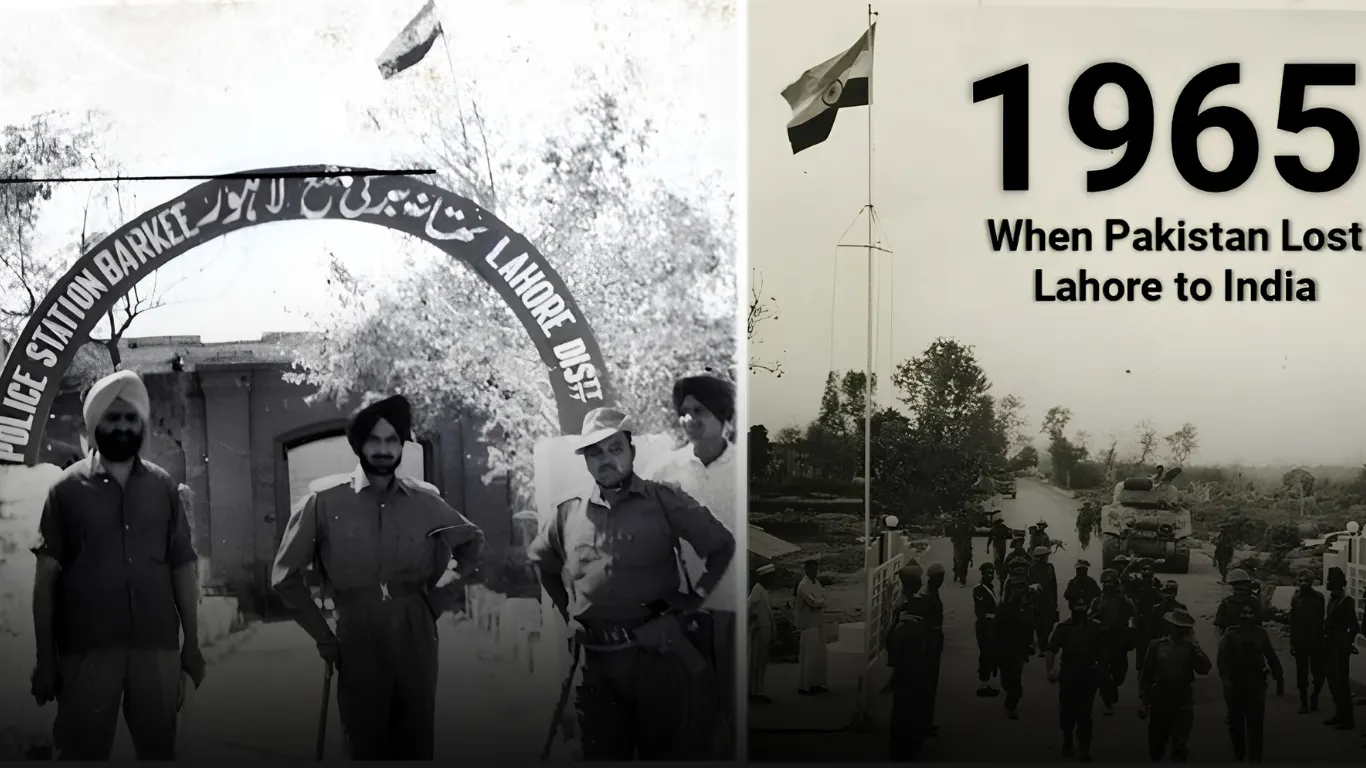
Meanwhile, India decided not to confine its response to the Pakistani pressure in the Chhamb-Akhnoor sector. On September 6, 1965, the Indian Army crossed the international border and launched a major offensive against Pakistan in the Punjab sector.
Indian forces advanced toward Lahore. This forced Pakistan to divert military resources to a new and larger front. As a result, the conflict was no longer limited to Jammu and Kashmir and developed into a full-scale war between the two countries.
Operation Grand Slam Did Not Achieve Its Original Objective
The stated military objective of Operation Grand Slam was to advance toward and capture the Akhnoor area. However, Pakistan was unable to achieve its original strategic objective during the operation. Indian counter-actions and the opening of additional fronts prevented Pakistan’s initial advantage from turning into a decisive victory.
Fighting continued across multiple fronts throughout September 1965. Eventually, a ceasefire came into effect on September 23, 1965, following a United Nations appeal.
The War Was Not Just About Soldiers, but the Entire Nation
The 1965 war was fought under the leadership of then Prime Minister Lal Bahadur Shastri. During the conflict, he highlighted the contributions of both soldiers and farmers through the famous slogan “Jai Jawan, Jai Kisan.”
The slogan reflected the national circumstances of that period. While soldiers were responsible for protecting the country’s borders, farmers played an important role in ensuring food security. The slogan therefore emphasised both national morale and self-reliance during a period of war.
What Does Operation Grand Slam Teach Us 61 Years Later?
Operation Grand Slam, which began on September 1, 1965, remains one of the important chapters of the India-Pakistan War. It demonstrated that military strength alone does not determine the outcome of a conflict. Strategy, speed, command, logistics and the response of the opposing side can also have a decisive impact.
Pakistan targeted Akhnoor in an attempt to put pressure on India’s military and communication network. Although Pakistani forces gained an advantage during the initial phase, they were unable to achieve their original objective. India’s counter-offensive in the Punjab sector changed the scope of the conflict.
Today, 61 years later, understanding Operation Grand Slam is not simply about knowing what happened on September 1, 1965. It is about understanding the chain of events through which a limited military operation gradually developed into a full-scale war, with the strategic calculations of both countries shaping the course of South Asian history.


