
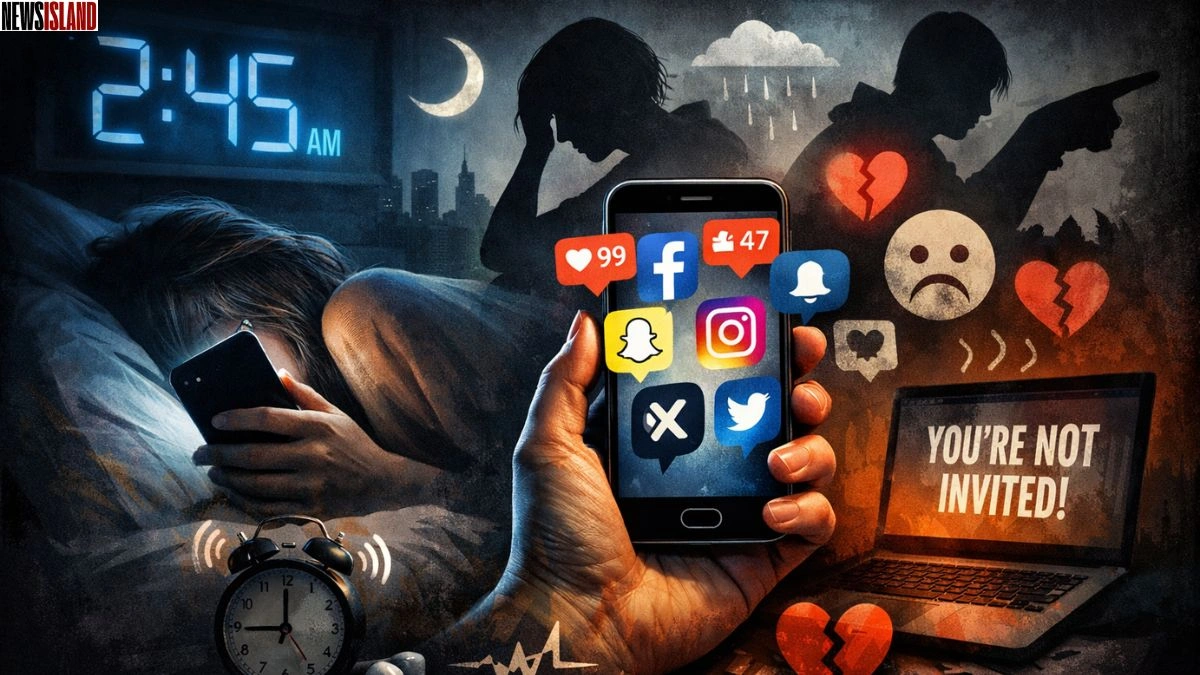
Social media platforms may be secretly affecting your sleep quality, confidence levels, and overall psychological well-being
New Delhi: Social media have become an integral part of life in the digital era. Facebook, Instagram, X, and Snapchat have connected over a billion users worldwide. People use these sites to communicate, express their creativity, and market their businesses. However, mental health professionals have been raising concerns about the increasing addiction to social media sites and their negative effects on psychological health.
Over the past ten years, casual browsing has become compulsive scrolling for many people. Teenagers, college students, and working professionals spend several hours a day checking updates, watching videos, and participating in online conversations. When people are unable to control their usage and let it affect their sleep, studies, work, and relationships, mental health professionals term it social media addiction.
Increasing Addiction
Technology companies have designed social media platforms to keep users engaged for a long time. Endless scrolling, instant notifications, likes, and comments activate the reward centers of the brain. Every notification triggers the release of dopamine, a chemical associated with pleasure and satisfaction. This response prompts users to come back to their screens again and again.
Social media addiction has become a common problem for many people. They spend several hours a day checking their social media accounts and feel a sense of emptiness when they are unable to access them. Social media addiction can affect a person’s psychological health in many ways. It can affect a person’s confidence levels and overall psychological well-being.
Young people are the most affected group. Teenagers immediately check their phones after waking up and continue browsing late into the night. Health experts agree that too much screen time affects attention span, reduces focus, and lowers productivity. Frequent phone checks increase restlessness and make it hard to focus on critical tasks and responsibilities.
Anxiety And Depression
Mental health experts clearly see a link between excessive social media use and rising levels of anxiety, depression, and loneliness. The comparison culture is one of the factors contributing to this issue. Social media platforms display carefully curated images of people’s lives. Users share filtered photos, accomplishments, and happy moments while hiding struggles and failures.
Teenagers compare their appearance, life, and professional achievements to those of influencers and friends. This practice decreases self-confidence and affects body image. In severe cases, people become socially isolated and exhibit symptoms of depression.
Cyberbullying further affects mental health. Cyberbullying, bullying, harsh comments, and public humiliation affect mental health. Unlike bullying, cyberbullying follows victims everywhere via their devices. Victims experience chronic stress, fear, and embarrassment.
Also Read: February 13: The Story Behind India’s National Women’s Day
Sleep And Mood
Health experts strongly advise against scrolling through phones late at night. People spend hours watching videos or chatting before bedtime. Devices emit blue light, which suppresses melatonin production, the sleep hormone. Users find it hard to fall asleep and have irregular sleep patterns.
Poor sleep directly influences mood. People who do not get enough sleep feel irritable, anxious, and emotionally unstable. Chronic sleep deprivation increases the risk of developing severe mental health disorders.
Fear Of Missing Out
Another significant cause, according to psychologists, is Fear of Missing Out, or FOMO. Social media sites are always updating their users about parties, events, trends, and achievements. When people witness others enjoying events or achieving milestones, they feel left out. This creates a compulsion to check updates again and again.
Users are also under pressure to be active on social media. Many feel that if they are not active on social media, they will be less important or less noticed. The need for likes and approval also causes stress, especially when the posts do not get the desired likes.
Mansha Gupta, a 22-year-old from Ambala, talked about her experience with excessive scrolling. She said, “I did not notice when casual scrolling turned into hours of screen time. I would take my phone for five minutes, and I would end up wasting two or three hours. The more I scrolled, the more anxious and distracted I felt. It started affecting my sleep, my productivity, and even my mood. Now I understand how important it is to control screen time before it controls us.”
Relationship Impact
Social media brings people together online but breaks them apart offline. Families today spend less time talking because everyone is busy with their phones. Even when friends are together, they are more interested in their screens than in actual conversations.
Too much time spent on it also causes misunderstandings in relationships. People misunderstand what others say, check out what their partners are doing, and overthink social media interactions. All these things cause problems and make people emotionally distant.
Children And Studies
Child psychologists point out the dangers of using social media at a young age. Children who rely too much on social media validation have trouble coping with criticism or rejection in real life. They also have trouble developing effective communication skills.
Students get distracted because of notifications. Many find it difficult to focus on their studies, which impacts their performance. Many schools have now banned the use of smartphones in class to help students focus.
Healthy Usage Tips
Mental health professionals explain that social media platforms themselves are not the cause of problems. The issue arises when users are not able to manage their usage. Professionals recommend setting time limits and using screen time tracking features.
Users should perform digital detox by not using social media before sleeping and during meals. Users should engage in physical activities, going out, reading, and hobbies to avoid being dependent on online validation.
Parents should be aware of their children’s social media usage and have open communication with them. Turning off notifications also helps avoid the need to check the phone repeatedly.
Mental health professionals recommend users be mindful of their usage. Users should log in with a purpose and not mindlessly scroll through the platform. Users who experience chronic anxiety and depression related to social media usage should consult mental health professionals.
Professionals think that technology companies should be responsible for designing safe social platforms. Some platforms have implemented features that remove like counts and remind users to take breaks. Governments in other countries are considering regulations to protect children from addictive design elements.
Authorities and schools are promoting digital literacy programs to raise awareness about healthy social media usage.
Finding The Balance
Social media platforms have many benefits. They help with networking, learning, activism, and instant communication. In emergencies, they help disseminate information quickly and efficiently. Users should, however, find a balance.
Professionals explain that people should be in control of their social media usage and not the other way around. When people experience irritability without access to their phones, ignoring responsibilities, or having constant sleep problems, they should seek help.
With the increasing use of digital platforms, it is important that mental well-being becomes a priority in society. By being responsible and having good offline relationships, one can shield oneself from the negative impacts of addiction to social media.

khushisikarwar is an award-winning journalist and content creator who thrives on telling stories that matter. As a key contributor to Newsisland, [she] focus on cultural commentary, providing readers with thought-provoking insights.


