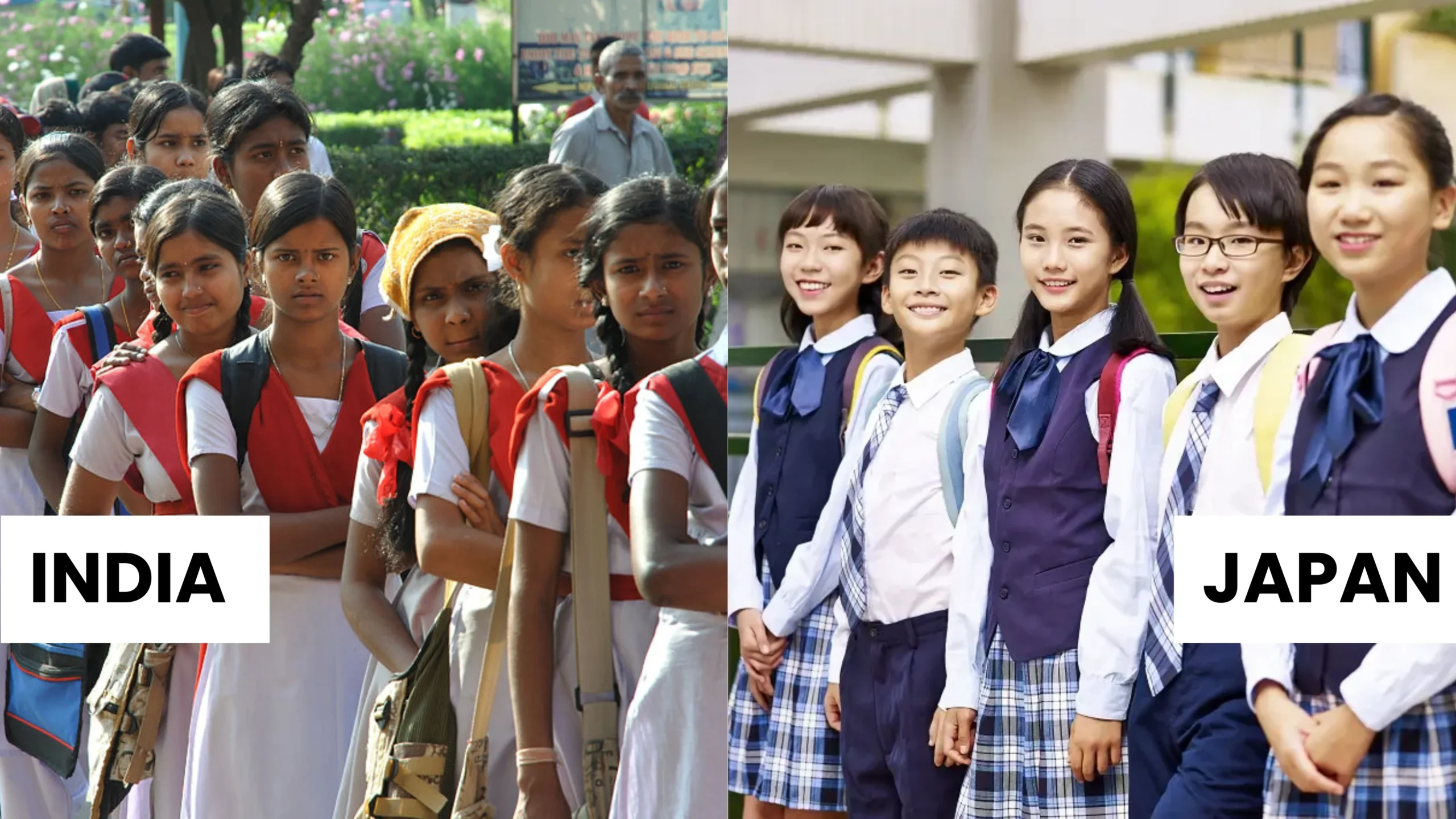
New Delhi: Schools are not just places where children learn from textbooks—they are institutions that shape the future. A country’s education system plays a crucial role in determining how future generations think, learn, and contribute to society. This is why Japan is often recognized as having one of the world’s most respected education systems. India, on the other hand, operates one of the largest education systems globally due to its vast population and diversity.
Both India and Japan are Asian nations that view education as the foundation of progress. However, their teaching methods, school culture, discipline, assessment practices, and approach to life skills differ significantly. These differences make their education systems particularly fascinating to compare.
Let’s take a closer look at some key aspects that distinguish the Indian and Japanese education systems.
- Is Ability Measured by Marks?
For decades, India’s education system has largely revolved around examinations and academic scores. Board exams, competitive entrance tests, rankings, and high marks often become the primary indicators of a student’s success. While the National Education Policy (NEP) has initiated efforts to shift this approach, the influence of exam-based evaluation remains strong.
In contrast, Japan focuses heavily on character development during the early years of schooling. Young students are taught not only academic subjects but also social behavior, discipline, cooperation, responsibility, and respect for others.
Japanese education aims first to develop responsible and ethical individuals, and only then to prepare them for professional success. This is one reason why Moral Education is considered an important part of the curriculum.
- Discipline and Self-Reliance: Japan’s Greatest Strength
If there is one major difference between Indian and Japanese schools, it is the emphasis on discipline and self-reliance.
In most Indian schools, cleaning and maintenance are handled by dedicated staff, allowing students to focus primarily on academics.
In Japan, however, students actively participate in cleaning their classrooms and school premises. They arrange desks, sweep floors, and help maintain shared spaces.
The goal is not cost-saving but character-building. This practice instills responsibility, respect for public spaces, and a strong sense of community. It is one of the reasons why Japanese society is often regarded as one of the most disciplined in the world.
- Understanding Over Memorization
India has long faced criticism for its culture of rote learning. Although many schools are now adopting project-based and skill-oriented education, exam-focused learning still influences the classroom experience.
Japan places greater emphasis on problem-solving, group discussions, critical thinking, and practical understanding. Teachers act not only as instructors but also as mentors who guide students through the learning process.
Students are encouraged to work collaboratively, ask questions, and apply their knowledge to real-life situations. As a result, Japanese students often develop strong foundations in science, technology, and innovation.
- Academic Pressure and Examinations
Indian students often encounter academic pressure from an early age. Tests, assessments, and performance expectations become an integral part of their educational journey. In many families, academic success is closely linked to examination scores.
In Japan, formal examinations carry relatively less importance during the primary years. Greater emphasis is placed on participation, behavior, and the overall learning process.
However, competition becomes intense at the secondary and higher education levels, where entrance examinations for prestigious schools and universities are highly challenging.
Even so, the early years are intentionally designed to be less stressful so that children can enjoy learning and develop naturally.
- The Role and Social Status of Teachers
Traditionally, teachers in India have been regarded as “gurus” and held in high esteem. However, modern educators often face numerous administrative and non-academic responsibilities in addition to teaching.
In Japan, teaching is considered one of the most respected professions in society. The process of becoming a teacher is rigorous and demanding.
Teachers are viewed not merely as subject experts but as mentors who contribute significantly to the personal and social development of students. Strong relationships built on trust and long-term guidance are encouraged.
As a result, schools become centers of social development as much as academic learning.
- Balancing Technology and Life Skills
India is rapidly embracing digital education. Smart classrooms, online learning platforms, digital content, and AI-powered educational tools are becoming increasingly common.
Japan is also a global leader in technology, but its education system does not rely solely on digital advancement. Equal importance is given to life skills and practical learning.
Students are taught time management, teamwork, social responsibility, disaster preparedness, and appropriate public behavior.
Since Japan is prone to earthquakes and other natural disasters, students regularly receive emergency preparedness training. This serves as an excellent example of connecting education with real-world needs.
- School Culture and Community Spirit
School culture in India varies widely across private, public, rural, and urban institutions.
Japanese schools, however, strongly emphasize community-oriented values. Students eat together, participate in group activities, and often regard the school as a second home.
Interestingly, in many Japanese schools, students help serve meals to their classmates. This encourages cooperation, equality, and mutual respect.
Education is viewed not only as a path to personal achievement but also as a means of contributing positively to society.
Key Lessons India Can Learn from Japan
India and Japan operate under very different social, cultural, and demographic conditions. India’s vast population, linguistic diversity, and social complexity make direct comparisons difficult.
Nevertheless, there are several valuable lessons that India can draw from the Japanese education model:
- Strengthening moral and value-based education
- Encouraging greater self-reliance among students
- Reducing excessive dependence on examination-based assessment
- Integrating life skills into the curriculum
- Promoting responsibility and community participation in schools
- Making learning more practical, experiential, and application-oriented