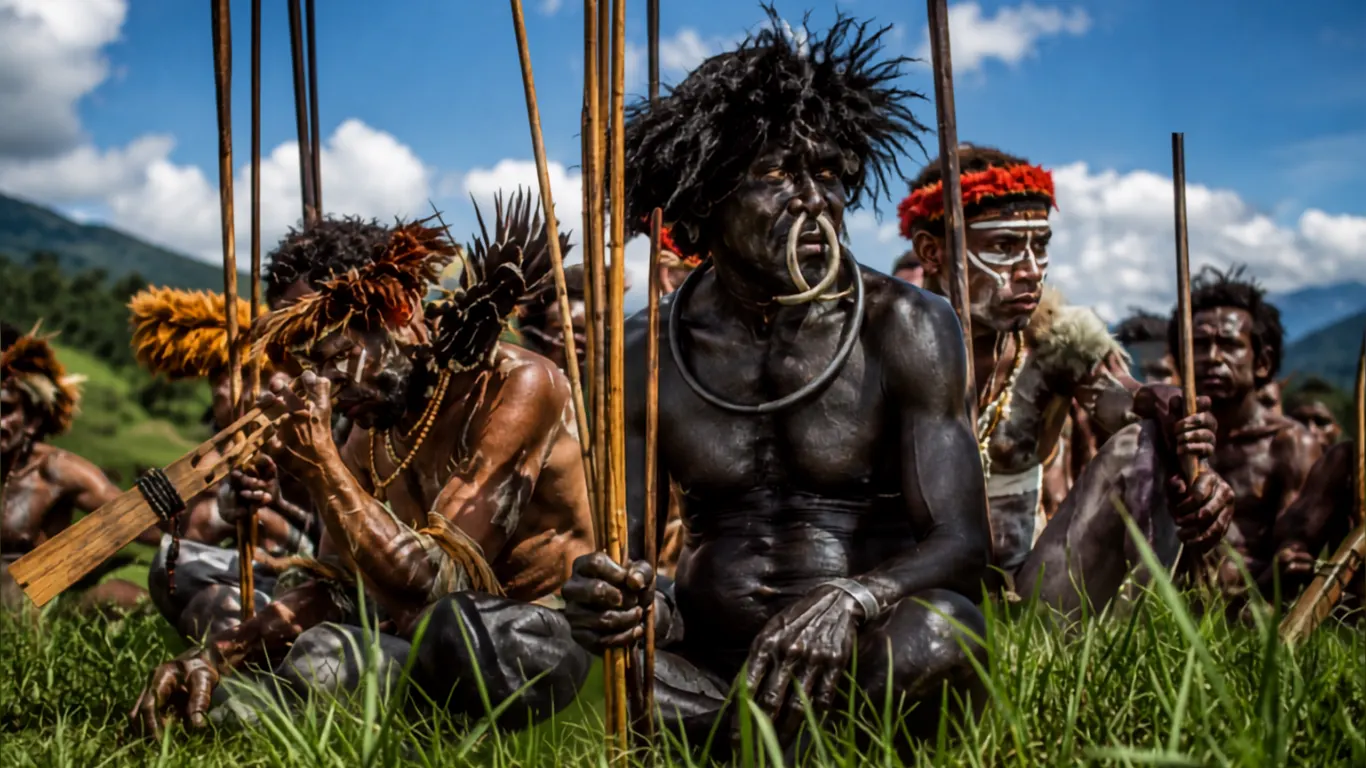
New Delhi: Imagine a world without the internet, crowded cities, or the fast-paced rush of modern life. Surrounded by towering mountains, dense forests, and nature, there exists a community that has preserved its traditions for centuries. The Dani tribe, living in the Baliem Valley of Indonesia’s Papua Province, offers a glimpse into such a world.
Key Insights:
- Who the Dani tribe is and where they live
- The unique traditions and culture of the Dani people
- The history behind their famous mourning ritual
- How the Dani tribe balances tradition with modern life
- Why the Dani tribe remains one of the world’s most fascinating indigenous communities
The Dani tribe is among the communities that have managed to preserve much of their cultural identity despite the rapid pace of modernization. Their lifestyle, religious beliefs, and social traditions continue to attract researchers, anthropologists, and travelers from around the world.
Who are Dani People?
The Dani tribe, also known locally as the Hubula, resides in the Baliem Valley of Indonesia’s Papua region. Their total population is estimated to be between 90,000 and 100,000 people. For a long time, this community remained almost completely isolated from the outside world.
Even without modern technologies and machinery, the Dani developed a well-organized society based on agriculture and animal husbandry. Their lives revolved primarily around farming and pig rearing. Among the Dani, pigs were not merely a source of food but also symbols of social status, wealth, and family honor.
Also read: The History of Kaaba: Story of Islam’s Holiest Site
First contact with the outside world
The Dani tribe’s first significant contact with the outside world occurred in 1926, when an exploratory expedition conducted the first systematic study of the region. However, regular interaction with the outside world was only established in the 1950s, following the arrival of Western missionaries and administrative officials.
As a result, education, healthcare facilities, and elements of modern lifestyle gradually reached the community. Despite these changes, the Dani sought to adapt to new circumstances without completely abandoning their cultural roots.
Honai: Warm homes in the cold mountains
One of the most distinctive features of Dani villages is their traditional houses, known as Honai. These are small, circular structures with thick thatched roofs.
The climate in the Baliem Valley becomes quite cold at night, and the design of the Honai helps retain warmth inside. Interestingly, separate Honai houses are built for men and women, making them an important part of the tribe’s social structure.
Traditional attire and cultural identity
Traditionally, Dani men wore a garment called the Koteka, which is made from dried gourds. It was not merely a piece of clothing but also a symbol of their cultural identity and traditions.
Although most Dani people now wear modern clothing, traditional attire is still proudly worn during festivals and cultural events.
The tradition of ritual warfare
Another unique aspect of Dani culture is their tradition of ritual warfare. At first glance, this practice may appear violent, but its purpose was not to seize land or resources.
These battles were considered a way to maintain social balance, demonstrate courage, and honor the spirits of ancestors. Today, the practice has nearly disappeared, though its legacy can still be seen during cultural celebrations.
A unique mourning tradition
One of the most well-known and emotional traditions of the Dani tribe was their mourning practice. In the past, when a family member died, women would cut off a portion of their fingers as an expression of grief.
The community believed that this act would help the deceased’s spirit find peace and reduce the influence of evil forces on the family. Although this practice has largely disappeared in modern times, it remains an important part of Dani cultural history.
Religion and spiritual life
Traditionally, the Dani believed in nature, ancestral spirits, and invisible supernatural forces. Rituals and community ceremonies played a significant role in their religious life.
Over time, most Dani people adopted Christianity. However, many of their traditional beliefs and cultural customs continue to remain an integral part of their lives.
Balancing modernity and tradition
Over the past few decades, Dani society has experienced rapid changes. Education, tourism, and modern communication have all influenced their way of life. Nevertheless, they continue to make efforts to preserve their cultural heritage.
During cultural festivals held in the Baliem Valley, Dani people showcase their traditional dances, music, and attire. These events not only strengthen their cultural identity but also help connect younger generations with their roots.
The story of the Dani tribe is not merely the story of a remote community; it is also a story of cultural preservation, identity, and the struggle to protect traditions. Despite the growing influence of modernization, this community has managed to keep its heritage alive.
The lives of the Dani people remind us that development is not solely about technology and modern conveniences. Equally important is the ability to preserve and cherish one’s cultural roots.
FAQs: Dani Tribe of Indonesia
The Dani tribe, also known as the Hubula people, is an indigenous community living in the Baliem Valley of Indonesia’s Papua Province. They are known for their unique traditions, farming lifestyle, Honai houses, ritual warfare, and rich cultural heritage.
The Dani tribe is famous for its traditional Honai houses, Koteka attire, ritual warfare, pig-centered economy, unique mourning customs, and efforts to preserve its cultural identity despite modernization.
Historically, Dani women cut off a portion of their fingers after the death of a close family member as a symbol of grief and respect. The practice has largely disappeared but remains an important part of the tribe’s cultural history.
The Dani tribe lives in the Baliem Valley in the highlands of Papua Province, Indonesia, a region surrounded by mountains and forests that remained isolated for centuries.
Honai houses are traditional circular huts with thick thatched roofs built by the Dani tribe. They help retain warmth in the cold mountain climate and are an integral part of Dani social life.