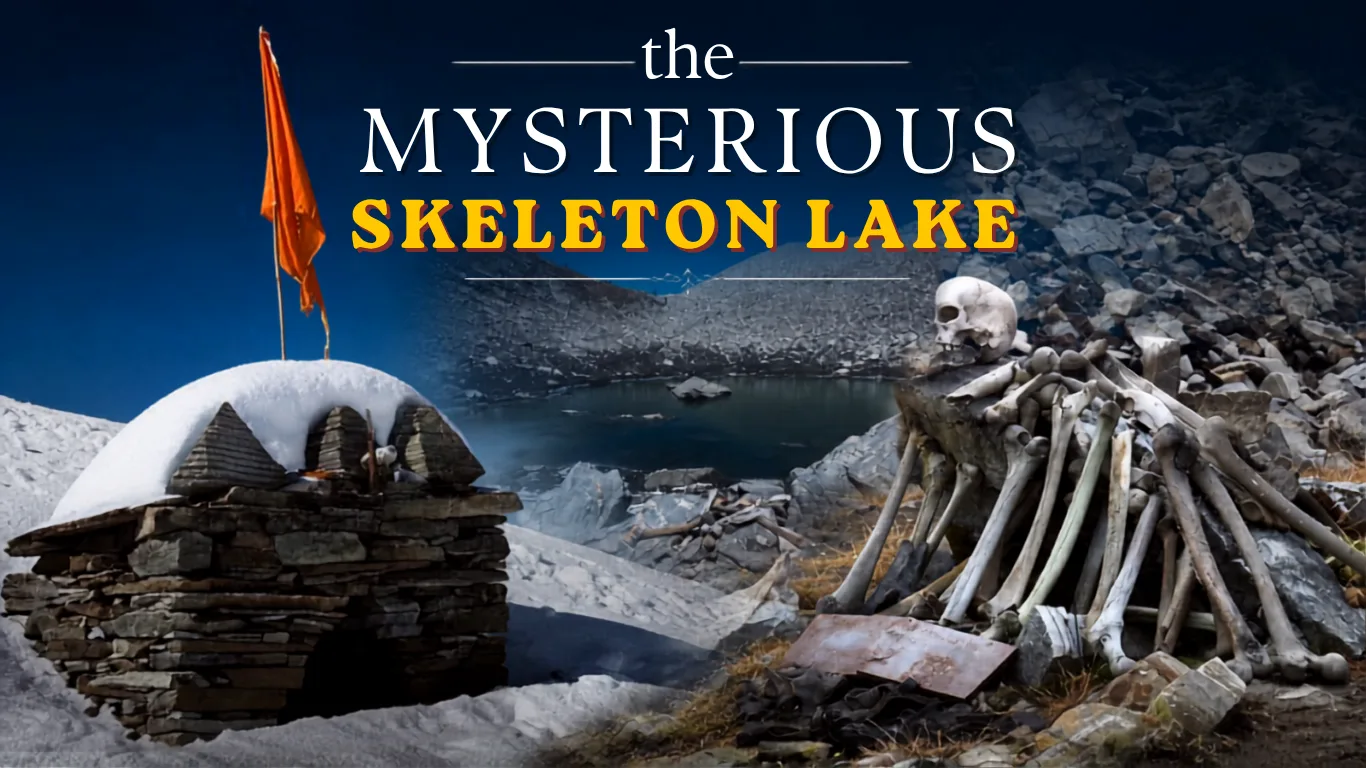
New Delhi: High in the Himalayas of Uttarakhand sits a lonely glacial lake surrounded by snow-covered peaks and deep silence. Located at an altitude of nearly 16,470 feet, Roopkund Lake conceals a centuries-old mystery beneath its frozen waters. Every summer, melting ice reveals hundreds of human skeletons scattered across the lake’s bed and shoreline.
The discovery has puzzled scientists, historians, and locals for decades. Who were these people? What brought them to such a remote place? And what caused their deaths?
A 1942 Discovery That Shocked the World
The mystery first gained global attention in 1942 when a British forest official came across hundreds of skeletons near the lake. Since World War II was underway, many believed they belonged to Japanese soldiers attempting to enter India.
Researchers later dismissed that theory after examining the site. They found wooden artifacts, leather shoes, and personal belongings that dated back several centuries. The findings sparked fresh debates and gave rise to numerous theories about Roopkund.
Did a Goddess’s Curse Claim Their Lives?
Local folklore offers its own explanation. According to legend, King Jasdhaval of Kannauj travelled to the Nanda Devi shrine with his queen and a large group of followers. During the pilgrimage, members of the royal party allegedly disrespected the goddess. In response, she unleashed a deadly hailstorm that killed everyone.
For generations, people treated the story as folklore. Later, scientists discovered skull injuries that matched the impact of unusually large hailstones. The finding gave the ancient legend a surprising scientific connection.
Scientists do not support the idea of a divine curse. However, they believe an extreme hailstorm may have killed many of the victims, creating an unusual link between folklore and scientific evidence.
A Destination That Blends Adventure and Mystery
Roopkund is more than a historical mystery. It is also one of India’s most popular high-altitude trekking destinations.
The trail passes through dense forests, alpine meadows, and snow-covered landscapes before reaching the lake. Trekkers enjoy spectacular views of Himalayan peaks, including Trishul and Nanda Ghunti.
Its breathtaking scenery attracts adventure seekers, photographers, and researchers from around the world. At the same time, the high altitude, unpredictable weather, and difficult terrain make the trek extremely challenging.
DNA Research Changed the Story
Modern DNA research revealed that Roopkund’s mystery is far more complex than scientists first believed.
A 2019 study found that the skeletons did not belong to people who died in a single event. Some remains dated back to the 8th century CE, while others belonged to individuals who died nearly 1,000 years later.
Researchers also found that the victims did not come from the same population. Most had South Asian ancestry, but some carried genetic links to people from the Eastern Mediterranean. These unexpected findings deepened the mystery and challenged earlier theories about the lake.
Protecting a Fragile Heritage
Growing tourism has created new challenges for Roopkund. Some visitors have touched the skeletons, disturbed archaeological remains, or even tried to take bones away as souvenirs. Such actions threaten an important historical and scientific site.
Environmentalists and local authorities continue to call for stricter rules on trekking and camping to protect the fragile Himalayan ecosystem, which already faces pressure from climate change and increasing human activity.
Preserving Roopkund means protecting far more than a tourist destination. The lake represents a unique historical and scientific archive that still holds many unanswered questions about the past, making it one of India’s greatest unsolved mysteries.
Also read: 5 Major Tribes of Uttarakhand: From the Descendants of the Pandavas to the Banrawats