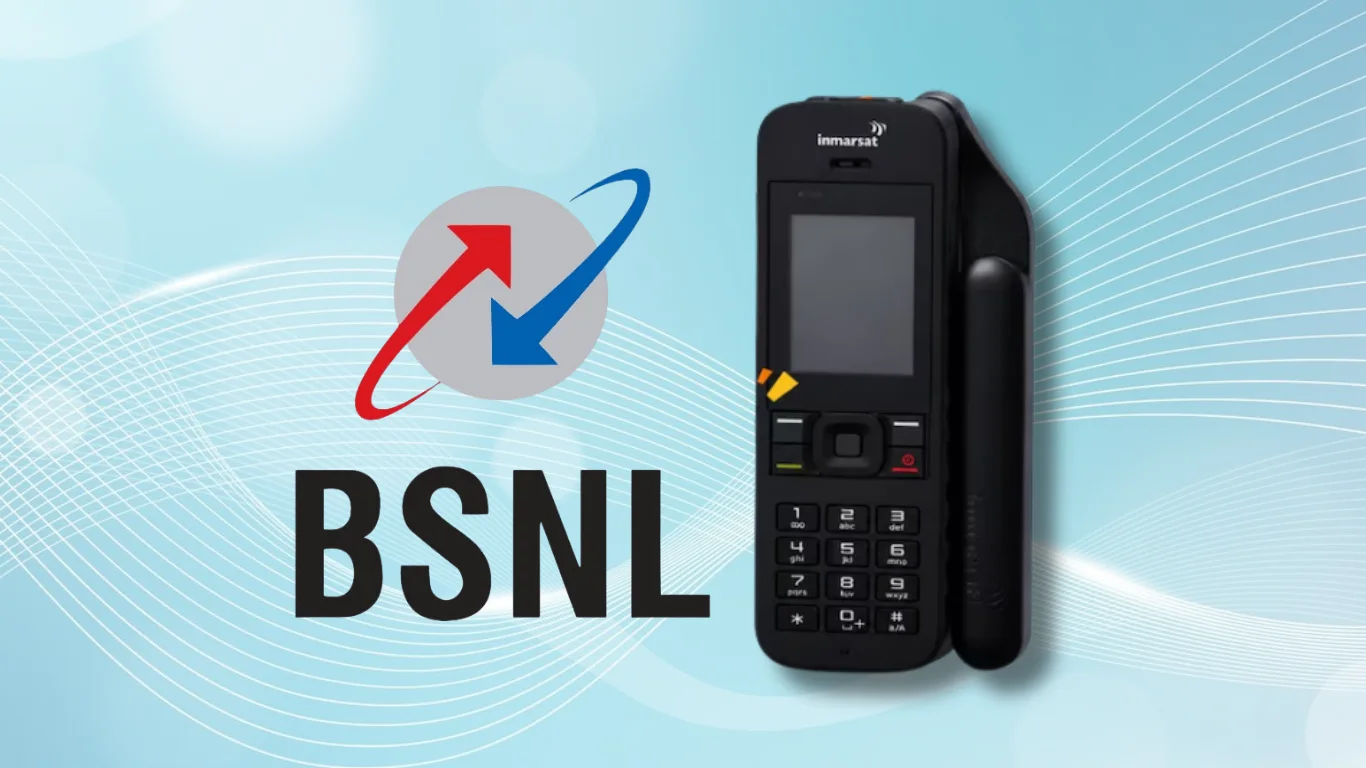
New Delhi: If you’re wondering whether it’s possible to make phone calls even without a mobile network, the answer is yes. Bharat Sanchar Nigam Limited (BSNL) has introduced a satellite phone that does not depend on mobile towers. Instead, it connects directly to satellites, allowing users to make calls and send messages even in areas where there is no cellular coverage.
The phone has attracted attention after details about its price and features became public. However, it is not like a regular smartphone. Not everyone can buy or use it without permission. India has strict regulations regarding the use of satellite phones, and it is important to understand these rules before considering one.
What Is a Satellite Phone?
A regular mobile phone works by connecting to the nearest cellular tower. A satellite phone, on the other hand, connects directly to communication satellites in space. This allows it to function even in places where there is absolutely no mobile network.
Remote mountains, the middle of the sea, dense forests, deserts, and disaster-hit regions often have little or no cellular connectivity. In such situations, satellite phones help people stay connected when traditional mobile networks fail.
What Makes BSNL’s New Satellite Phone Special?
BSNL has made this satellite phone available in partnership with global satellite network provider Inmarsat. According to the company, the device has been designed to provide reliable communication even in the most challenging conditions.
The phone features a rugged design to withstand accidental drops and harsh weather conditions. It also comes with a long-lasting battery, making it suitable for remote areas where charging facilities may not be easily available.
The device is mainly intended for people who work in locations where conventional mobile services are unavailable.
Who Is It Designed For?
BSNL has clearly stated that this satellite phone is not meant for the general public. It has been developed for specific professional and operational requirements.
The phone is considered especially useful for:
- Defence and security agencies
- Disaster management teams
- Maritime services and fishermen
- Mining companies
- Remote industrial operations
- Adventure travel and mountaineering expeditions
Reliable communication is critical in all these sectors, where mobile network coverage is often unavailable.
How Much Does It Cost?
BSNL has priced the satellite phone at ₹1,34,166. This makes it significantly more expensive than a regular smartphone.
One of the main reasons for the higher price is the cost of satellite communication technology. In addition, operating, maintaining, and securing satellite networks is much more expensive than running conventional mobile networks.
This is why such devices are generally used by government agencies, organizations, and professionals with specialized communication needs rather than everyday consumers.
Can Anyone Buy It?
This is probably the biggest question.
The purchase and use of satellite phones in India are not completely open to the public. Owning or using one without government authorization can lead to legal consequences.
If an individual or an organization requires a satellite phone, they must apply through the prescribed process. The concerned authorities review the application and assess the need before granting permission. Only after receiving official approval can the phone be legally purchased and used.
In simple terms, having enough money is not enough to buy this phone.
Are Satellite Phones New to India?
Many people believe that BSNL has launched a satellite phone for the first time, but that is not the case.
BSNL has been offering its Global Satellite Phone Service (GSPS) for several years. Earlier, the service was primarily limited to government agencies and specialized organizations. The company has now introduced a new handset with updated pricing, bringing the service back into the spotlight.
So, it would not be accurate to describe it as an entirely new technology. Instead, it can be seen as the latest phase of an existing service.
How Is It Different From a Smartphone?
Many premium smartphones today offer limited emergency satellite messaging features. However, BSNL’s device is built entirely around satellite communication.
This means it can make calls and send messages even in areas where there are no mobile towers at all. That is its biggest advantage over conventional smartphones.
Do Ordinary People Need It?
For most people, the answer is no. Most cities and villages across India already have mobile network coverage. As a result, this satellite phone is neither practical nor cost-effective for everyday use.
However, for people who regularly work in remote mountains, forests, deserts, offshore locations, or other areas without cellular connectivity, it can prove to be a life-saving communication device.
Designed for Special Needs, Not for Everyday Users
BSNL’s satellite phone is a specialized communication device built for specific operational requirements. Its biggest strength is its ability to maintain communication in places where ordinary mobile phones become completely useless.
Although the device is expensive and requires government approval for purchase and use, it serves an important purpose. It is primarily designed for defence personnel, disaster management teams, maritime operations, and professionals working in remote locations.
As satellite communication technology continues to evolve and regulations change in the future, such services may become more accessible. For now, however, this technology remains available only to a limited group of authorized users with specialized needs.
Also read: Is This Apple’s ₹2 Lakh iPhone Fold? First Look Leaks Online