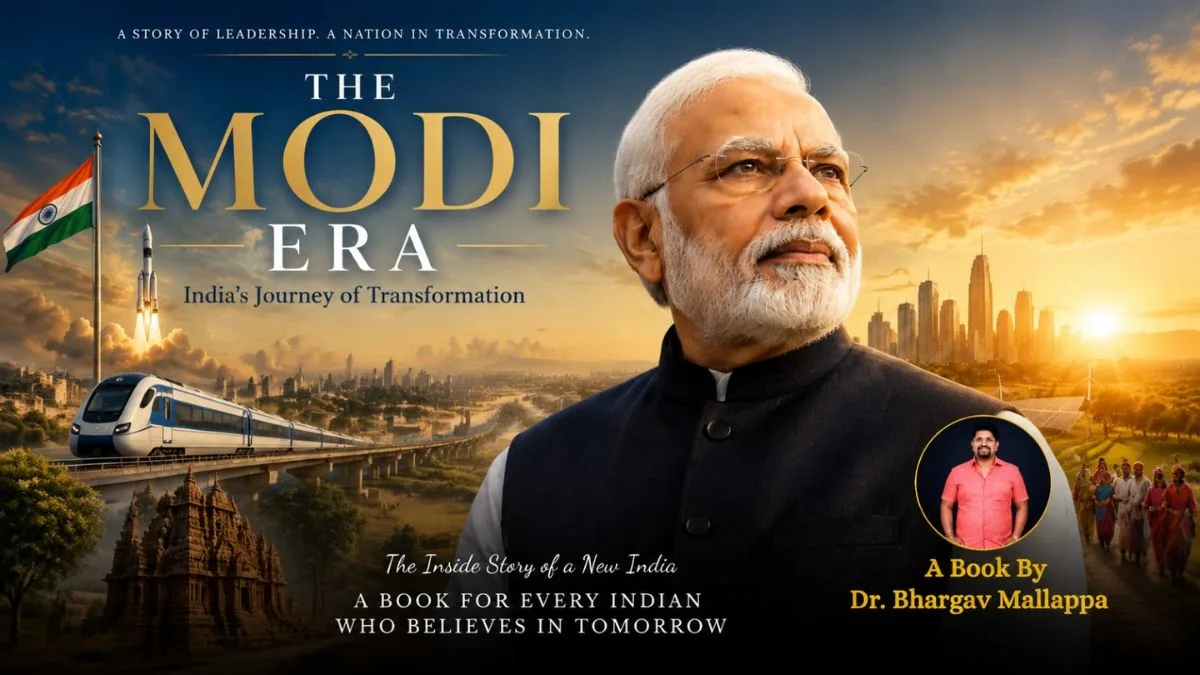
New Delhi: Dr. Bhargav Mallappa has written ‘The Modi Era: India’s Journey of Transformation’, a new book that explores India’s digital transformation and the role of Prime Minister Narendra Modi’s leadership in shaping the country’s development.
Focus on Digital India
The book examines the expansion of the Digital India programme and several major digital initiatives, including Aadhaar, BharatNet, UPI, digital payments, e-governance, digital literacy and financial inclusion.
It also looks at how digital technology has changed citizens’ access to public services and created new opportunities in areas such as education, healthcare and the economy.
From Technology to Governance
According to the book, India’s digital transformation goes beyond the introduction of new technologies. Dr. Mallappa examines how digital infrastructure, innovation and online services have influenced governance and changed aspects of everyday life.
The book also explores the wider impact of digitalisation on citizens and public service delivery.
Addressing Digital Challenges
Along with the progress made in digital adoption, the book discusses challenges that continue to affect India’s digital journey. These include the digital divide, cybersecurity risks, data protection and unequal access to technology.
The discussion highlights the need for a more inclusive digital ecosystem where citizens can benefit from technology safely and effectively.
Looking Ahead to AI and 5G
‘The Modi Era’ also considers the next phase of India’s digital development. Technologies such as artificial intelligence, 5G and digital governance are discussed in the context of emerging opportunities as well as potential challenges.
Dr. Mallappa said, “This book is my tribute to Prime Minister Narendra Modi and his vision of a digitally empowered India. I have tried to capture the journey of Digital India, its impact on ordinary citizens and the possibilities that lie ahead.”
Importance of Digital Literacy
The book places citizens at the centre of India’s digital transformation. It stresses that providing access to technology is only one part of digital inclusion. People also need the skills and understanding to use digital services effectively.
With its focus on Digital India, technology, governance and public policy, the book offers readers an account of India’s journey towards a more digitally connected and empowered society.