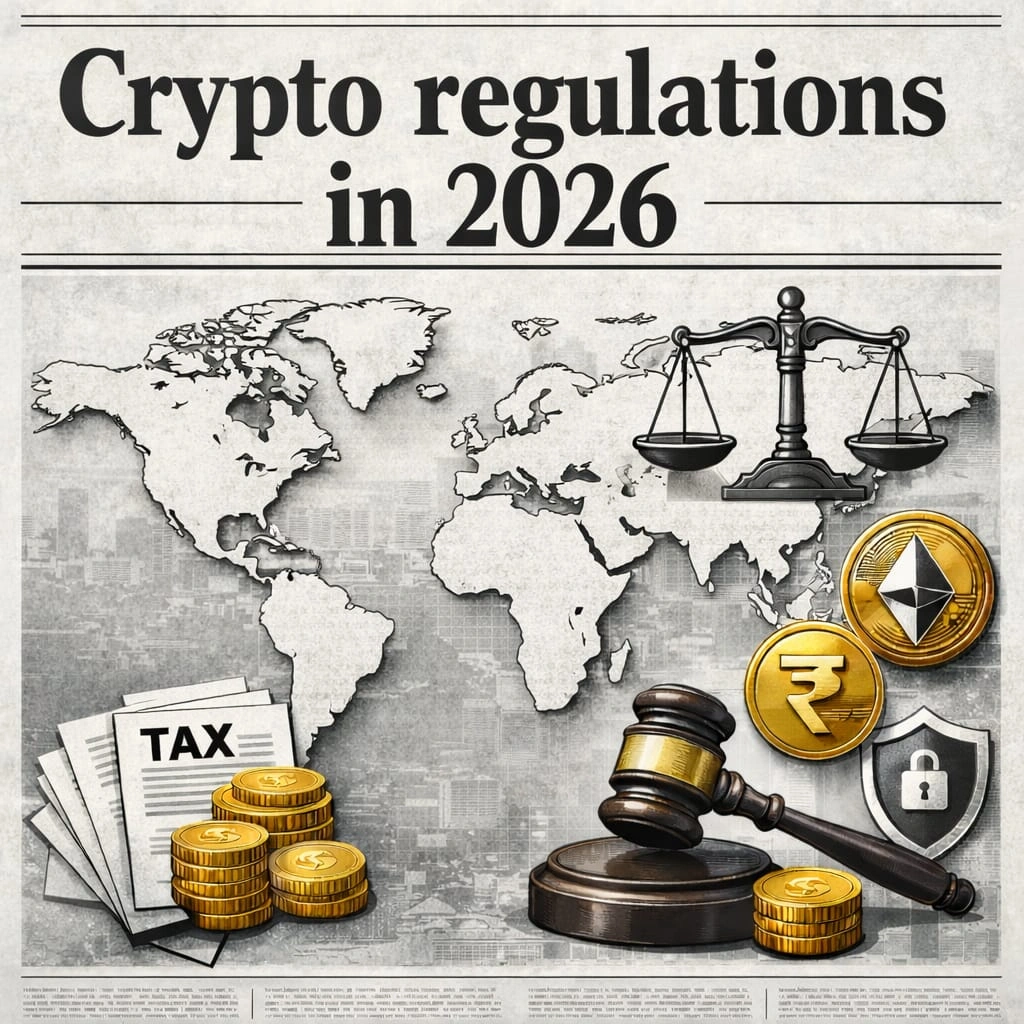
India relationship with virtual digital assets (VDAs) presents a clear paradox. On one hand, the country continues to lead globally in grassroots crypto adoption. For the third consecutive year, India secured the top position in the Geography of Cryptocurrency rankings published by Chainalysis. This widely cited industry assessment has influenced policy discussions across countries and has also been referenced by global standard-setting institutions.
Table of contents
- Growing Web3 Ecosystem and Developer Strength
- Regulatory Caution and Policy Challenges
- Early Warnings and Policy Developments
- Current Tax Framework for VDAs
- Shift to Offshore Platforms and Revenue Impact
- Limits of Enforcement Measures
- Global Regulatory Approaches and Lessons
- Role of Domestic Platforms in Compliance
- Domestic Industry Efforts and Contributions
- The Need for a Comprehensive Framework
- The Strategic Policy Choice Ahead
Growing Web3 Ecosystem and Developer Strength
At the same time, multiple studies on Web3 and public blockchain adoption echo similar findings, consistently identifying India as one of the most dynamic digital asset ecosystems in the world. A recent study by Visa Inc. also placed India alongside emerging markets such as Turkey and Brazil as key centres of crypto adoption. Supporting this trend is India’s growing developer base, with engineers and founders contributing significantly to global blockchain protocols and startups.
Regulatory Caution and Policy Challenges
However, this strong adoption story contrasts with India’s evolving policy stance. The trajectory of VDAs in the country has been shaped by regulatory caution, driven by concerns around capital controls, financial stability, and the integrity of payment systems. Unlike traditional financial assets, VDAs are borderless and internet-native, making them difficult to regulate within frameworks designed for geographically bound capital flows.
Early Warnings and Policy Developments
These concerns are not new. The Reserve Bank of India began flagging risks associated with cryptocurrencies as early as 2013. This caution eventually led to the central bank’s 2018 directive, which effectively restricted regulated financial institutions from servicing crypto-related entities. Although the Supreme Court overturned this measure in 2020, policy uncertainty has continued. In the absence of a comprehensive regulatory framework, the government shifted towards taxation as an interim approach to control speculative activity while broader regulatory discussions remained ongoing.
Also Read: Taxing Virtual Digital Assets: Why Global Experience Calls for a Course Correction in India
Current Tax Framework for VDAs
Currently, two key tax provisions define India’s VDA regime. These include a 1% tax deducted at source (TDS) on transactions exceeding ₹10,000 under Section 393(1), and a 30% tax on gains, which does not allow loss offsetting. While these measures were introduced to improve transaction traceability and strengthen fiscal oversight, emerging data suggests mixed outcomes.
Shift to Offshore Platforms and Revenue Impact
Industry estimates indicate that between July 2022 and December 2023, Indian users carried out over ₹1.03 trillion worth of VDA trades on offshore or non-compliant platforms, with only a small portion remaining on domestic exchanges. This shift is believed to have resulted in significant foregone tax revenues, running into thousands of crores. The trend appears to have accelerated further through 2025, with rising offshore trading volumes and increasing uncollected TDS liabilities.
Limits of Enforcement Measures
Enforcement actions, such as blocking URLs of overseas exchanges in December 2023, have also shown limited long-term impact. Trading activity on these platforms often declined briefly but later rebounded. Users continued to access these platforms through workarounds such as virtual private networks (VPNs), mirror sites, and migration to alternative platforms. In fact, web traffic to several blocked exchanges not only recovered but increased over time, highlighting the difficulty of restricting participation in globally accessible digital markets through such measures.
Global Regulatory Approaches and Lessons
In this context, international policy approaches offer useful direction. Global institutions such as the International Monetary Fund, Financial Stability Board, and Financial Action Task Force have broadly agreed on the need for comprehensive, risk-based regulatory frameworks aligned with cross-border standards. A key element of these frameworks is the use of domestically regulated virtual asset service providers (VASPs) as supervisory checkpoints.
Role of Domestic Platforms in Compliance
These intermediaries help enforce compliance, improve transaction visibility, and enable regulators to engage more effectively with the industry. However, when users move to offshore, non-compliant platforms, the government’s ability to manage risks—such as consumer protection and anti-money laundering—declines. This also leads to a loss of potential tax revenues.
Also Read: Dr Bhargav Mallappa Greets PM Narendra Modi on Ram Navami, Applauds Cultural Efforts
Domestic Industry Efforts and Contributions
Despite facing operational challenges, domestic platforms have shown a greater willingness to align with regulatory expectations. Oversight by India’s Financial Intelligence Unit has contributed to improved international recognition, particularly in anti-money laundering and counter-terror financing measures. Additionally, responses to recent security incidents indicate increasing market maturity. Exchanges have strengthened cybersecurity systems, created contingency reserves, and collaborated on industry-wide risk management practices. Beyond compliance, these platforms also contribute to the domestic economy through employment, innovation, and investment.
The Need for a Comprehensive Framework
Ultimately, India’s VDA ecosystem reflects an incomplete policy balance, marked by taxation without a fully developed regulatory framework. Whether viewed as an opportunity, a risk, or both, digital assets are now firmly embedded in the country’s financial and technological landscape. Bridging the gap between adoption and regulation will require moving beyond temporary measures towards a coherent legislative framework.
The Strategic Policy Choice Ahead
As other countries move ahead with comprehensive crypto regulations, India faces a strategic decision: continue with a provisional policy approach or establish a balanced framework that ensures stability, supports innovation, and restores regulatory oversight in a rapidly growing market.
Estimated reading time: 4 minutes

Aniket Sardhana is a journalism graduate with hands-on experience in field reporting, camera operations, and news production. With a strong understanding of newsroom workflows and on-ground storytelling, he has developed a practical and detail-oriented approach to reporting. Aniket writes extensively on cryptocurrency and current affairs, focusing on policy developments, market trends, and their broader socio-economic impact.