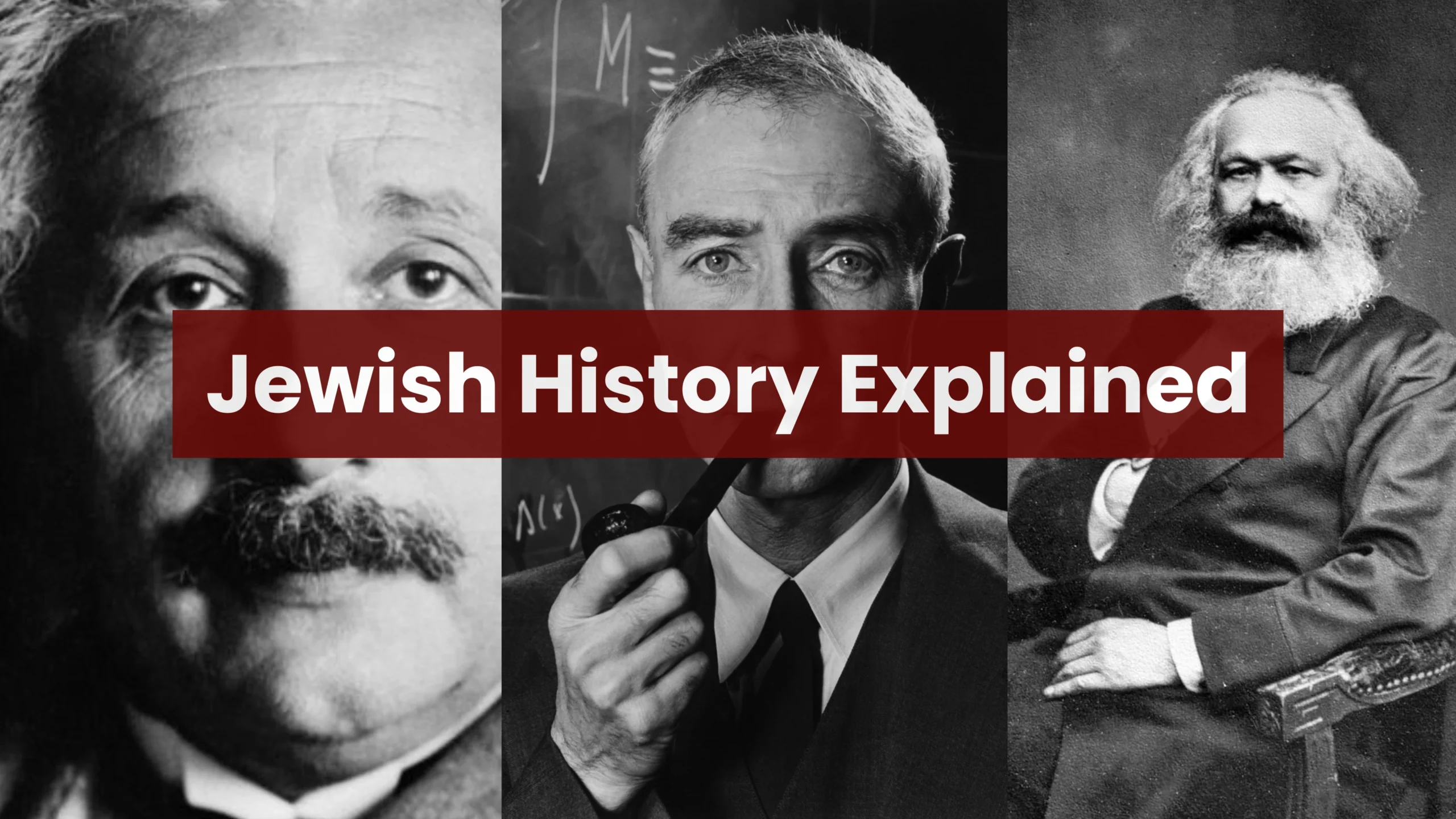
New Delhi, June 2, 2026: Jews account for only 0.2% of the world’s population, but their influence reaches far beyond their numbers. Their ideas helped shape major world religions, while Jewish scientists, entrepreneurs and thinkers played key roles in some of history’s biggest breakthroughs.
Around 15 million Jews live across the world today. Although the community is small, its impact on religion, science, business, politics and culture remains significant. Judaism gave rise to Christianity and Islam, the world’s two largest religions. Together, these three faiths are known as the Abrahamic Religions and are followed by more than half of humanity.
Jewish figures such as Albert Einstein, Meta founder Mark Zuckerberg and Oscar-winning actress Natalie Portman have also left a lasting mark on the modern world.
But who are the Jews, where did they come from, and how did such a small community come to influence billions of people across centuries?
The Beginning: Abraham and the Birth of Monotheism
Jewish tradition traces its origins to Abraham, who is believed to have lived in ancient Mesopotamia, in present-day Iraq, nearly 4,000 years ago.
At a time when many societies worshipped several gods, Abraham taught belief in a single God. This idea became the foundation of Judaism and later influenced Christianity and Islam.
Because all three faiths trace their spiritual roots to Abraham, they are collectively known as the Abrahamic Religions. Today, Christianity, Islam and Judaism together account for more than four billion followers worldwide.
While historians continue to debate details of Abraham’s life, his importance in religious history remains undisputed.
Also read: How Many Countries Still Have the Death Penalty in 2026?
How the Name “Israel” Originated
Abraham’s son Isaac and grandson Jacob play a central role in Jewish history and tradition.
According to religious texts, Jacob later received the name “Israel.” Jacob’s twelve sons became the ancestors of the Twelve Tribes of Israel. These tribes later formed the foundation of the Israelite people and the Jewish nation.
The story of Israel’s origins remains central to Jewish identity and religious tradition.
Moses and the Exodus Story
One of the most important chapters in Jewish history centers on Moses.
According to Jewish tradition, the Israelites settled in Egypt but eventually fell into slavery. Moses led the Israelites out of bondage in an event known as the Exodus.
Jewish tradition says Moses received the Ten Commandments during this journey. These commandments remain among the most important teachings in Judaism.
Moses also holds an important place in Christianity and Islam, making him one of the most influential figures in religious history.
Jerusalem: The Spiritual Heart of Judaism
Around 1000 BCE, the Israelites established a kingdom in the region associated with ancient Israel.
King David made Jerusalem the capital. His son Solomon later built the First Temple, which became Judaism’s holiest site and the center of Jewish religious life.
The temple stood for centuries before Babylonian forces conquered Jerusalem in 586 BCE and destroyed it. The attack changed the course of Jewish history.
The destruction of the temple began the Jewish Diaspora. Jewish communities spread across different regions while preserving their faith, traditions and identity.
A Global Community That Preserved Its Identity
Over the centuries, Jewish communities settled throughout Europe, the Middle East, North Africa and later the Americas.
Despite living in different countries and cultures, Jews maintained a strong sense of community. They built schools, places of worship and cultural institutions that helped preserve their traditions.
Jewish scholars, doctors, merchants, scientists and intellectuals made important contributions wherever they lived. At the same time, many Jewish communities faced discrimination, persecution and forced displacement.
Yet the community survived and continued to thrive across different parts of the world.
How Judaism Influenced Christianity and Islam
Judaism is the oldest of the Abrahamic faiths.
Christianity emerged from Jewish traditions during the first century CE and centers on the life and teachings of Jesus Christ. Christians believe Jesus is the Son of God and the promised Messiah.
About six centuries later, Islam emerged in the Arabian Peninsula. Muslims regard Abraham, Moses and Jesus as important prophets and recognize Prophet Muhammad as the final messenger of God.
These shared roots explain why Judaism, Christianity and Islam share many stories, prophets and moral teachings despite important theological differences.
Today, followers of these three religions make up more than half of the world’s population.
Jewish Contributions to Science, Technology and Culture
Although Jews represent a small share of the global population, their contributions to knowledge and innovation have been remarkable.
Albert Einstein transformed modern physics through his theory of relativity. Jonas Salk developed one of the first successful vaccines against polio and helped save millions of lives.
In technology and business, Jewish entrepreneurs helped build some of the world’s most influential companies. Jewish writers, artists, economists, filmmakers and academics have also shaped global culture and intellectual life.
Many historians view these achievements as one reason the Jewish community remains one of the most influential minority groups in history.
The Holocaust: One of Humanity’s Darkest Chapters
The Holocaust marked the darkest chapter in Jewish history.
During World War II, Nazi Germany under Adolf Hitler murdered about six million Jews in a genocide known as the Holocaust.
The Holocaust remains one of the deadliest atrocities in human history. It serves as a reminder of the dangers of hatred, discrimination and extremism.
Its legacy continues to influence discussions about human rights, genocide prevention and international law around the world.
The Creation of Israel
The Holocaust strengthened support for the creation of a Jewish homeland.
On May 14, 1948, the State of Israel officially came into existence. In the decades that followed, millions of Jews migrated there from different parts of the world.
Today, Israel serves as a political, cultural and religious center for many Jews worldwide. It also remains one of the most closely watched countries in global affairs.
Why the Story of the Jews Matters
The story of the Jewish people goes far beyond numbers.
Despite representing only 0.2% of the world’s population, Jews have influenced religion, science, culture, economics and politics for thousands of years.
From Abraham and Moses to Albert Einstein and modern Israel, Jewish history continues to shape ideas and institutions that influence billions of people around the world today.
Understanding Jewish history is not just about learning the story of one community. It is also about understanding the roots of some of the world’s most influential religions, scientific advances and historical developments that continue to shape modern civilization.