Mahashivratri reminds devotees to develop inner peace, discipline, and spiritual awareness under the compassionate guidance of Shiva through prayers and reflections
New Delhi: Mahashivratri 2026 will be celebrated on February 15, 2026. It is not just a religious festival. It is a day when devotees of Lord Shiva across the world celebrate the night of Lord Shiva, the god of destruction, meditation, and supreme consciousness. While many people know Shiva as the “Destroyer” in the Hindu Trinity, his personality and representation have much deeper spiritual significance that many devotees are yet to discover.
Here are some important and interesting facts about Lord Shiva that every devotee must know:
Shiva Symbolizes Transformation
Lord Shiva is often described as the destroyer of the Trimurti, Brahma the creator, and Vishnu the preserver. However, Shiva does not destroy anything for the sake of destroying. He destroys ego, ignorance, and negativity to bring about transformation and spiritual evolution.
Lord Shiva represents transformation. He removes all obstacles that come in the way of progress and brings about new beginnings. His calm and meditative pose symbolizes complete control over desires and the mind. Devotees worship him as the symbol of deep awareness and peace.
The Power of Tandava
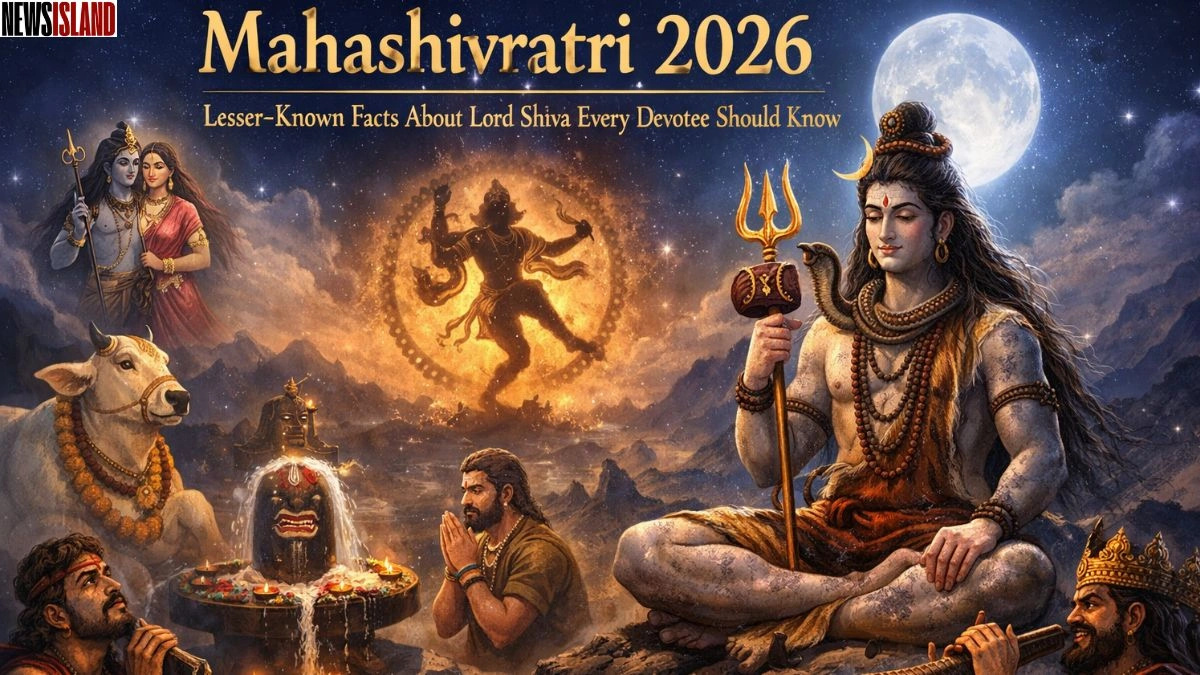
Lord Shiva represents the cosmic force of the universe through his powerful dance called Tandava. The dance represents the natural cycle of the universe. Through Tandava, Shiva demonstrates the cycle of creation, preservation, and destruction.
Many sects of Hinduism believe that Lord Shiva performs this divine dance on the night of Mahashivratri. That is why devotees observe a nightlong vigil. They chant mantras and meditate to connect themselves with the cosmic forces and spiritual energy of Shiva.
Meaning of Sacred Symbols
The emergence of Lord Shiva is full of deep spiritual symbols and not materialistic opulence. Each symbol associated with him has some significance.
The Shivling symbolizes the infinite pillar of light and the formless nature of God. The Trishul, or trident, symbolizes the power to control creation, preservation, and destruction. The Damru symbolizes the sound and rhythm of the universe. The Third Eye symbolizes wisdom and the destruction of ignorance. The snake around his neck symbolizes fearlessness and the power to conquer death. The crescent moon symbolizes the power to control time.
Each symbol together symbolizes Shiva as a force beyond materialistic opulence, who controls the balance of the universe.
Stories of True Devotion
The devotees of Lord Shiva belong to different backgrounds, and their stories symbolize the power of devotion.
Nandi, the Sacred Bull
Nandi, the sacred bull, is not only the vehicle of Shiva but also his most devoted follower. Nandi always stands in front of Shiva, symbolizing his unflinching devotion and faith.
Goddess Parvati
Goddess Parvati did severe penance to get Shiva as her husband. Her determination and devotion make her one of his greatest followers.
Also Read: Elon Musk Reorganizes xAI, Announces Layoffs and Major Hiring Push
Kannappa
Kannappa, a tribal hunter, once offered his own blood to a Shivling to show his devotion to it. His story symbolizes pure and unconditional devotion.
Markandeya Rishi
Markandeya Rishi overcame death because of his devotion to Shiva. Because of this story, his devotees call Shiva Mahamrityunjaya, the conqueror of death.
Ravana
Even Ravana, who is remembered as the villain in the Ramayana, was a devoted follower of Shiva and composed the powerful Shiv Tandav Stotram.
Mystery of His Origin
Mythological legends portray Shiva as the ultimate power that manifested himself in the form of an endless light pillar when Brahma and Vishnu searched for ultimate truth.
Shiva is also known as Ardhanarishwara, which is a form that combines half male and half female. This form of Shiva represents the harmony between the male and female aspects of the universe. It also signifies that when both aspects coexist, there is balance.
Why It Holds Special Significance
Mahashivratri is closely associated with the divine power of Shiva. Many legends claim that on this day, Shiva appeared as the Jyotirlinga, a light pillar.
Bhaktas conduct special aarti in the four Prahars, or night divisions. Each Prahar signifies the blessings of health, wealth, happiness, and liberation.
Bhaktas keep fasts, recite holy mantras, and conduct Abhishek of the Shivling with milk, water, and bel leaves. This is done to attain purification and blessings from the divine.
Significance of Staying Awake All Night
Bhaktas stay awake on Mahashivratri as a spiritual practice. This practice represents awareness and triumph over darkness and ignorance.
Spiritual practices state that the night is full of cosmic power. Devotees meditate and chant all night to get closer to Lord Shiva and increase their consciousness.
Many Names Of Shiva
Lord Shiva has many names, and each name has a different meaning.
Mahadeva is the greatest god.
Maheshwara is the supreme lord.
Neelkanth is the blue-throated god who drank the poison to save the universe.
Bholenath is the kind and simple god.
Mahamrityunjaya is the conqueror of death.
Each name describes his compassion, power, and simplicity.
Conclusion
Lord Shiva is one of the most intricate gods in Hindu mythology. He lives an ascetic life but rules the universe. He destroys evil but also protects his devotees. He is always calm but performs the dynamic Tandava dance.
Mahashivratri 2026 provides devotees with a chance to learn about Shiva in a different way. By learning about the symbolism and cosmic importance of Shiva, devotees can experience the spiritual meaning of this holy night.

khushisikarwar is an award-winning journalist and content creator who thrives on telling stories that matter. As a key contributor to Newsisland, [she] focus on cultural commentary, providing readers with thought-provoking insights.