At the ICAF seminar, experts highlight connectivity, energy security, and civilizational ties as key pillars for strengthening India–Central Asia cooperation in a shifting global order
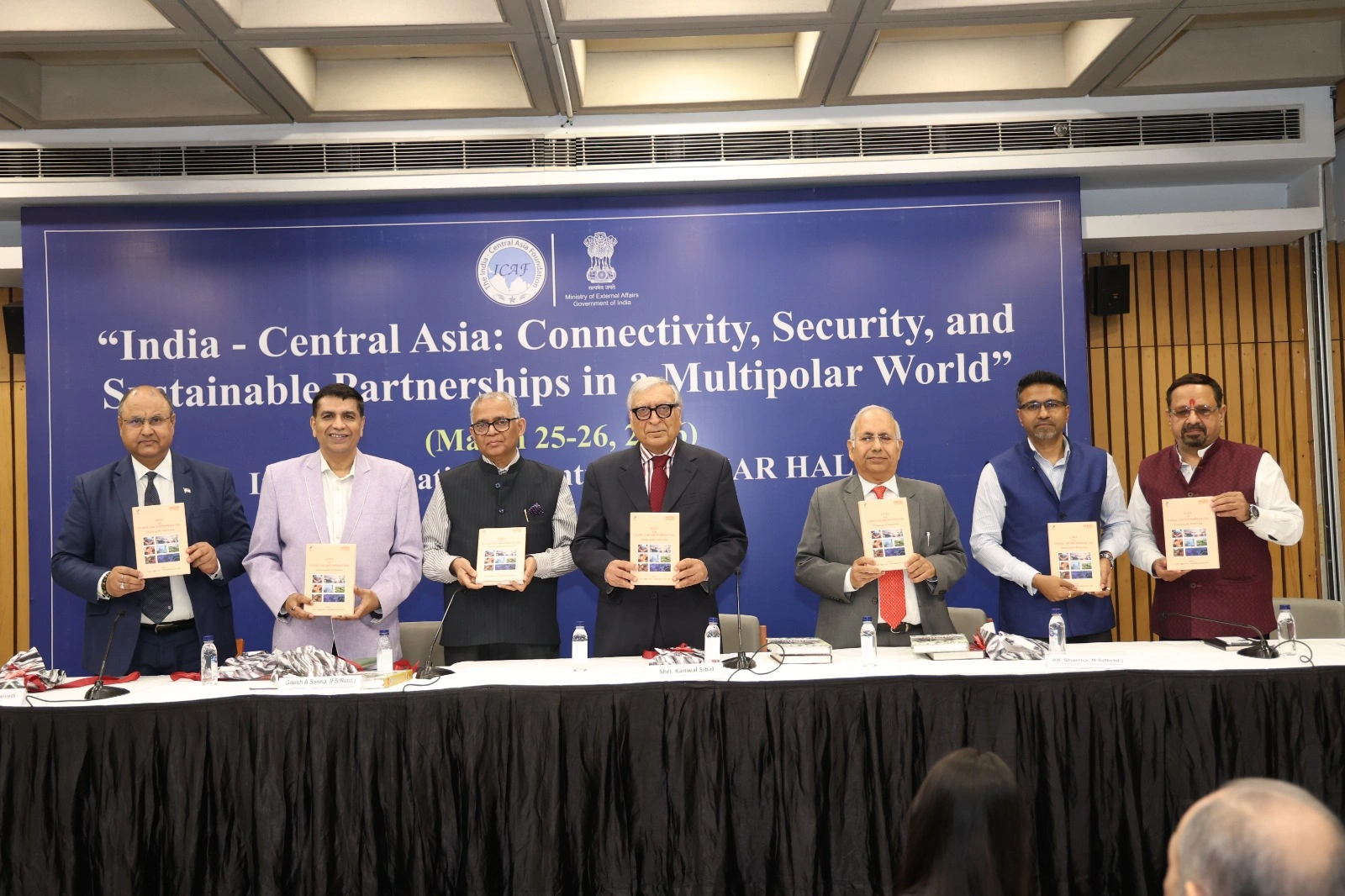
The India Central Asia Foundation (ICAF) organised a two-day international seminar at the India International Centre on “India-Central Asia: Connectivity, Security, and Sustainable Partnership in a Multipolar World,” bringing together policymakers, scholars, and strategic experts to discuss the evolving regional landscape.
Inaugurating the two-day international seminar—organised by the Ministry of External Affairs and sponsred by MERI Group of Institutions.
Table of contents
- At the ICAF seminar, experts highlight connectivity, energy security, and civilizational ties as key pillars for strengthening India–Central Asia cooperation in a shifting global order
- Central Asia’s Strategic Importance Highlighted
- Focus on Connectivity and Trade Routes
- Civilizational Ties and Future Collaboration
- Digital and Academic Partnerships Emphasised
- Book Releases at the Seminar
- Conclusion
Central Asia’s Strategic Importance Highlighted
In his inaugural address, former Foreign Secretary Kanwal Sibal highlighted Central Asia’s growing importance in India’s foreign policy, describing it as part of India’s “extended neighbourhood.” He stressed that stronger engagement with the region is critical for addressing shared concerns such as extremism, energy security, and shifting geopolitical dynamics.
Focus on Connectivity and Trade Routes
Emphasising connectivity as a key priority, Sibal pointed to initiatives like the International North-South Transport Corridor (INSTC) and Chabahar Port as vital to enhancing trade and strategic access. Furthermore, he noted that existing transit limitations remain a challenge, thereby underlining the need for alternative routes and deeper regional cooperation.
Civilizational Ties and Future Collaboration
Speaking at the concluding session, Prof. Lalit Aggarwal underscored the deep-rooted civilizational ties between India and Central Asia, built on centuries of trade, cultural exchange, and intellectual linkages. Moreover, he said these shared histories offer a strong foundation for renewed partnerships in today’s interconnected world.
Digital and Academic Partnerships Emphasised
He further highlighted the need to strengthen collaboration through digital connectivity and academic partnerships, enabling knowledge exchange and innovation across borders while overcoming geographical and political constraints.
Book Releases at the Seminar
On this occasion, the book India-Kazakhstan Partnership in a Changing Geo-Political Order—co-authored by Prof. Ramakant Dwivedi, Lalit Agarwal, and Kurlay Baizakova—was formally released. Furthermore, two other books co-authored by Prof. Ramakant Dwivedi and Lalit Agarwal— Kirgiz Vir Gatha Kavya Manas (Hindi Edition) and India and Central, East and Southeast Asia: Enhancing the Partnership—were also unveiled.
Also Read: Dr Bhargav Mallappa Greets PM Narendra Modi on Ram Navami, Applauds Cultural Efforts
Conclusion
The seminar concluded with a vote of thanks by Prof. Ramakant Dwivedi, who reiterated the importance of revitalising India’s historical ties with Central Asian nations and called for sustained, forward-looking engagement to build a resilient and mutually beneficial partnership.
Estimated reading time: 2 minutes