
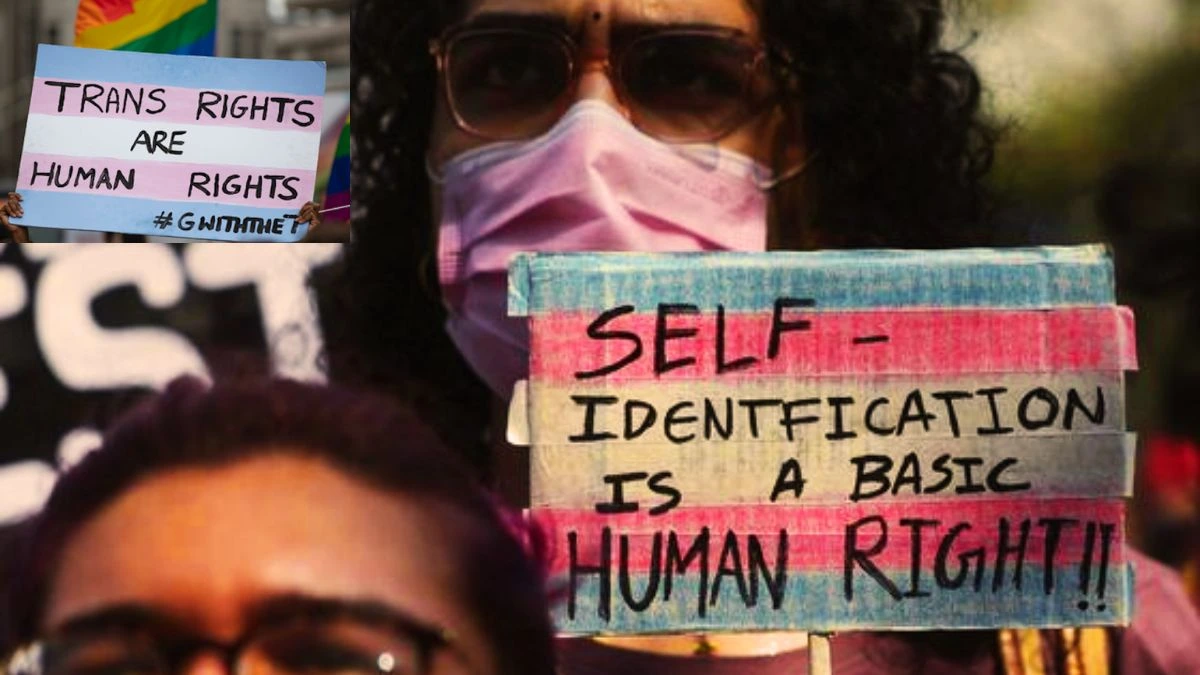
India’s Parliament passes the Transgender Amendment Bill 2026 amid protests and opposition walkout, triggering nationwide debate over rights, identity, and self-determination.
New Delhi: Parliament approved the Transgender Amendment Bill 2026 after two days of deliberation, a decision that has sparked fierce political and social controversy. Despite severe Opposition party and transgender advocacy groups, both Houses passed the measure—which aims to modify the Transgender Persons (Protection of Rights) Act, 2019—through voice vote. To become law, the bill is now waiting Presidential clearance.
Table of contents
- India’s Parliament passes the Transgender Amendment Bill 2026 amid protests and opposition walkout, triggering nationwide debate over rights, identity, and self-determination.
- Bill Passed Amid Protests and Walkouts
- Government’s Justification: Reform and Clarity
- According to the government, the bill aims to:
Bill Passed Amid Protests and Walkouts
The Lok Sabha approved the bill on March 24, 2026, followed by its passage in the Rajya Sabha on March 25. Both approvals came via voice vote, even as Opposition members staged protests and several MPs walked out in dissent.
In the Upper House, attempts to send the bill to a select committee for further scrutiny were rejected, intensifying criticism over the lack of detailed parliamentary review. Demonstrations were also witnessed outside Parliament, with activists and civil society groups voicing strong opposition.
Government’s Justification: Reform and Clarity
The government, led by Union Minister for Social Justice and Empowerment Virendra Kumar, defended the amendment as a necessary reform.
According to the government, the bill aims to:
Provide clearer definitions of transgender identity
Ensure welfare benefits reach “genuine” beneficiaries
Strengthen protections and penalties against offences
Officials argued that the changes would improve administrative efficiency and prevent misuse of provisions under the existing law.
Key Changes in the Amendment Bill
Narrowed Definition of Transgender Identity
One of the most controversial aspects of the bill is the revised definition of “transgender person.”
The amendment restricts recognition primarily to:
Traditional socio-cultural identities such as hijra, kinner, aravani, jogta, and eunuch continue to play a significant role in shaping gender diversity in society. Additionally, individuals with biological or physiological variations, such as those with intersex conditions, represent another important dimension of gender identity.
Moreover, persons who have undergone medical procedures affecting their gender identity also form a crucial part of this spectrum. Thus, these categories together highlight the complexity and diversity of gender experiences. Furthermore, recognizing all these groups is essential for creating inclusive policies and ensuring equal rights.
Critics argue that this excludes gender-fluid individuals and those identifying based on self-perception, thereby limiting inclusivity.
Removal of Self-Identification Rights
The original 2019 Act allowed transgender individuals to self-identify their gender through a simple certification process.
The amendment replaces this with a requirement for verification by a district medical board, effectively introducing medical scrutiny into the process.
Activists say this undermines personal autonomy and dignity, making identity recognition conditional rather than self-determined.
Administrative and Legal Changes
The bill also proposes:
Simplified procedures for changing first names in official documents
Possible enhancement of penalties for crimes against transgender persons
While these changes are seen as progressive by the government, critics argue they do not compensate for the rollback of core identity rights
Criticism: ‘Regressive’ and ‘Unconstitutional’
Opposition parties and activists have strongly condemned the bill, calling it “draconian” and a regression of rights.
They argue that the amendments contradict the landmark NALSA v. Union of India judgment, where the Supreme Court recognized the right to self-identify gender as a fundamental right linked to dignity and autonomy.
Several members of the National Council for Transgender Persons reportedly resigned in protest, citing lack of consultation. Activists have warned of “identity erasure” and hinted at possible legal challenges in the Supreme Court.
Also Read: Will Kerala Soon Be Called Keralam? Union Cabinet to Approve Proposal Today
Political and Social Reactions Intensify
Opposition leaders from multiple parties demanded broader consultation and scrutiny through a parliamentary committee.
Meanwhile, transgender communities across the country staged protests, expressing concern that the law reinforces rigid definitions and excludes diverse identities. Civil society groups have also criticized the government for pushing the bill without adequate stakeholder engagement.
Background: The 2019 Act and Ongoing Debate
The amendment builds upon the Transgender Persons (Protection of Rights) Act, 2019, which itself faced criticism for gaps in implementation and limited welfare provisions.
Also Read: 11 Days of Colour, Culture & Cuisine: Rajasthan Utsav 2026 Concludes with Grand Celebration in Delhi
The 2026 amendment was introduced in the Lok Sabha on March 13, 2026, and has since been at the center of ongoing protests and policy debates.
Estimated reading time: 4 minutes


