Source:X
Historic reciprocal trade deal boosts garments, opens zero duty access, and deepens U.S. Bangladesh economic partnership
New Delhi : The United States has reduced reciprocal tariffs on Bangladeshi exports to 19% under a newly signed United States Bangladesh Agreement on Reciprocal Trade, marking a major shift in bilateral trade relations and offering fresh momentum to Bangladesh’s export-led economy.
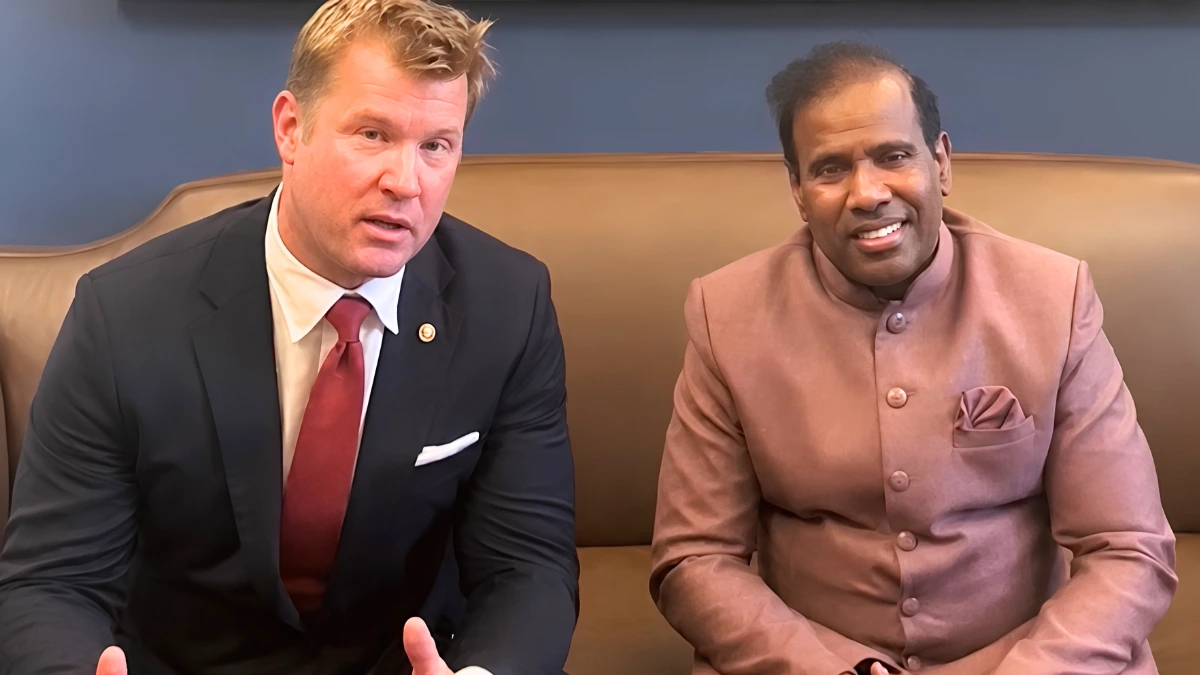
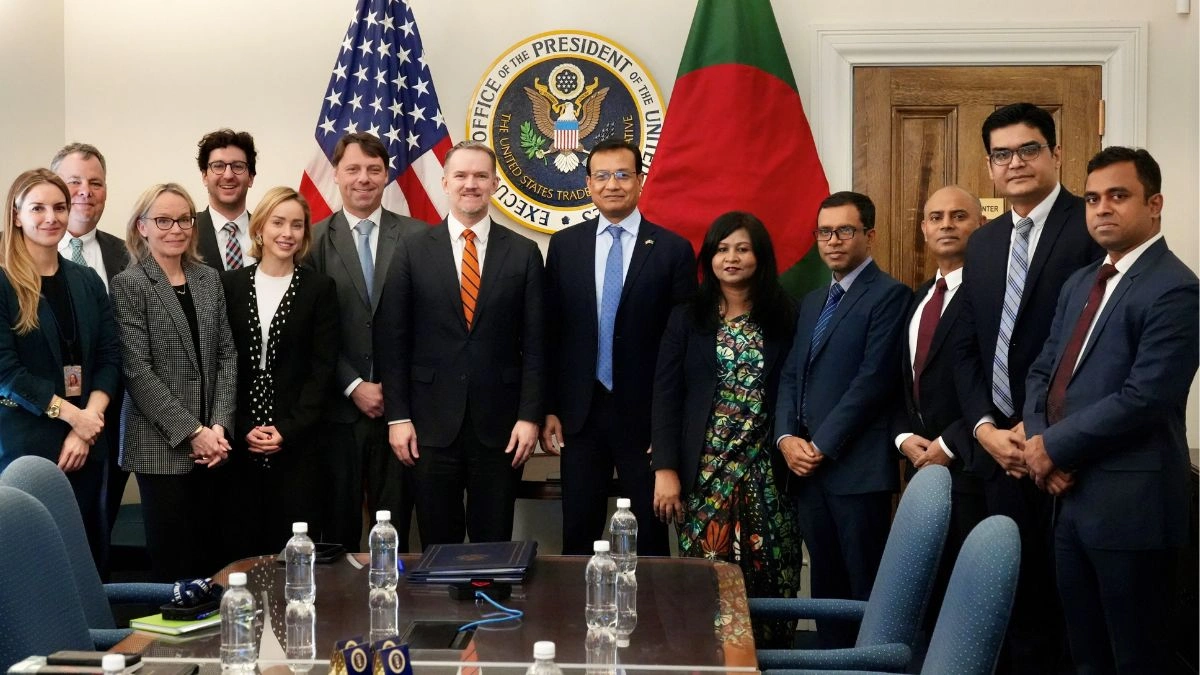
The development was officially announced by the United States Trade Representative through a post on X, where it confirmed that Ambassador Jamieson Greer joined Bangladesh’s Adviser Sheikh Bashir Uddin to sign the agreement. The post stated that the deal advances economic partnership and opens new markets for U.S. exports, while also establishing the first reciprocal trade agreement in South Asia.
First South Asia Deal
This agreement becomes the first reciprocal trade arrangement between the United States and a South Asian country. It sets a new example for how the U.S. plans to engage economically with the region.
Instead of offering one sided trade benefits, the deal introduces shared responsibilities. Both countries agree to structured market access, tariff adjustments, and closer cooperation. Through this framework, the agreement focuses on long term trade, investment, and regulatory cooperation, moving beyond temporary tariff relief to a more stable and rules based partnership.
Tariffs Reduced Significantly
Under the agreement, the United States reduced reciprocal tariffs on Bangladeshi goods to 19 percent, lowering them from previously proposed levels that had gone as high as 37 percent under revised U.S. tariff policies.
Although the numerical reduction may appear limited, trade analysts point out that even a one percent tariff cut can strongly influence sourcing decisions in global markets. For Bangladesh, whose exports rely heavily on price competitiveness, the lower tariff improves access to one of its most important export destinations.
Also Read: 25-Year-Old Suffocates After Falling Into 15-Foot Open Pit in West Delhi
Zero Duty Garment Access
A key highlight of the agreement is the zero reciprocal duty provision for specific ready made garments exported from Bangladesh when manufacturers use cotton and synthetic fibres imported from the United States.
Commerce Secretary Mahbubur Rahman confirmed that Bangladesh’s export earning garments will enjoy zero duty benefits under this condition. This provision directly links tariff relief to supply chain cooperation, encouraging Bangladeshi garment producers to source raw materials from American suppliers.
By doing so, the agreement supports U.S. cotton and man made fibre producers while simultaneously helping Bangladeshi exporters secure duty free access for selected apparel products.
Garment Sector Backbone
The ready-made garment industry continues to be the main driver of Bangladesh’s economy. It accounts for more than 80 percent of total export earnings, employs millions of workers, and contributes significantly to national income.

The United States continues to rank among Bangladesh’s largest garment export markets. With lower tariffs and zero duty access for qualifying products, Bangladeshi manufacturers gain stronger positioning against competitors such as Vietnam, Cambodia, and India in the highly competitive U.S. retail market.
Bangladesh Opens Markets
In return for tariff reductions, Bangladesh agreed to expand market access for U.S. goods across several sectors. These include industrial machinery, agricultural products, medical equipment, vehicles, information technology products, and energy related items.
Additionally, Bangladesh committed to easing non tariff barriers by aligning or recognising certain U.S. regulatory standards. This step reduces procedural hurdles and helps American exporters enter the Bangladeshi market more easily.
Boosting U.S. Exports
The United States Trade Representative highlighted that the agreement will help open new markets for U.S. exports. Officials emphasised that American businesses will gain better access to Bangladesh’s growing consumer and industrial markets.
Bangladesh has already increased imports of U.S. agricultural commodities such as wheat and soy. At the same time, the country has engaged in major commercial purchases, including aircraft and energy supplies, strengthening long term economic ties between the two nations.
Nine Month Negotiations
Negotiations for the agreement continued for nearly nine months, starting in April 2025. Talks became more urgent after the United States introduced higher reciprocal tariffs under its updated trade policy, which pushed Bangladesh to seek quick relief.
Bangladesh’s interim government, led by Chief Adviser Muhammad Yunus, made improved access to the U.S. market a top priority as the country faced economic pressure and prepared for an upcoming general election.
Political Economic Context
The agreement was signed at a sensitive time for Bangladesh as it deals with political transition, rising inflation, and uncertainty in export earnings. Economists believe the tariff reduction provides both economic relief and political stability during this period.
From the U.S. point of view, the deal fits into a wider strategy to rebalance trade relationships, strengthen supply chains, and expand economic influence in South Asia through deeper engagement.
Regional Trade Impact
The agreement has drawn attention across the region, particularly in India. Opposition leaders there have raised concerns that Indian textiles face higher U.S. tariffs compared to Bangladesh’s zero duty access for garments produced using U.S. materials.
This comparison has intensified debate over how differentiated U.S. trade arrangements could reshape competitive dynamics among South Asian exporters, especially in labour intensive industries like textiles.
Benefits And Challenges
Economists say the agreement offers clear gains for Bangladesh by making its exports more competitive, strengthening links within global supply chains, and improving overall investor confidence. At the same time, they caution that challenges persist, including the possibility of higher production costs if manufacturers rely more on U.S. raw materials and the need to meet stricter regulatory and compliance standards.
For the United States, the deal improves export opportunities while helping secure Bangladesh as a dependable trade partner in a region of growing strategic importance.
Implementation Next Steps
The agreement will take effect after both governments complete their domestic legal procedures. Once implemented, exporters and importers are expected to adjust sourcing plans, pricing strategies, and production methods to match the new tariff system.
Strategic Trade Milestone
Overall, the United States–Bangladesh Agreement on Reciprocal Trade marks an important milestone in South Asian trade relations. As highlighted in the U.S. Trade Representative’s post, the deal aims to strengthen economic ties, improve supply chain integration, and create new business opportunities for both countries.
By combining tariff reductions, zero duty incentives, and reciprocal market access, the agreement sets a model for future trade arrangements in the region and signals a deeper and more structured phase of economic cooperation between the United States and Bangladesh.

khushisikarwar is an award-winning journalist and content creator who thrives on telling stories that matter. As a key contributor to Newsisland, [she] focus on cultural commentary, providing readers with thought-provoking insights.