New Delhi: Smart glasses are rapidly moving from niche technology to mainstream consumer products. Equipped with cameras, microphones and artificial intelligence, these devices can capture images, record videos, process audio and deliver real-time information about the wearer’s surroundings.
These features offer genuine convenience. Users can navigate unfamiliar places, translate languages in real time, access hands-free assistance and improve accessibility. However, the same technology also raises serious concerns about the privacy of people who unknowingly enter the device’s field of view.
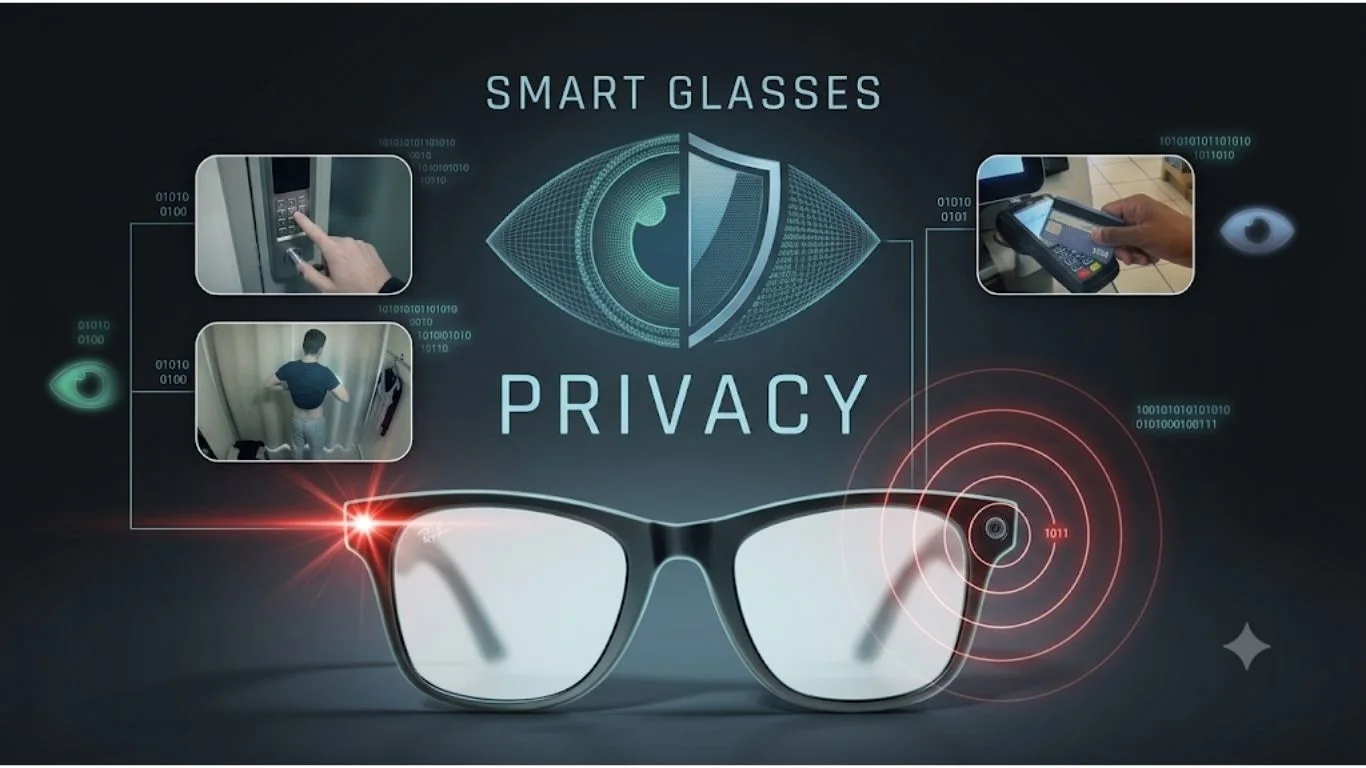
Unlike smartphones and traditional cameras, smart glasses can record discreetly without making the recording obvious to people nearby. As AI-powered wearable devices become more common, privacy advocates and lawmakers are questioning whether current laws adequately protect the public.
A Camera That Blends Into Everyday Life
When someone records a video with a smartphone, others usually notice the action. The user must hold up the device, point it toward a subject and interact with the screen. This visible behaviour alerts nearby people that recording may be taking place.
Smart glasses change that dynamic. Products such as Meta’s Ray-Ban AI smart glasses look like ordinary eyewear while quietly integrating cameras, microphones, speakers and AI capabilities.
Users can take photos, record videos, make calls and interact with an AI assistant without using their hands. Depending on the software, the glasses can also identify objects, read text aloud and generate audio descriptions of what the wearer sees.
While users benefit from this seamless experience, bystanders face greater uncertainty. Manufacturers include recording indicators, such as small LED lights, to show when the camera is active.
However, privacy advocates argue that people can easily miss these indicators in bright sunlight or crowded public places. Some also warn that users could intentionally cover the lights to record discreetly.
As a result, smart glasses fundamentally change how people record others. Instead of pointing a visible camera, users can simply look in someone’s direction. This shift makes consent and situational awareness much harder to maintain.
AI Expands the Privacy Challenge
Artificial intelligence introduces another layer of complexity. A stored photograph presents one level of privacy concern. An AI system that analyses the same image can reveal far more information.
Modern AI tools can analyse images and audio, extract text, translate languages and interpret complex social situations within seconds. As a result, experts continue to debate how companies should handle data collected from people who never agreed to participate.
Key questions include:
- Where is the data processed? Does the device analyse it locally, or does it send it to cloud servers?
- How long is the data stored? Do companies delete recordings quickly or retain them for extended periods?
- Who can access the information? Can employees, third parties or government agencies obtain the collected data under certain circumstances?
Because bystanders usually do not know they have been recorded, they have little or no opportunity to opt out.
Many privacy laws were written when cameras were large and easily recognisable. Wearable AI challenges those assumptions by combining advanced computing with everyday eyewear.
Also read: Trojan Horse: The 3,200-Year-Old Deception That Inspired One of the Most Dangerous Computer Threats
Public Spaces Could Face New Privacy Challenges
Public recording serves many legitimate purposes. Journalists document important events, citizens collect evidence during disputes and security personnel monitor high-risk locations. In many situations, recording strengthens public accountability and safety.
However, wearable AI introduces new questions in public spaces.
People attending protests, demonstrations or public gatherings may worry about being recorded without their knowledge. If wearable AI eventually analyses or identifies individuals in large crowds, authorities and technology companies will need to address how they collect, process and use that information.
The debate increasingly centres on balancing legitimate recording with individual privacy rights and the freedom to participate in civic activities.
Facial Recognition Remains the Biggest Concern
Facial recognition represents one of the most sensitive issues surrounding wearable AI.
Current commercial smart glasses primarily focus on scene description and object recognition. However, if developers integrate real-time facial recognition that matches strangers against public databases or social media profiles, public interactions could change dramatically.
Even if technology companies prohibit facial recognition in their official software, third-party applications or later processing of recorded images could potentially enable similar capabilities.
For this reason, digital rights organisations continue to call for clear rules governing how companies collect, process and store biometric information.
Governments May Need Stronger Privacy Rules
As AI-powered wearables become more common, governments and regulators may need to revisit existing privacy laws.
Clear rules governing public recording, facial recognition, image processing and data retention could improve accountability and strengthen public trust.
Technology companies can also reduce privacy risks by making recording indicators more visible, offering stronger privacy controls and clearly explaining how they process and store user data.
Experts say updated regulations should address several important areas:
- Public recording standards: Define reasonable limits for hands-free video recording.
- Data retention: Limit how long companies can store audio and video data on cloud servers.
- Biometric protections: Regulate facial recognition and AI analysis of wearable camera feeds.
At the same time, hardware manufacturers can strengthen privacy protections by using brighter, tamper-resistant recording indicators, enabling privacy-by-default settings and providing transparent dashboards that explain how devices process user data.
Balancing Innovation with Privacy
AI-powered smart glasses represent a significant step forward in personal computing. They improve accessibility, simplify everyday tasks and offer convenient hands-free experiences.
However, developers, regulators and society must ensure that innovation does not outpace privacy protections. The real challenge is not whether smart glasses should exist, but whether governments and technology companies can protect individual privacy as quickly as wearable AI continues to evolve.