Women’s Equality Day 2026 looks at the long U.S. struggle for women’s voting rights, the 19th Amendment, the ERA, and why legal equality remains unfinished
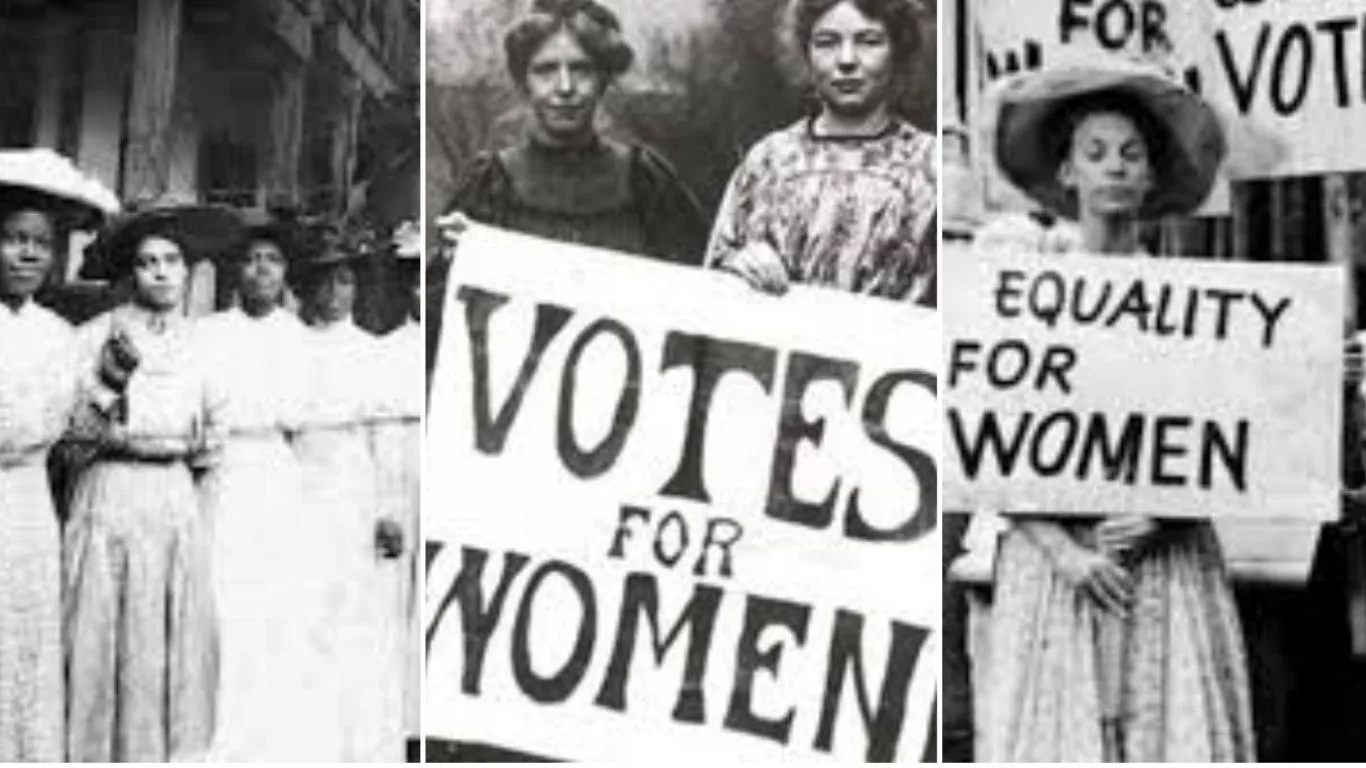
New Delhi: The United States marks Women’s Equality Day on August 26, a date Congress designated in 1973 to commemorate the certification of the 19th Amendment to the Constitution, which prohibited the federal and state governments from denying citizens the right to vote based on sex.
The observance grew out of a resolution introduced by U.S. Representative Bella Abzug of New York and remains a symbolic observance rather than a federal holiday. The amendment’s roots stretch back more than seven decades before its ratification. At the 1848 Seneca Falls Convention in New York, activists issued the Declaration of Sentiments, modelled in part on the language of the Declaration of Independence, and called for women’s suffrage.
The long road to the 19th Amendment
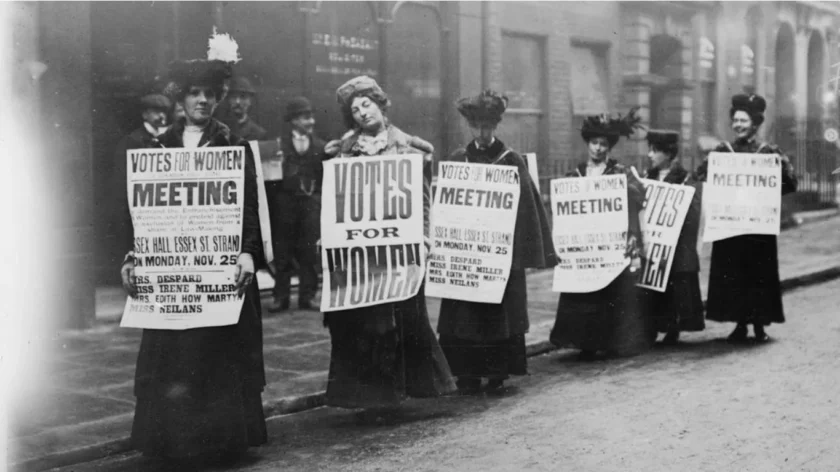
The campaign that followed spanned generations of organisers, split at points over strategy and inclusion, and drew opposition that framed the vote as incompatible with women’s domestic role. Congress finally passed the amendment in June 1919, and Tennessee’s ratification on August 18, 1920 supplied the 36th and deciding State, allowing the U.S. Secretary of State to certify it on August 26.
Also Read: Harshad Mehta Case: The ‘Tax Due’ Battle Behind the August 26, 1996 Supreme Court Order
When voting rights did not mean equal access
Historians studying the period note that, in practice, the amendment’s reach fell short of its text. Southern States continued to use poll taxes, literacy tests, and outright intimidation to keep Black women from the polls for decades after 1920, barriers that were addressed by the Voting Rights Act of 1965.
Native American women faced a separate obstacle: many were not recognised as U.S. citizens until the Indian Citizenship Act of 1924, and some States continued to restrict Native voting rights even after citizenship was recognised. Asian immigrants also faced race-based restrictions on naturalisation and voting that were dismantled only gradually through later legislation.
The 19th Amendment’s centenary in 2020 prompted renewed attention to this gap between the date usually cited for women’s suffrage and the much later point at which the right became more broadly accessible to women regardless of race.
How August 26 became Women’s Equality Day
Women’s Equality Day itself grew out of Representative Bella Abzug’s campaign in Congress. Abzug first introduced a joint resolution in 1971 to designate August 26 as Women’s Equality Day, but the initial bill did not become law.
She reintroduced it, and President Richard Nixon signed the designation into law on August 16, 1973. The choice of August 26 tied the observance directly to the certification date of the 19th Amendment, giving the day a fixed anchor in the constitutional record.
The unfinished fight for equal rights
A second, unfinished part of the campaign for women’s equality centres on the Equal Rights Amendment (ERA). Suffragist Alice Paul and activist Crystal Eastman drafted the amendment and introduced it in Congress in December 1923, just three years after the 19th Amendment took effect.
The ERA has a simple goal. It would prohibit denying or limiting equal rights under the law because of sex. Congress sent it to the states for ratification in 1972 with a seven-year deadline. Congress later extended the deadline to 1982. However, only 35 states ratified it during that period, three short of the 38 needed.
The ratification effort resumed decades later. Nevada ratified the amendment in 2017, followed by Illinois in 2018 and Virginia in 2020. This brought the total to 38 states. Five states that had previously ratified the ERA later voted to rescind their approval. The legal validity of those rescissions remains disputed.
The U.S. Archivist has declined to certify the ERA as the 28th Amendment, citing the ratification deadline. The dispute has since moved into the courts. In April 2026, a federal judge in Massachusetts dismissed Equal Means Equal v. Trump. The case challenged sex discrimination in the male-only Selective Service system and partly relied on the claimed constitutional status of the ERA.
The plaintiffs appealed to the U.S. Court of Appeals for the First Circuit in May. The appeal remains pending.
The ERA debate has never been purely legal. When the amendment approached ratification in the 1970s, activist Phyllis Schlafly led a campaign against it. She argued that the amendment could remove legal protections linked to women’s traditional roles, including exemption from military conscription.
Supporters argued, and continue to argue, that the ERA would give courts a clearer constitutional basis to challenge sex discrimination. They say it could also address gaps left by existing civil rights laws. This disagreement continues to shape debates over the amendment at the state level.
Also Read: An Important Milestone in India’s Virtual Digital Asset Regulatory Journey
The equality gap beyond the law
Whatever the legal outcome, government data show the distance between formal political equality and equal outcomes elsewhere. According to the U.S. Bureau of Labor Statistics, women working full-time had median weekly earnings of $1,131 in the second quarter of 2026, compared with $1,380 for men — meaning women earned 82 per cent of men’s median weekly earnings.
The ratio varied by race and ethnicity: Black women earned 91 per cent as much as Black men, while Asian women earned 78.3 per cent and Hispanic women 83.5 per cent of their male counterparts.
Political representation shows a similar gap between formal political rights and equal representation. Women held roughly 28 per cent of the voting seats in the 119th Congress in 2026, according to the Center for American Women and Politics at Rutgers University.
A right on paper, equality in practice
The figure marked a record level of representation, but women remained well below their roughly 50% share of the U.S. population. No woman has served as U.S. president yet. However, Hillary Clinton became the first woman to win the presidential nomination of a major U.S. political party in 2016.
Taken together, Women’s Equality Day and the unresolved status of the ERA highlight a long-standing distinction in the American women’s rights movement.
Securing voting rights through the Constitution was one achievement. Ensuring equal rights in practice has proved to be a separate and unfinished challenge.