The four-day festival connected artisans from Rajasthan and eastern Uttar Pradesh directly with urban buyers, strengthening livelihoods while highlighting India’s living craft traditions and cultural diversity.
New Delhi | January 10, 2026
The Indian Trust for Rural Heritage and Development (ITRHD) successfully concluded its 12th Annual Craft Festival in New Delhi, recording its most impactful edition so far with total sales exceeding ₹50 lakh. The four-day event emerged as a powerful platform for rural artisans, enabling direct engagement with urban consumers and generating significant economic and cultural visibility.
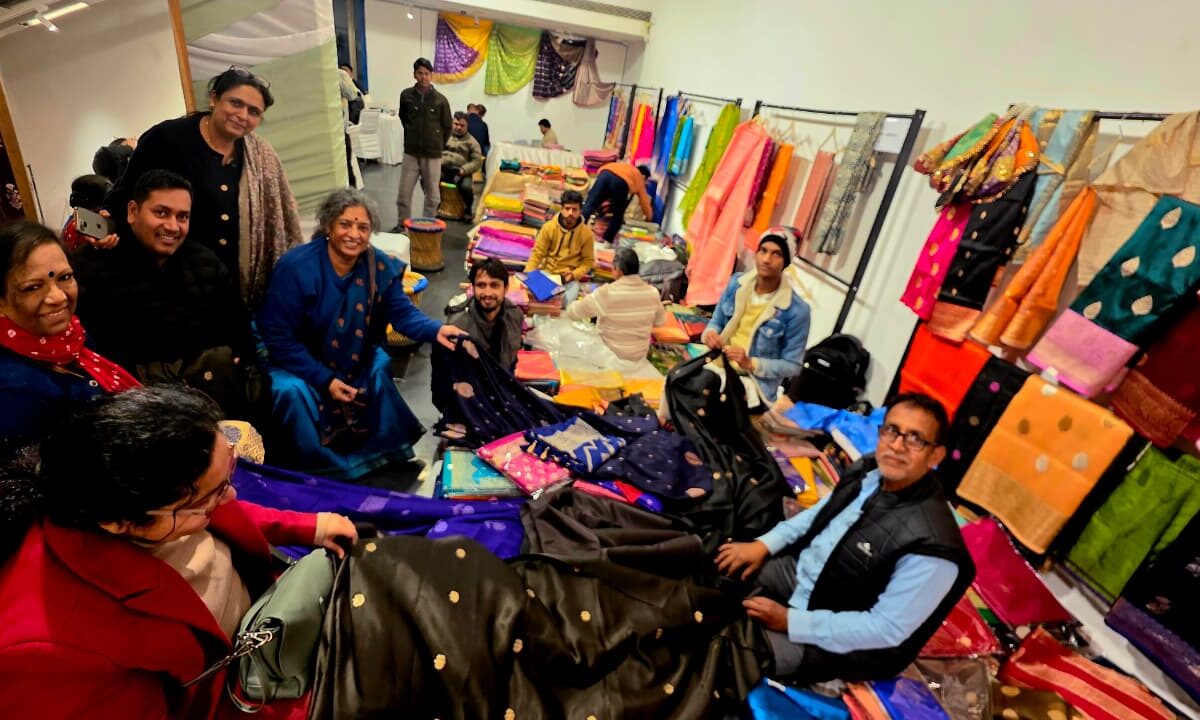
Hosted at Alliance Française, Lodhi Estate, the festival eliminated middlemen by allowing artisans to sell their creations directly to buyers. Organisers said the strong response from visitors translated into record-breaking sales, reaffirming the growing appreciation for authentic, handmade crafts among urban audiences.
This year’s festival featured a rich collection of crafts from Barmer district in western Rajasthan—close to the India–Pakistan border—and from Azamgarh district in eastern Uttar Pradesh. Artisans from Barmer showcased intricate embroidery, appliqué work, leather crafts, dhurrie weaving, and Ajrak printing, while participants from Azamgarh presented Mubarakpur’s handloom textiles and the renowned black pottery of Nizamabad.

Commenting on the festival’s success, Maureen Liebl, Co-Project Director and Trustee, ITRHD, said the outcomes clearly demonstrated the value of direct market access. She noted that surpassing the ₹50 lakh sales mark was not only an economic achievement but also a reflection of sustained engagement with artisan communities and rising public interest in traditional crafts.
Madhu Khatri, Projects Director, ITRHD, emphasised the long-term significance of the initiative, highlighting that artisans retained the entire income from their sales. She said the festival goes beyond short-term earnings by fostering enduring relationships between craftsmen and buyers, which is vital for preserving traditional skills and ensuring their continuity.
Among the major attractions was Nizamabad’s black pottery, a craft that has seen renewed recognition over the past decade. Its global visibility increased after Prime Minister Narendra Modi gifted it to Japanese Prime Minister Fumio Kishida at the G7 Summit in Germany in 2022. Several works displayed at the festival were created by members of the original artisan families associated with the revival of this craft.
The festival also celebrated the cultural heritage of Hariharpur village in Azamgarh, known for its association with the Banaras gharana of classical music. A special classical music performance during the event added a vibrant cultural dimension to the craft exhibition.
ITRHD stated that it has been working closely with Barmer artisans for over six years, expanding participation annually. Beyond exhibitions, the Trust supports artisans through design development, product diversification, and access to wider platforms, while bearing participation costs to ensure artisans benefit fully from sales.
With its 12th edition now complete, the Annual Craft Festival has firmly established itself as a key event on New Delhi’s cultural calendar. ITRHD also continues similar initiatives at Mehrangarh Fort in Jodhpur, reinforcing its commitment to sustaining India’s rich craft heritage while promoting dignified livelihoods for artisan communities.