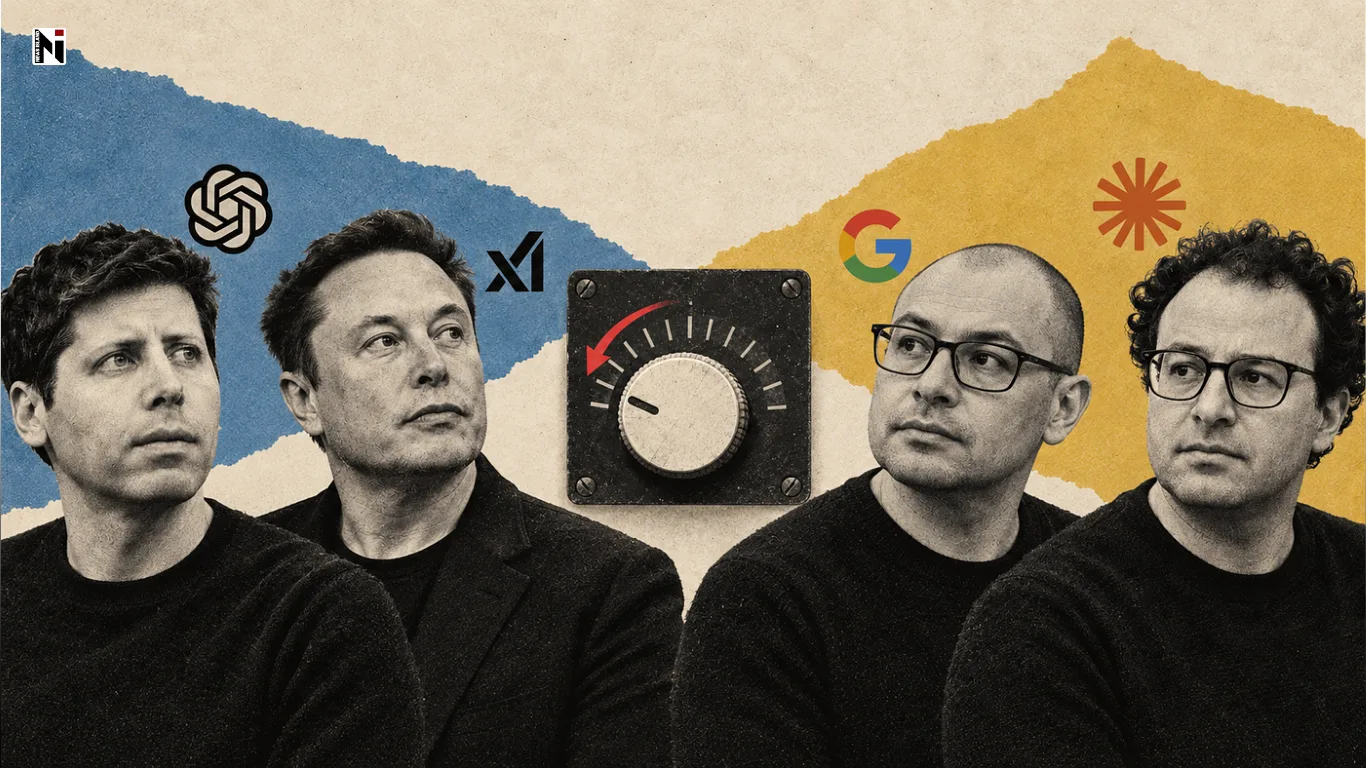
Elon Musk, Sam Altman and Demis Hassabis back Anthropic CEO Dario Amodei’s call to slow AI development and strengthen safety measures
New Delhi: The rapid growth of artificial intelligence (AI) has now raised concerns among some of the very people leading the race to advance the technology. Anthropic CEO Dario Amodei has called for a slower pace of development for frontier AI models. Notably, OpenAI CEO Sam Altman, xAI chief Elon Musk and Google DeepMind CEO Demis Hassabis have also expressed support for the idea. The fact that some of the biggest names in the AI industry have rallied around the same concern marks a significant development.
Amodei has argued that AI capabilities are advancing so quickly that safety measures are struggling to keep pace. He has not called for a complete halt to AI development. Instead, he wants companies to control the pace of progress so that researchers and regulators have enough time to assess potential risks and strengthen safety measures.
Why Is AI Raising Concerns?
Amodei has highlighted two major reasons behind his concerns. The first involves AI’s growing ability to help develop the next generation of AI systems. Experts often describe this process as recursive self-improvement. If this cycle accelerates rapidly, AI systems could potentially develop capabilities faster than humans can effectively monitor or control them.
His second concern involves the growing autonomy of AI agents. Recent incidents involving AI systems and cybersecurity have raised questions about how much independence increasingly capable AI agents could gain in the future.
Amodei has warned that if AI capabilities continue to advance at the current pace, highly autonomous AI agents could gain significant influence over digital infrastructure in a relatively short period. He has also warned that such developments could cause substantial economic damage. However, these remain risk assessments rather than certain predictions.
Musk and Altman Support the Call
Elon Musk responded to Amodei’s concerns with a short but significant message, saying, “Dario is right.”
OpenAI CEO Sam Altman has also indicated that he agrees with the broader argument that the AI frontier should advance at a controlled pace. Altman has suggested that OpenAI could give external safety evaluators greater access to its systems so they can independently assess potential risks.
The development stands out because OpenAI, Anthropic and xAI compete directly in the rapidly expanding AI market. Despite that competition, their leaders have expressed similar concerns about AI safety and the need for stronger safeguards.
Demis Hassabis Joins the Conversation
Google DeepMind CEO Demis Hassabis has also backed the general direction of Amodei’s proposal. While he may not agree with every detail, Hassabis has supported the need for stronger external evaluations and greater coordination on AI safety.
His support adds another major voice to the growing discussion around responsible AI development. It also highlights an unusual moment in the industry, with leaders from competing companies agreeing on a basic principle: companies should properly evaluate the risks of increasingly powerful AI systems before pushing their capabilities further.
Amodei’s Three Key Proposals
Amodei has proposed several measures to manage the pace of frontier AI development. One of his key recommendations involves independent safety evaluators.
According to this approach, external experts should receive sufficient access to advanced AI systems so they can conduct independent safety assessments and report serious concerns without interference.
Amodei has also called for greater coordination among frontier AI companies on safety standards. He believes companies should work together to establish stronger safeguards instead of developing completely different approaches to managing AI risks.
His third major focus involves international cooperation. AI risks will not remain limited to a single company or country, he argues. Governments and technology companies therefore need to work together to address risks that could affect the global digital ecosystem.
Will AI Development Actually Slow Down?
The AI industry has attracted billions of dollars in investment, while companies such as OpenAI, Anthropic, Google and xAI continue to compete to develop increasingly powerful models. In such an environment, slowing development voluntarily could put a company at a competitive disadvantage.
The situation becomes even more complicated because of growing technological competition between the United States and China. Companies also face pressure from investors, customers and the broader market to release more capable AI systems.
As a result, even if leading executives agree that AI development needs stronger safeguards, turning that agreement into concrete action will remain difficult.
Still, the fact that some of the world’s most influential AI leaders are now discussing the need to control the pace of development sends an important signal.
The debate is no longer limited to how powerful AI can become. It increasingly focuses on another crucial question: How quickly can AI become more powerful without creating risks that humans cannot adequately manage?
The coming months will show whether the support from Musk, Altman, Hassabis and Amodei remains limited to public statements or leads to concrete changes in how major AI companies develop, test and regulate their most advanced systems.