Zohran Mamdani’s midnight ceremony highlighted public transit as a political and civic symbol for the city
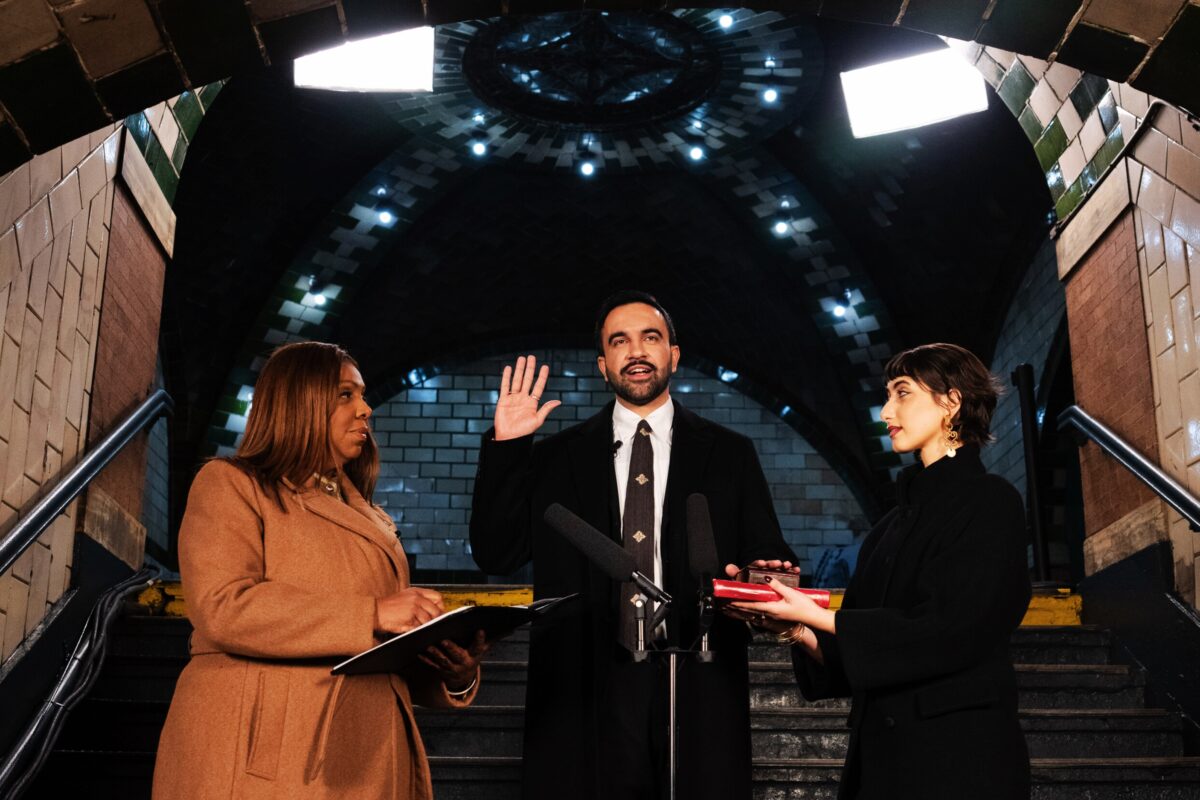
New Delhi: Just after midnight on January 1, 2026, Zohran Mamdani took the oath as New York City’s 112th mayor at an unconventional venue—the decommissioned Old City Hall subway station beneath City Hall. Mamdani chose the location deliberately to underscore the political message he aimed to set at the start of his four-year term.
The city opened the Old City Hall subway station in 1904 as part of New York’s first subway line and closed it in 1945. Planners originally designed the station as a ceremonial gateway to the transit system. Built during a period of heavy investment in monumental public infrastructure, the station embodied the belief that civic spaces serving ordinary citizens should project dignity and permanence.
Mamdani referenced this history to explain his decision, calling public transit the city’s “great equalizer” and vital to its social and economic life.
The symbolism of the venue closely aligns with Mamdani’s political background and campaign priorities. Born in Kampala, Uganda, in 1991, he moved to New York as a child and grew up relying on public transportation. As a New York State Assembly member representing Astoria, Queens, since 2020, Mamdani focused on affordability, supporting fare-free bus pilots, opposing transit fare hikes, and criticising policy reversals on congestion pricing that he argued disproportionately affected working-class residents.
Letitia James administered the private midnight ceremony, which a small group attended, including Mamdani’s wife, Syrian artist Rama Duwaji, his immediate family, and outgoing mayor Eric Adams, signaling continuity in city governance. Mayor-elect Mamdani arrived at the venue with his wife shortly before the ceremony began.
Mamdani placed his hand on the Quran during the oath, becoming New York City’s first Muslim mayor, as well as its first mayor of South Asian descent, first born in Africa, and the youngest in generations at 34.
Public transit was a recurring theme in his 2025 mayoral campaign, which centred on cost-of-living concerns such as rent freezes, childcare, and expanded public services funded through higher taxes on the wealthy. By choosing a defunct but historically significant subway station for his swearing-in, Mamdani linked his administration’s agenda to an earlier period when New York viewed public investment as a tool for broad-based opportunity.
In brief remarks after taking the oath, Mamdani described the occasion as “the honor and privilege of a lifetime” and announced his first appointment: veteran city planner Mike Flynn as Commissioner of the Department of Transportation. He said strengthening public transit would be a core priority of his administration, framing it as both an infrastructure and equity issue.
However, Mamdani shaped the political framing of his mayoralty hours earlier underground. By starting his term in a long-closed subway station built for everyday riders, he emphasized a core message of his leadership: New York’s future must center on public infrastructure and the people who rely on it most.
Also Read: Who Was Nandini CM? Kannada-Tamil Actor Found Dead in Bengaluru at 26

Prateeksha Kumari is a journalist and strategic communications professional specialising in digital journalism, political reporting, and public affairs. Her work focuses on grassroots issues, governance, and civic developments, with an emphasis on clarity, accuracy, and narrative-driven reporting.
She holds a Master’s degree in Journalism and Mass Communication from Himachal Pradesh University, Shimla and has qualified the UGC-NET examination, reflecting her academic grounding in media studies and communication research. Her reporting spans politics, public policy, health, education, and socio-economic issues, and she is experienced in bilingual (Hindi and English) content creation tailored to diverse audiences.
Alongside her journalistic work, she brings experience in political communication and public relations, where she has contributed to campaign messaging, media outreach, and narrative building. She has worked on integrated communication strategies across print and digital platforms, combining editorial judgment with audience insight and data-led content approaches.